


Multistate outbreak of salmonella chester infections associated with frozen meals -- 18 states, 2010
- PMID: 24304829
- PMCID: PMC4585545
Multistate outbreak of salmonella chester infections associated with frozen meals -- 18 states, 2010
Abstract
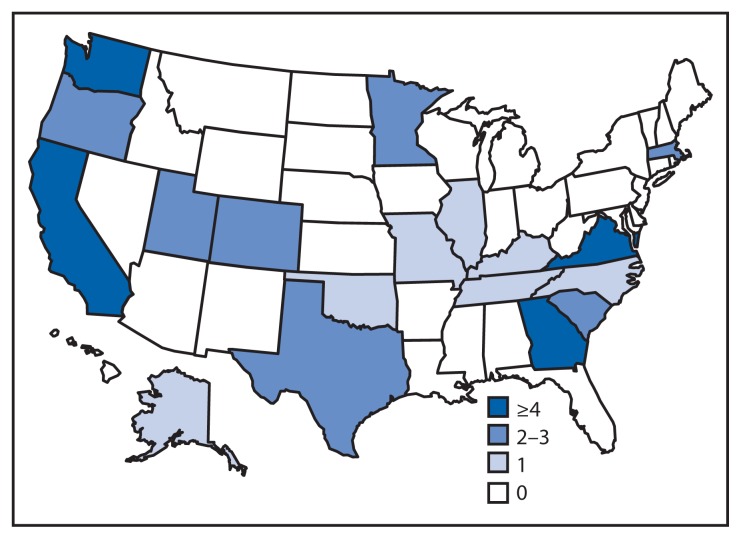
On May 24, 2010, a cluster of 17 human Salmonella enterica serotype Chester clinical isolates with indistinguishable pulsed-field gel electrophoresis (PFGE) patterns was reported to PulseNet, the national molecular subtyping network for foodborne disease surveillance. This PFGE pattern had not been reported previously. Subsequently, CDC conducted an investigation that identified 44 ill persons in 18 states during May 24-June 19, 2010. In a multistate case-control study, consumption of a brand A frozen meal was associated with illness (matched odds ratio [mOR] = 30.7; 95% confidence interval [CI] = 6.4-∞). On June 17, 2010, the manufacturer (company A) voluntarily recalled its brand A cheesy chicken and rice frozen meals. The outbreak strain of Salmonella Chester was isolated from eight unopened samples. A root cause analysis conducted by company A identified chicken as a possible contaminated ingredient. Many frozen meals are not "heat and serve" items but rather are "not-ready-to-eat" (NRTE) products that require full cooking before consumption because they might include ingredients that have not gone through a pathogen kill-step process. Because Salmonella and other pathogens can survive in NRTE products, such products must be fully cooked before eating and clearly labeled with instructions for safe handling and cooking.
Figures

References
-
- US Department of Agriculturem, Food Safety and Inspection Service. FSIS food recalls. Washington, DC: US Department of Agriculture, Food Safety and Inspection Service; 2013. Available at http://www.fsis.usda.gov/wps/portal/fsis/topics/food-safety-education/ge....
-
- Smith K, Medus C, Meyer S, et al. Outbreaks of salmonellosis in Minnesota (1998 through 2006) associated with frozen, microwaveable, breaded, stuffed chicken products. J Food Prot. 2008;71:2153–60. - PubMed
-
- CDC. Multistate outbreak of Salmonella infections associated with frozen pot pies—United States, 2007. MMWR. 2008;57:1277–80. - PubMed
-
- Gessner BD, Beller M. Protective effect of conventional cooking versus use of microwave ovens in an outbreak of salmonellosis. Am J Epidemiol. 1994;139:903–9. - PubMed
MeSH terms
LinkOut - more resources
Full Text Sources
