


Quantitative metabolic imaging using endogenous fluorescence to detect stem cell differentiation
- PMID: 24305550
- PMCID: PMC3851884
- DOI: 10.1038/srep03432
Quantitative metabolic imaging using endogenous fluorescence to detect stem cell differentiation
Abstract
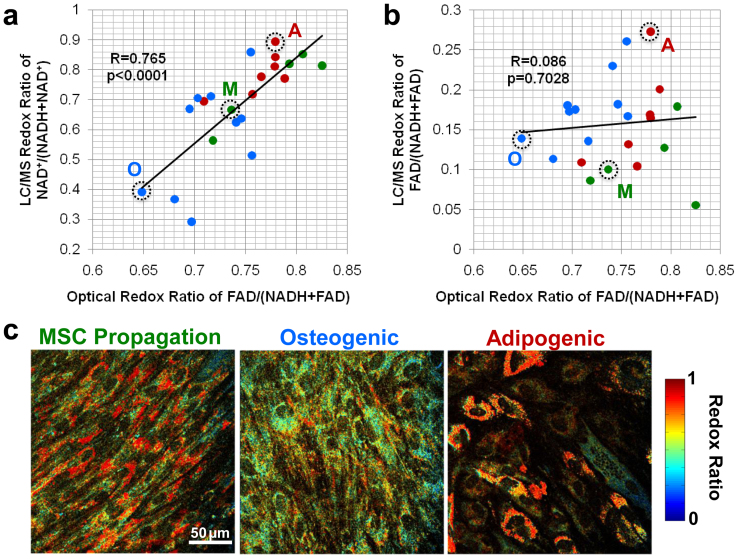
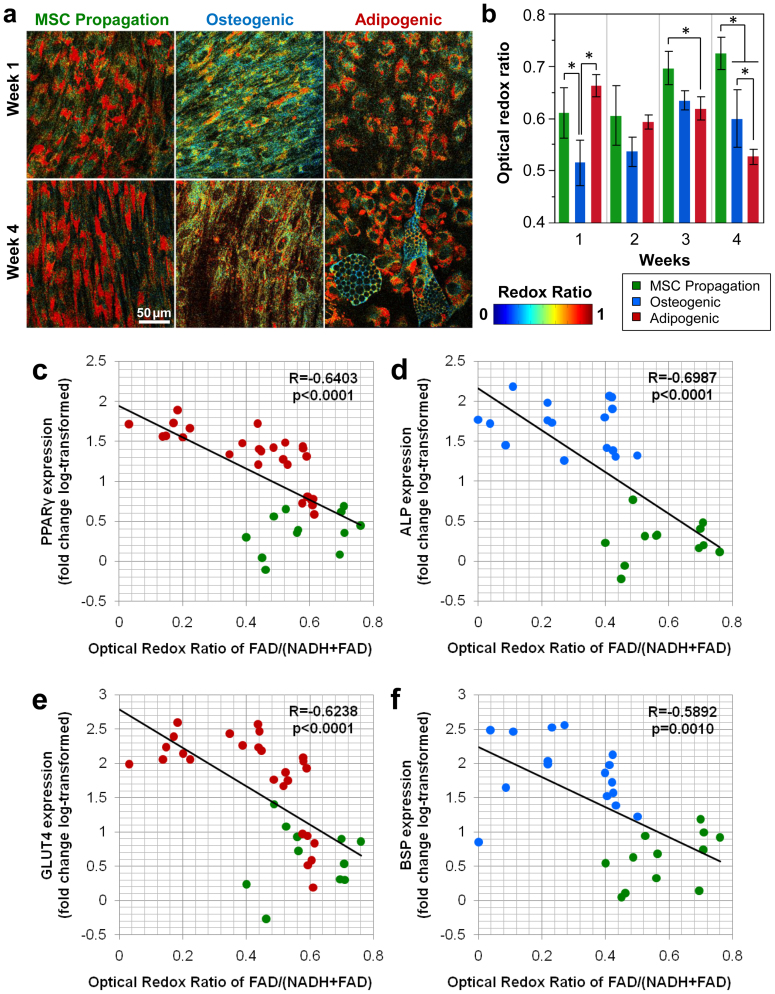
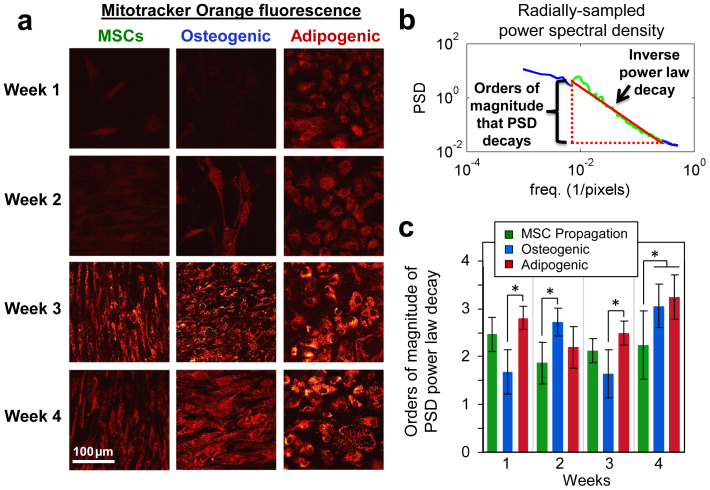
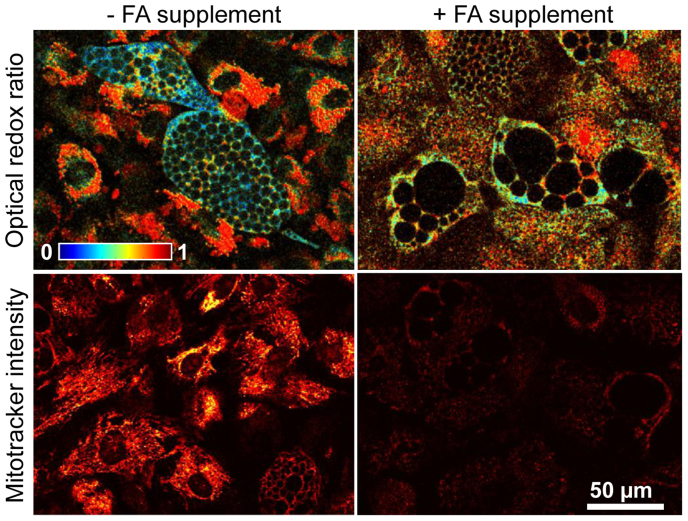
The non-invasive high-resolution spatial mapping of cell metabolism within tissues could provide substantial advancements in assessing the efficacy of stem cell therapy and understanding tissue development. Here, using two-photon excited fluorescence microscopy, we elucidate the relationships among endogenous cell fluorescence, cell redox state, and the differentiation of human mesenchymal stem cells into adipogenic and osteoblastic lineages. Using liquid chromatography/mass spectrometry and quantitative PCR, we evaluate the sensitivity of an optical redox ratio of FAD/(NADH + FAD) to metabolic changes associated with stem cell differentiation. Furthermore, we probe the underlying physiological mechanisms, which relate a decrease in the redox ratio to the onset of differentiation. Because traditional assessments of stem cells and engineered tissues are destructive, time consuming, and logistically intensive, the development and validation of a non-invasive, label-free approach to defining the spatiotemporal patterns of cell differentiation can offer a powerful tool for rapid, high-content characterization of cell and tissue cultures.
Figures
References
-
- Berthiaume F., Maguire T. J. & Yarmush M. L. Tissue engineering and regenerative medicine: history, progress, and challenges. Annu Rev Chem Biomol Eng 2, 403 (2011). - PubMed
-
- Kim H. J., Kim U. J., Vunjak-Novakovic G., Min B. H. & Kaplan D. L. Influence of macroporous protein scaffolds on bone tissue engineering from bone marrow stem cells. Biomaterials 26 (21), 4442 (2005). - PubMed
Publication types
MeSH terms
Substances
Grants and funding
LinkOut - more resources
Full Text Sources
Other Literature Sources
Medical
