


Plant phytochemicals as epigenetic modulators: role in cancer chemoprevention
- PMID: 24307610
- PMCID: PMC3889536
- DOI: 10.1208/s12248-013-9548-5
Plant phytochemicals as epigenetic modulators: role in cancer chemoprevention
Abstract
In recent years, "nutri-epigenetics," which focuses on the influence of dietary agents on epigenetic mechanism(s), has emerged as an exciting novel area in epigenetics research. Targeting of aberrant epigenetic modifications has gained considerable attention in cancer chemoprevention research because, unlike genetic changes, epigenetic alterations are reversible and occur during early carcinogenesis. Aberrant epigenetic mechanisms, such as promoter DNA methylation, histone modifications, and miRNA-mediated post-transcriptional alterations, can silence critical tumor suppressor genes, such as transcription factors, cell cycle regulators, nuclear receptors, signal transducers, and apoptosis-inducing and DNA repair gene products, and ultimately contribute to carcinogenesis. In an effort to identify and develop anticancer agents which cause minimal harm to normal cells while effectively killing cancer cells, a number of naturally occurring phytochemicals in food and medicinal plants have been investigated. This review highlights the potential role of plant-derived phytochemicals in targeting epigenetic alterations that occur during carcinogenesis, by modulating the activity or expression of DNA methyltransferases, histone modifying enzymes, and miRNAs. We present in detail the epigenetic mode of action of various phytochemicals and discuss their potential as safe and clinically useful chemopreventive strategies.
Figures
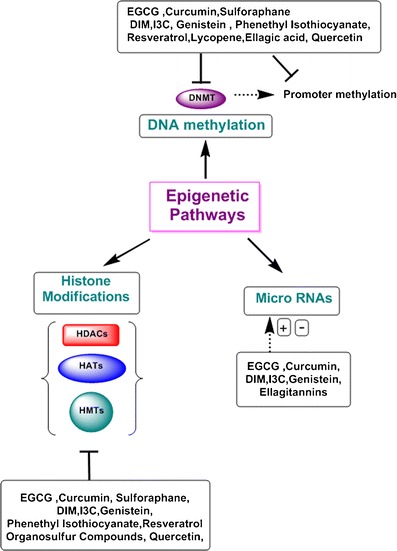
 demonstrates regulation;
  demonstrates inhibition
References
Publication types
MeSH terms
Substances
Grants and funding
LinkOut - more resources
Full Text Sources
Other Literature Sources
Medical
