


Propionibacterium acnes: an underestimated pathogen in implant-associated infections
- PMID: 24308006
- PMCID: PMC3838805
- DOI: 10.1155/2013/804391
Propionibacterium acnes: an underestimated pathogen in implant-associated infections
Abstract
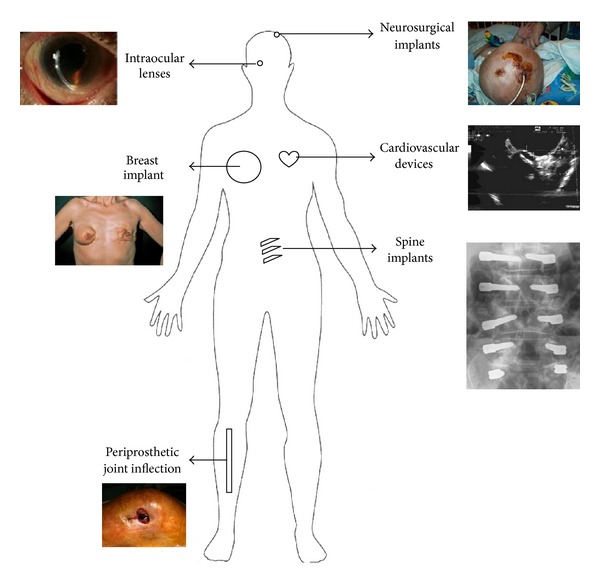
The role of Propionibacterium acnes in acne and in a wide range of inflammatory diseases is well established. However, P. acnes is also responsible for infections involving implants. Prolonged aerobic and anaerobic agar cultures for 14 days and broth cultures increase the detection rate. In this paper, we review the pathogenic role of P. acnes in implant-associated infections such as prosthetic joints, cardiac devices, breast implants, intraocular lenses, neurosurgical devices, and spine implants. The management of severe infections caused by P. acnes involves a combination of antimicrobial and surgical treatment (often removal of the device). Intravenous penicillin G and ceftriaxone are the first choice for serious infections, with vancomycin and daptomycin as alternatives, and amoxicillin, rifampicin, clindamycin, tetracycline, and levofloxacin for oral treatment. Sonication of explanted prosthetic material improves the diagnosis of implant-associated infections. Molecular methods may further increase the sensitivity of P. acnes detection. Coating of implants with antimicrobial substances could avoid or limit colonization of the surface and thereby reduce the risk of biofilm formation during severe infections. Our understanding of the role of P. acnes in human diseases will likely continue to increase as new associations and pathogenic mechanisms are discovered.
Figures
Comment in
-
Which is the best treatment for prosthetic joint infections due to Propionibacterium acnes: need for further biofilm in vitro and experimental foreign-body in vivo studies?Acta Orthop. 2016 Jun;87(3):318-9. doi: 10.3109/17453674.2016.1162037. Epub 2016 Apr 4. Acta Orthop. 2016. PMID: 27045190 Free PMC article. No abstract available.
References
-
- Brüggemann H. Insights in the pathogenic potential of Propionibacterium acnes from its complete genome. Seminars in Cutaneous Medicine and Surgery. 2005;24(2):67–72. - PubMed
-
- Cohen RJ, Shannon BA, McNeal JE, Shannon T, Garrett KL. Propionibacterium acnes associated with inflammation in radical prostatectomy specimens: a possible link to cancer evolution? Journal of Urology. 2005;173(6):1969–1974. - PubMed
-
- Colina M, Lo Monaco A, Khodeir M, Trotta F. Propionibacterium acnes and SAPHO syndrome: a case report and literature review. Clinical and Experimental Rheumatology. 2007;25(3):457–460. - PubMed
Publication types
MeSH terms
Substances
LinkOut - more resources
Full Text Sources
Other Literature Sources
Medical
