


Distinguishing Selection Bias and Confounding Bias in Comparative Effectiveness Research
- PMID: 24309675
- PMCID: PMC4043938
- DOI: 10.1097/MLR.0000000000000011
Distinguishing Selection Bias and Confounding Bias in Comparative Effectiveness Research
Abstract
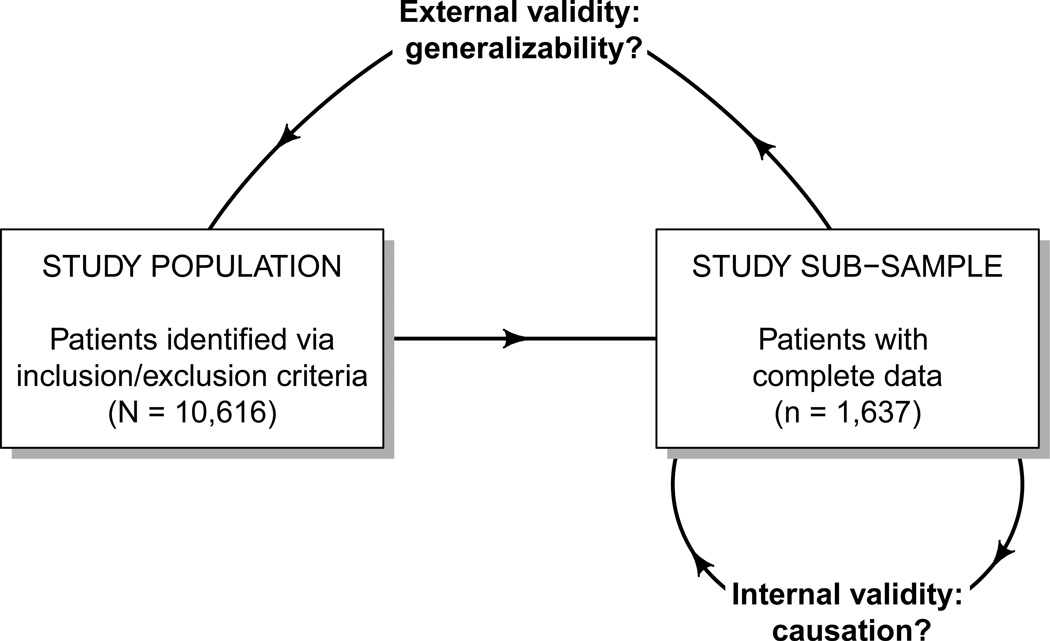
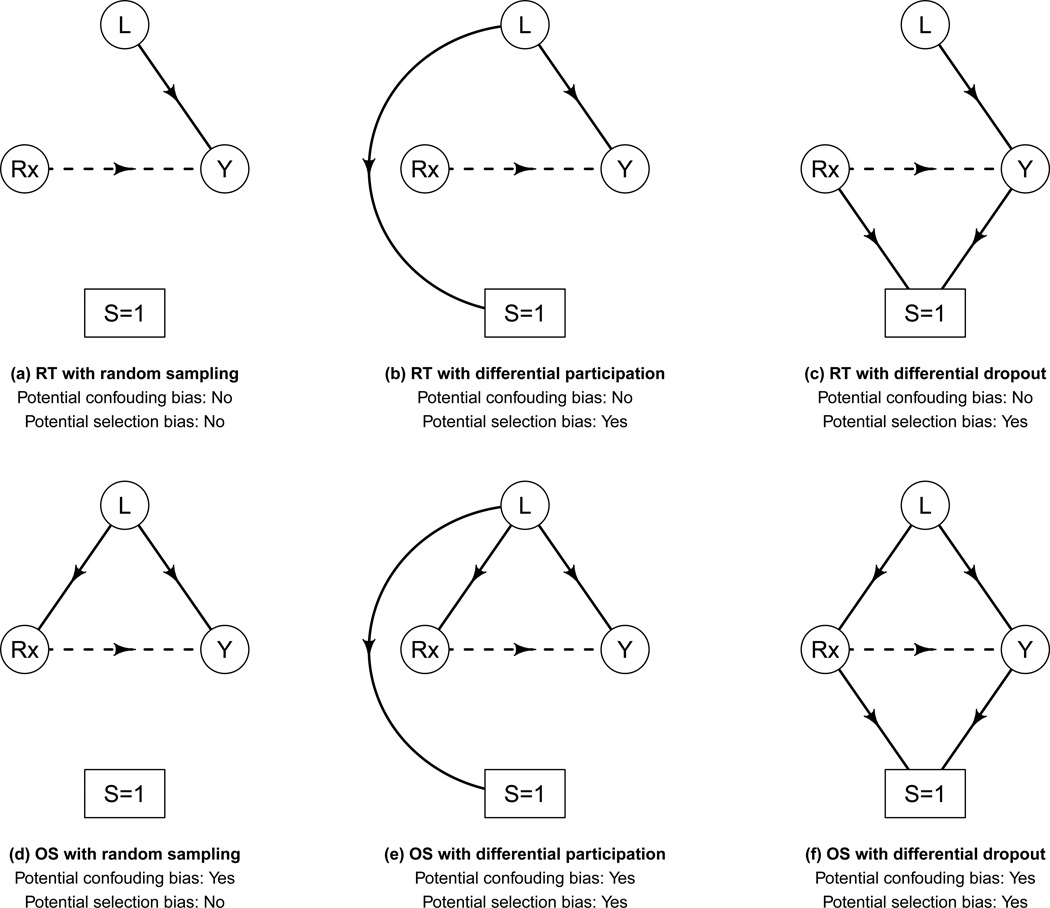
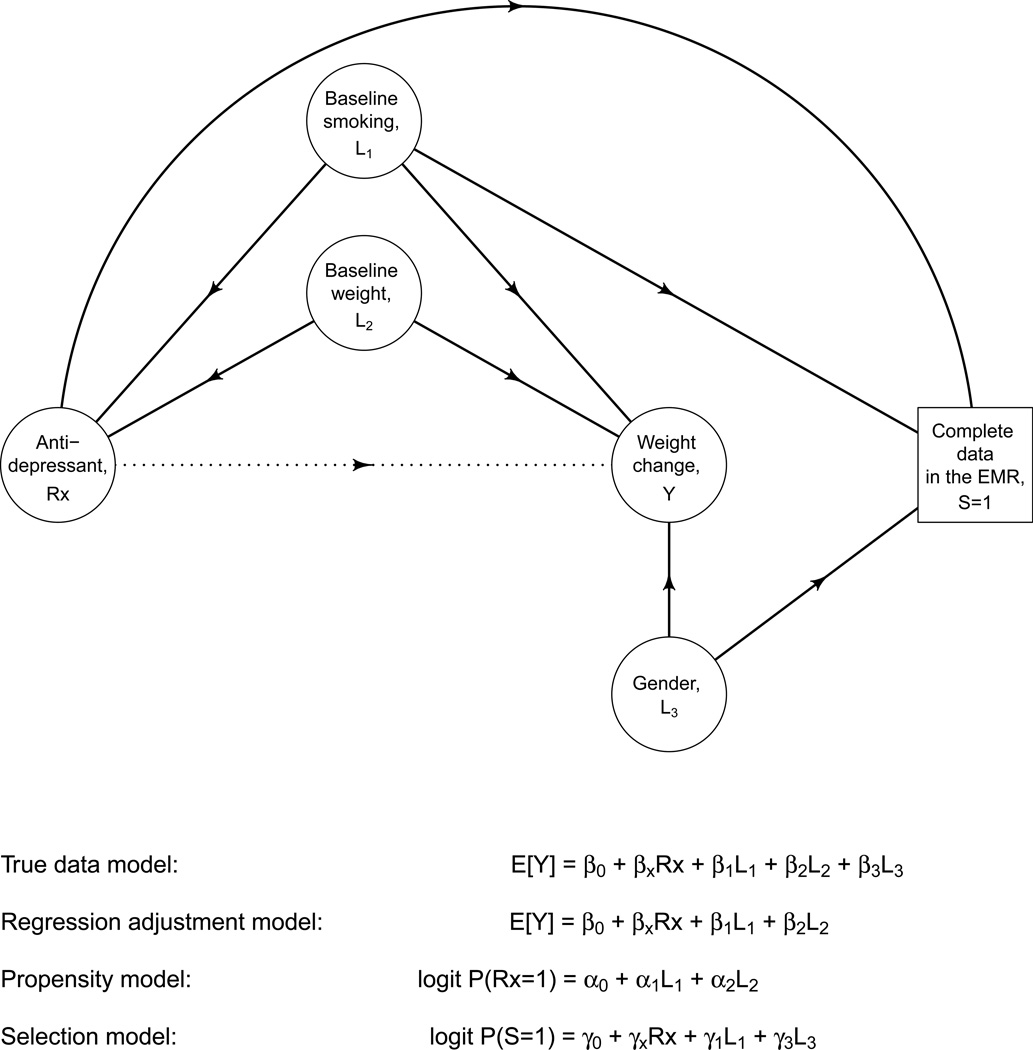
Comparative effectiveness research (CER) aims to provide patients and physicians with evidence-based guidance on treatment decisions. As researchers conduct CER they face myriad challenges. Although inadequate control of confounding is the most-often cited source of potential bias, selection bias that arises when patients are differentially excluded from analyses is a distinct phenomenon with distinct consequences: confounding bias compromises internal validity, whereas selection bias compromises external validity. Despite this distinction, however, the label "treatment-selection bias" is being used in the CER literature to denote the phenomenon of confounding bias. Motivated by an ongoing study of treatment choice for depression on weight change over time, this paper formally distinguishes selection and confounding bias in CER. By formally distinguishing selection and confounding bias, this paper clarifies important scientific, design, and analysis issues relevant to ensuring validity. First is that the 2 types of biases may arise simultaneously in any given study; even if confounding bias is completely controlled, a study may nevertheless suffer from selection bias so that the results are not generalizable to the patient population of interest. Second is that the statistical methods used to mitigate the 2 biases are themselves distinct; methods developed to control one type of bias should not be expected to address the other. Finally, the control of selection and confounding bias will often require distinct covariate information. Consequently, as researchers plan future studies of comparative effectiveness, care must be taken to ensure that all data elements relevant to both confounding and selection bias are collected.
Figures
References
-
- Steinbrook R. Health care and the American Recovery and Reinvestment Act. The New England Journal of Medicine. 2009;360(11):1057–1060. - PubMed
-
- Federal Coordinating Council for Comparative Effectiveness Research (U.S.), United States. President., United States. Congress., United States. Dept. of Health and Human Services. Report to the President and the Congress. Washington, DC: US Dept. of Health and Human Services; 2009.
-
- Patient-Centered Outcomes Research Institute. http://www.pcori.org/.
-
- Rothman K, Greenland S, Lash TL. Modern Epidemiology. N/A. 3 ed. Philadelphia, PA: Lippincott Williams & Wilkins; 2008.
-
- Rothman KJ, Greenland S, Lash TL. Modern epidemiology. 3rd ed. Philadelphia: Wolters Kluwer Health/Lippincott Williams & Wilkins; 2008.
Publication types
MeSH terms
Grants and funding
LinkOut - more resources
Full Text Sources
Other Literature Sources
Research Materials
