


Frequency-modulated orocutaneous stimulation promotes non-nutritive suck development in preterm infants with respiratory distress syndrome or chronic lung disease
- PMID: 24310444
- PMCID: PMC3946759
- DOI: 10.1038/jp.2013.149
Frequency-modulated orocutaneous stimulation promotes non-nutritive suck development in preterm infants with respiratory distress syndrome or chronic lung disease
Abstract
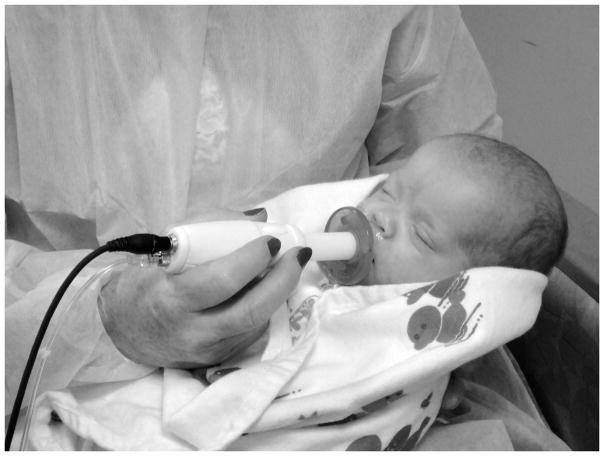
Objective: For the premature infant, extrauterine life is a pathological condition, which greatly amplifies the challenges to the brain in establishing functional oromotor behaviors. The extent to which suck can be entrained using a synthetically patterned orocutaneous input to promote its development in preterm infants who manifest chronic lung disease (CLD) is unknown. The objective of this study was to evaluate the effects of a frequency-modulated (FM) orocutaneous pulse train delivered through a pneumatically charged pacifier capable of enhancing non-nutritive suck (NNS) activity in tube-fed premature infants.
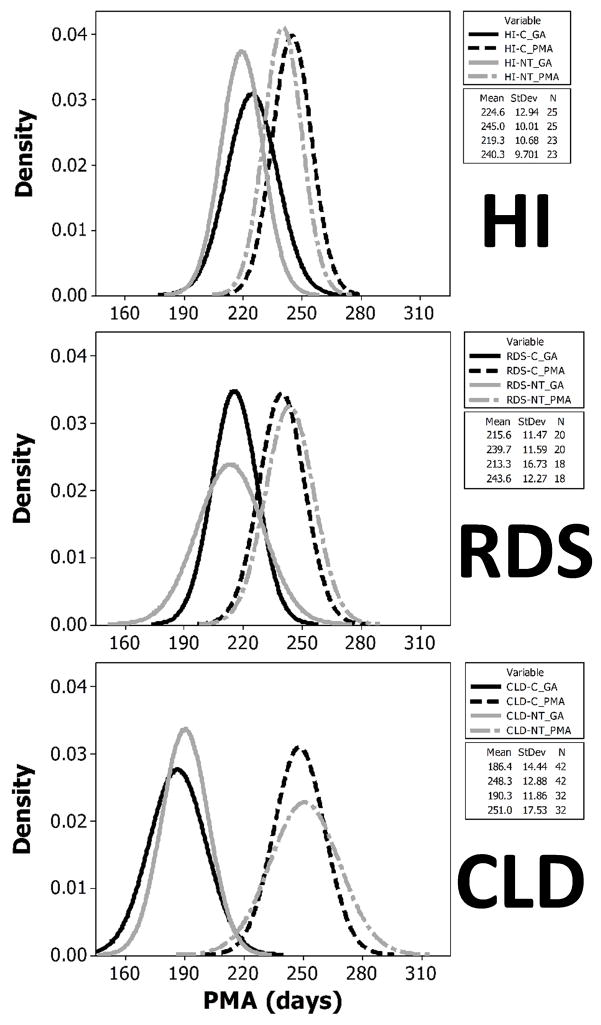
Study design: A randomized trial to evaluate the efficacy of pneumatic orocutaneous stimulation 3 × per day on NNS development and length of stay (LOS) in the neonatal intensive care unit among 160 newborn infants distributed among three sub-populations, including healthy preterm infants, respiratory distress syndrome (RDS) and CLD. Study infants received a regimen of orocutaneous pulse trains through a PULSED pressurized silicone pacifier or a SHAM control (blind pacifier) during gavage feeds for up to 10 days.
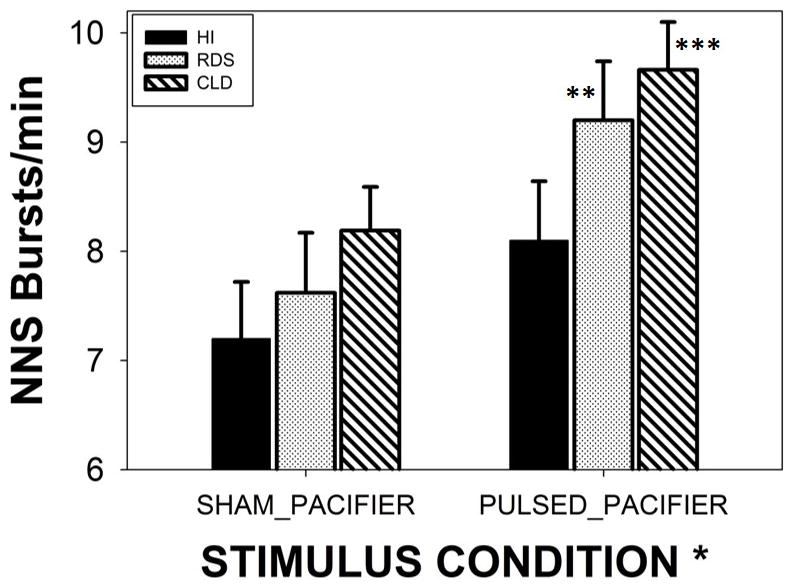
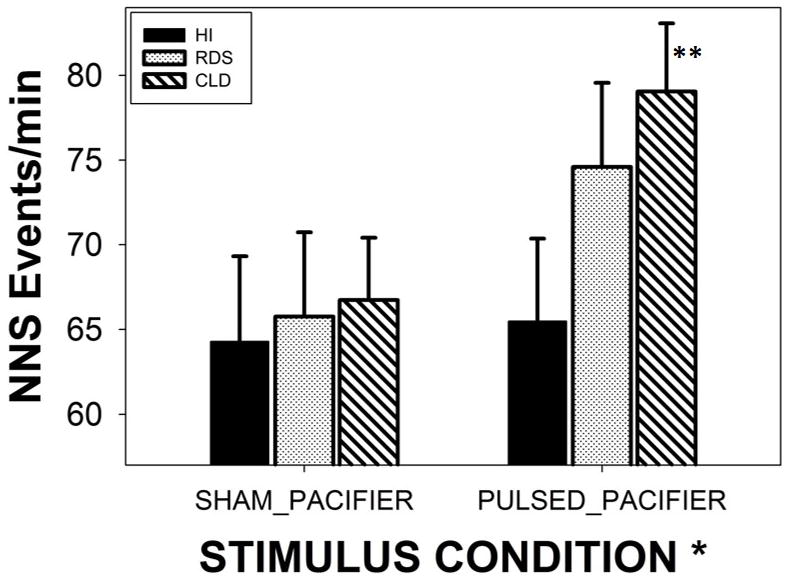
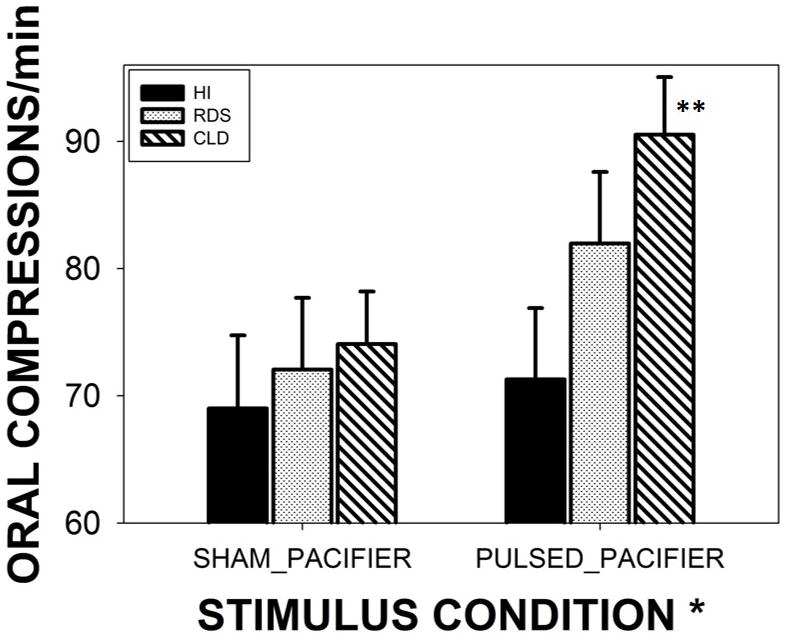
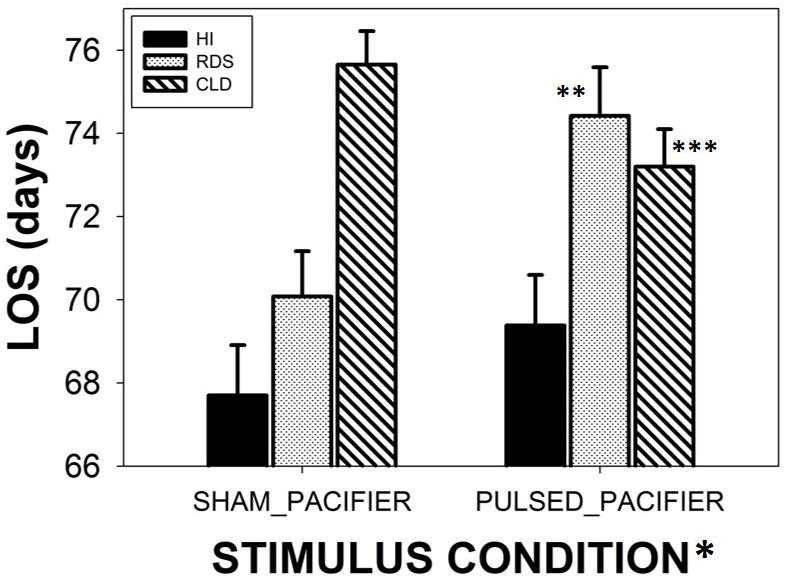
Result: Mixed modeling, adjusted for the infant's gender, gestational age, postmenstrual age and birth weight, was used to handle interdependency among repeated measures within subjects. A significant main effect for stimulation mode (SHAM pacifier vs PULSED orosensory) was found among preterm infants for NNS bursts per min (P=0.003), NNS events per min (P=0.033) and for total oral compressions per min (NNS+nonNNS) (P=0.016). Pairwise comparison of adjusted means using Bonferroni adjustment indicated RDS and CLD infants showed the most significant gains on these NNS performance indices. CLD infants in the treatment group showed significantly shorter LOS by an average of 2.5 days.
Conclusion: FM PULSED orocutaneous pulse train stimuli delivered through a silicone pacifier are effective in facilitating NNS burst development in tube-fed RDS and CLD preterm infants, with an added benefit of reduced LOS for CLD infants.
Figures
References
-
- Lau C. Oral feeding in the preterm infant. Neoreviews. 2006;7:19–27.
-
- Hack M, Estabrook MM, Robertson SS. Development of sucking rhythm in preterm infants. Early Hum Dev. 1985;11:133–140. - PubMed
-
- Mizuno K, Ueda A. Neonatal feeding performance as a predictor of neurodevelopmental outcome at 18 months. Dev Med Child Neurol. 2005;47:299–304. - PubMed
-
- Medoff-Cooper B, Shults J, Kaplan J. Sucking behavior of preterm neonates as a predictor of developmental outcomes. J Dev Behav Pediatrics. 2009;30:16–22. - PubMed
-
- DiPietro JA, Cusson RM, Caughy MO, Fox NA. Behavioral and physiologic effects of nonnutritive sucking during gavage feeding in preterm infants. Pediatr Res. 1994;36 :207–214. - PubMed
Publication types
MeSH terms
Grants and funding
LinkOut - more resources
Full Text Sources
Other Literature Sources
Medical
