


The effect of breakfast cereal consumption on adolescents' cognitive performance and mood
- PMID: 24312043
- PMCID: PMC3834293
- DOI: 10.3389/fnhum.2013.00789
The effect of breakfast cereal consumption on adolescents' cognitive performance and mood
Abstract
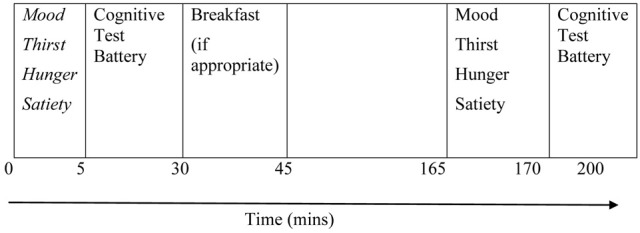
The aim of the current study was to investigate the effect of breakfast consumption on cognitive performance and mood in adolescents, and any interaction that breakfast consumption might have with cognitive load. The rationale for this approach was that the beneficial effects of any intervention with regard to cognitive function may be more readily apparent when more demands are placed on the system. Furthermore, as skipping breakfast is particularly prevalent within this age group, thus, we focused on adolescents who habitually skip breakfast. Cognitive load was modulated by varying the level of difficulty of a series of cognitive tasks tapping memory, attention, and executive functions. Mood measured with Bond-Lader scales (1974) as well as measures of thirst, hunger, and satiety were recorded at each test session both at baseline and after the completion of each test battery. Forty adolescents (mean age = 14:2) participated in this within-subjects design study. According to treatment, all participants were tested before and after the intake of a low Glycaemic index breakfast (i.e., a 35 g portion of AllBran and 125 ml semi-skimmed milk) and before and after no breakfast consumption. Assessment time had two levels: 8.00 am (baseline) and 10.45 am. The orders of cognitive load tasks were counterbalanced. Overall it appeared that following breakfast participants felt more alert, satiated, and content. Following breakfast consumption, there was evidence for improved cognitive performance across the school morning compared to breakfast omission in some tasks (e.g., Hard Word Recall, Serial 3's and Serial 7's). However, whilst participants performance on the hard version of each cognitive task was significantly poorer compared to the corresponding easy version, there was limited evidence to support the hypothesis that the effect of breakfast was greater in the more demanding versions of the tasks.
Keywords: adolescent; breakfast; cognitive load; cognitive performance; mood.
References
-
- Affenito S. G., Thompson D. R., Barton B. A., Franko D. L., Daniels S. R., Obarzanek E., et al. (2005). Breakfast consumption by African-American and white adolescent girls correlates positively with calcium and fiber intake and negatively with body mass index. J. Am. Diet. Assoc. 105, 938–945 10.1016/j.jada.2005.03.003 - DOI - PubMed
-
- Benton D., Parker P. Y. (1998). Breakfast, blood glucose and cognition. Am. J. Clin. Nutr. 67, 772S–778S - PubMed
LinkOut - more resources
Full Text Sources
Other Literature Sources
