. 2013 Nov 14;4(9):703-15.
doi: 10.7150/jca.7235. eCollection 2013.

Simultaneous inhibition of cell-cycle, proliferation, survival, metastatic pathways and induction of apoptosis in breast cancer cells by a phytochemical super-cocktail: genes that underpin its mode of action

Affiliations

Simultaneous inhibition of cell-cycle, proliferation, survival, metastatic pathways and induction of apoptosis in breast cancer cells by a phytochemical super-cocktail: genes that underpin its mode of action

Allal Ouhtit et al. J Cancer. .

Abstract

Traditional chemotherapy and radiotherapy for cancer treatment face serious challenges such as drug resistance and toxic side effects. Complementary / Alternative medicine is increasingly being practiced worldwide due to its safety beneficial therapeutic effects. We hypothesized that a super combination (SC) of known phytochemicals used at bioavailable levels could induce 100% killing of breast cancer (BC) cells without toxic effects on normal cells and that microarray analysis would identify potential genes for targeted therapy of BC. Mesenchymal Stems cells (MSC, control) and two BC cell lines were treated with six well established pro-apoptotic phytochemicals individually and in combination (super cocktail), at bioavailable levels. The compounds were ineffective individually. In combination, they significantly suppressed BC cell proliferation (>80%), inhibited migration and invasion, caused cell cycle arrest and induced apoptosis resulting in 100% cell death. However, there were no deleterious effects on MSC cells used as control. Furthermore, the SC down-regulated the expression of PCNA, Rb, CDK4, BcL-2, SVV, and CD44 (metastasis inducing stem cell factor) in the BC cell lines. Microarray analysis revealed several differentially expressed key genes (PCNA, Rb, CDK4, Bcl-2, SVV, P53 and CD44) underpinning SC-promoted BC cell death and motility. Four unique genes were highly up-regulated (ARC, GADD45B, MYLIP and CDKN1C). This investigation indicates the potential for development of a highly effective phytochemical combination for breast cancer chemoprevention / chemotherapy. The novel over-expressed genes hold the potential for development as markers to follow efficacy of therapy.

Keywords: Breast cancer; chemoprevention; metastasis; microarray; phytochemicals.


Conflict of interest statement

COMPETING INTERESTS: Dr. Madhwa HG Raj: A patent is being submitted for a phytochemical cocktail to maintain breast health.

Dr. Shailaja G Raj: Based on the findings in this research, a nutritional supplement for breast health (Breast Healthguard Formula) is being prepared for commercialization by Protegene Corporation.

All other authors declare that no competing interest exists.

Figures
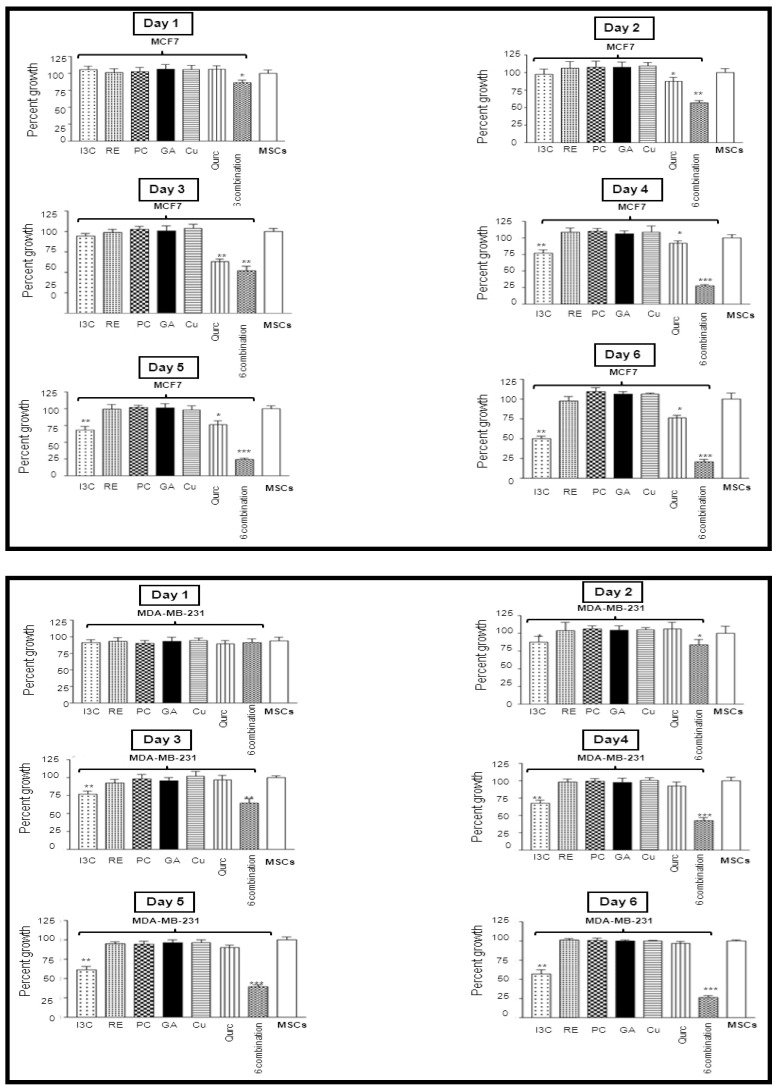
Fig 1
Fig 1
Effects of each of the phytochemicals alone or their combination on cell proliferation of MCF7 cells (Top panel) and the highly invasive MDA-MB-231 cell line (Bottom panel) assayed with Alamar-Blue dye. Cells were treated over a 6 day period and Alamar-Blue assay was performed daily as described under methods. The data is expressed as percent of growth ± SEM, as compared to the negative control MSCs (100%), unless noted otherwise. Level of significance is denoted as follows: *, p <0.05; **, p<0.01; ***, p<0.001.
Fig 2
Fig 2
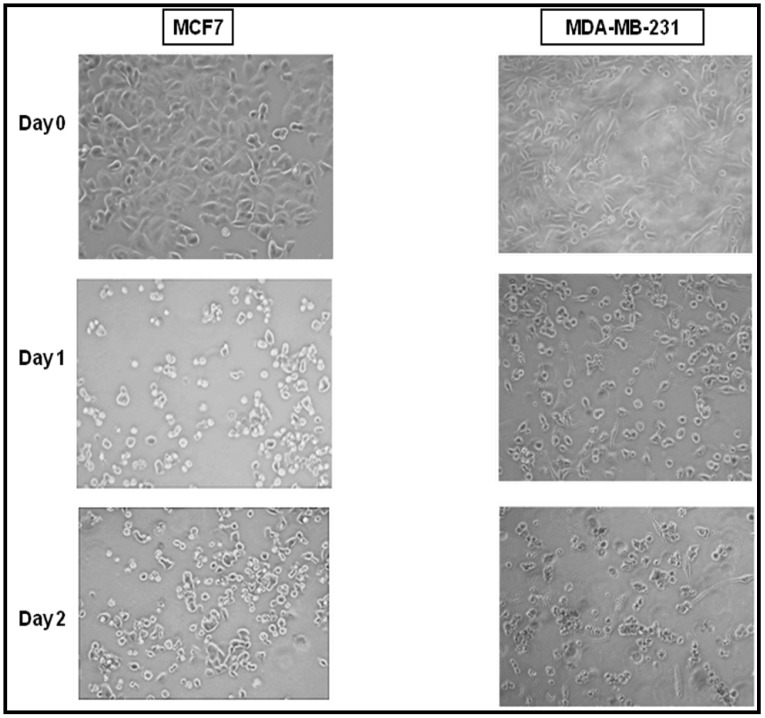
Effect of the phytochemical combination on MCF7 and MDA-MB-231 cell morphology. MCF7 and MDA-MB-231 cells at day 0 exhibited a smooth epithelial cell pattern with prominent nuclei. In contrast the cells treated with the 6-combination start to lose cell-cell contact and attain more rounded shape at day 1. By day 2, cells cluster together, demonstrate membrane blebbing, and start to detach from the dish (original magnification, X100).
Fig 3
Fig 3
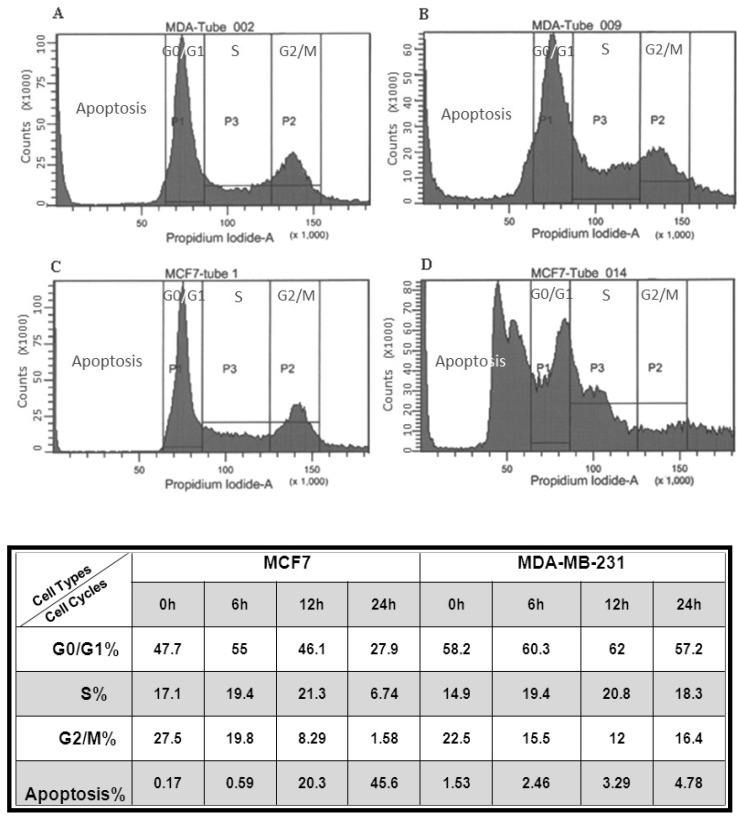
Flow cytometry data analysis of MCF7 and MDA-MB-231 cells after the 6-combination treatment. Data demonstrate a non-significant effect of phytochemicals at cell cycle stages after 6h of 6-combination treatment of both cell lines. Meanwhile, a significant increase in cell apoptosis at 24 h of MCF7 cells treatment with six phytochemicals in combination, and only a small increase in cell apoptosis of treatment of MDA-MB-231 cells. In the top panel, representative flow cytometric diagrams are given. A: MDA-MB-231 control at 0 hr. B: MDA-MB-231 treated for 24 hrs. C: MCF-7 control. D: MCF-7 treated for 24 hrs.
Fig 4
Fig 4
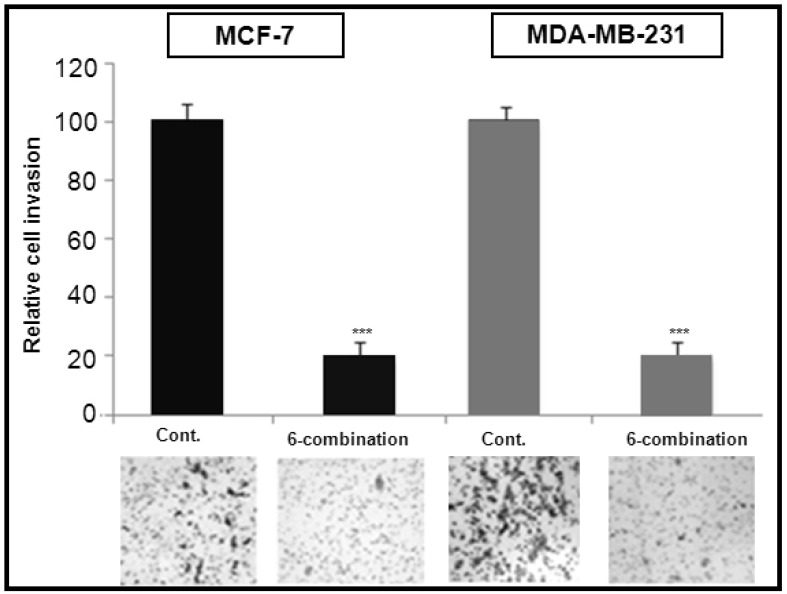
Determination of the phytochemical effect on the invasiveness of MCF7 and MDA-MB-231 cell lines. Cell invasiveness is demonstrated by Boyden chamber invasion assay. Images of Boyden chamber membranes (bottom panels) represent the number of invaded cells, illustrating the difference in invaded cell numbers. Note the reduction in invasion capability of MCF7 and MDA-MB-231 cell after 6-combination treatment. All data were performed in triplicate and in three independent experiments. Black bars represent MCF7 cells invasion, while the grey bars represent MDA-MB-231 cell invasion (student's two-tailed t-test, *P<0.05; **P<0.01, ***P<0.001).
Fig 5
Fig 5
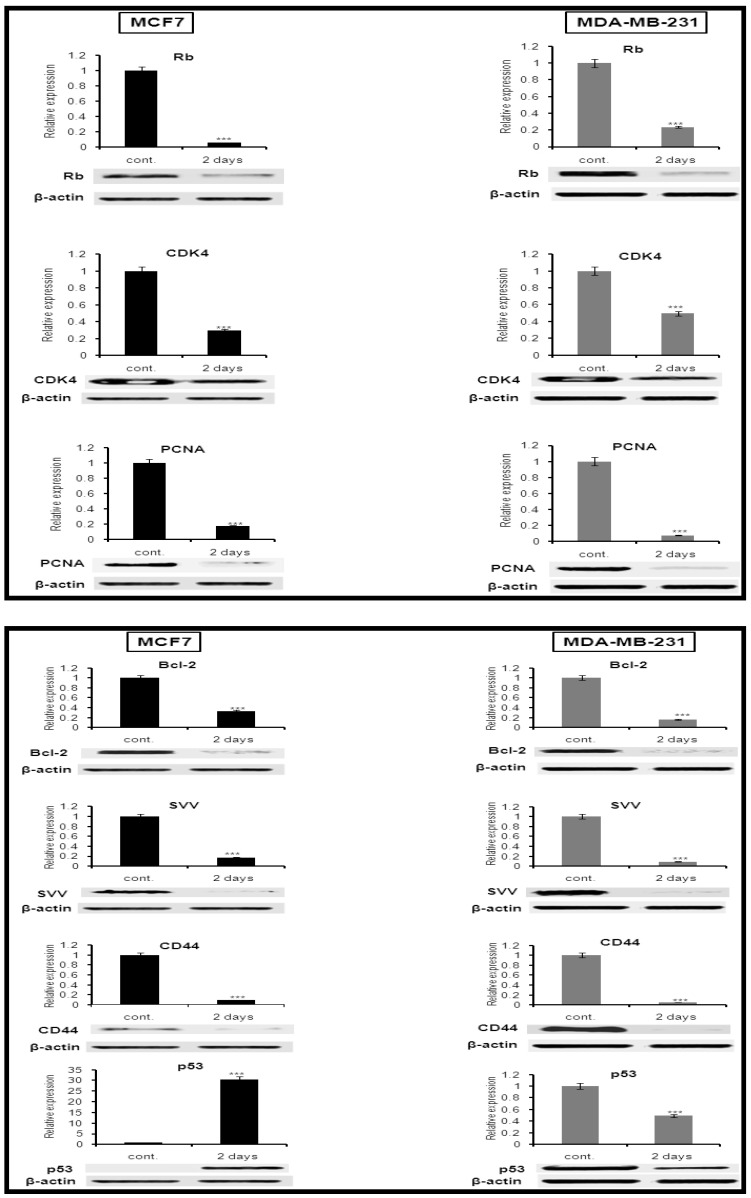
Molecular mechanisms of the 6-combination inhibitory actions on cell migration, invasion and induction of cell apoptosis in MCF-7 and MDA-MB-231 cell lines Cells were treated with the 6-combination for 48 hrs, protein lysates were collected and examined by western blot analysis as described under methods. All bands were quantified and normalized against β-Actin that was used as loading Control. Top panel: Synergistic down-regulation of cell proliferation marker PCNA and cell cycle regulators Rb, CDK4. Bottom panel: Down regulation of anti-apoptotic BcL-2, SVV and the cell metastatic marker cell adhesion molecule CD44 (marker of cell metastasis and BC stem cell marker) in both cell lines after 48hr from cell treatment with the 6 phytochemicals combination. Down-regulation of the MDA-MB-231 mutant P53 and up-regulation of P53 wild type in MCF7 was interestingly analyzed.

References

    1. Subramaniam D, Ramalingam S, Houchen CW, Anant S. Cancer stem cells. A novel paradigm for cancer prevention and treatment. Mini Rev Med Chem. 2010;103:59–71. - PMC - PubMed
    1. Kawasaki BT, Hurt EM, Mistree T, Farrar WL. Targeting cancer stem cells with phytochemicals. Mol Interv. 2008;8:174–84. - PubMed
    1. Gullett NP, Ruhul Amin AR, Bayraktar S. et al. Cancer prevention with natural compounds. Semin Oncol. 2010;37:258–81. - PubMed
    1. Moiseeva EP, Manson MM. Dietary chemopreventive phytochemicals: Too little or too much? Cancer Prev Res (Phila) 2009;2:611–6. - PubMed
    1. Mehta RG, Murillo G, Naithani R, Peng X. Cancer chemoprevention by natural products: How far have we come? Pharm Res. 2010;27:950–61. - PubMed