


Next generation sequencing uncovers unexpected bacterial pathogens in ticks in western Europe
- PMID: 24312301
- PMCID: PMC3842327
- DOI: 10.1371/journal.pone.0081439
Next generation sequencing uncovers unexpected bacterial pathogens in ticks in western Europe
Abstract
Background and aims: Ticks are highly susceptible to global environmental and socio-economical changes. Several tick-borne pathogens have been reported in new geographical regions while new species, strains or genetic variants of tick-borne microorganisms are continually being detected. However, tick-borne pathogens are still poorly understood, and it is estimated that half of all human tick-borne disease has an unknown origin. Therefore in order to prevent these diseases, more effort is required to identify unknown or unexpected tick-borne pathogens. Ixodes ricinus is the vector for a broad range of bacterial pathogens and the most prevalent tick in Europe. The aim of the present study was to evaluate the capability of Next Generation Sequencing (NGS) to extend the inventory of pathogenic bacteria carried by this species of tick in France.
Methods: RNA and DNA were extracted from 1450 I. ricinus questing nymphs collected by flagging in Alsace, France. RNA was pooled and used for NGS. Following de novo assembly, bacterial contigs were assigned to the closest known taxonomy. DNA was used for real time PCR to confirm taxonomic species assignment of NGS-derived contigs for the doubtful cases, and for determination of prevalence.
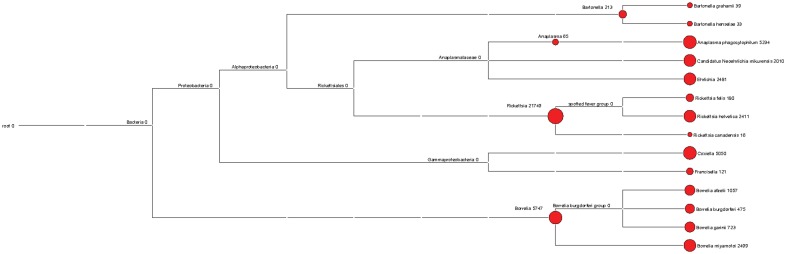
Results: We have generated a global in-depth picture of tick-borne bacteria. We identified RNA from the main pathogenic bacterial species known to be transmitted by I. ricinus. In addition we also identified unanticipated bacterial species for which we have estimated the prevalence within those ticks inhabiting the studied areas.
Conclusions: The data obtained from this study has proven that NGS has an enormous potential to detect the unexpected and provides the means to monitor pathogen occurrence.
Conflict of interest statement
Figures
References
-
- Parola P, Raoult D (2001) Ticks and tickborne bacterial diseases in humans: an emerging infectious threat. Clin Infect Dis 32: 897–928. - PubMed
-
- Haselbarth K, Tenter AM, Brade V, Krieger G, Hunfeld KP (2007) First case of human babesiosis in Germany - Clinical presentation and molecular characterisation of the pathogen. Int J Med Microbiol 297: 197–204. - PubMed
-
- Parola P, Raoult D (2001) Tick-borne bacterial diseases emerging in Europe. Clin Microbiol Infect 7: 80–83. - PubMed
Publication types
MeSH terms
Substances
LinkOut - more resources
Full Text Sources
Other Literature Sources
