


Incidence and risk of treatment-related mortality with anti-epidermal growth factor receptor monoclonal antibody in cancer patients: a meta-analysis of 21 randomized controlled trials
- PMID: 24312376
- PMCID: PMC3842967
- DOI: 10.1371/journal.pone.0081897
Incidence and risk of treatment-related mortality with anti-epidermal growth factor receptor monoclonal antibody in cancer patients: a meta-analysis of 21 randomized controlled trials
Abstract
Background: Anti-epidermal growth factor receptor (EGFR) monoclonal antibodies (MoAbs) cetuximab and panitumumab have emerged as an effective targeted therapy in the treatment of cancer patients, but the overall incidence and risk of fatal adverse events (FAEs) associated with these agents is still unclear.
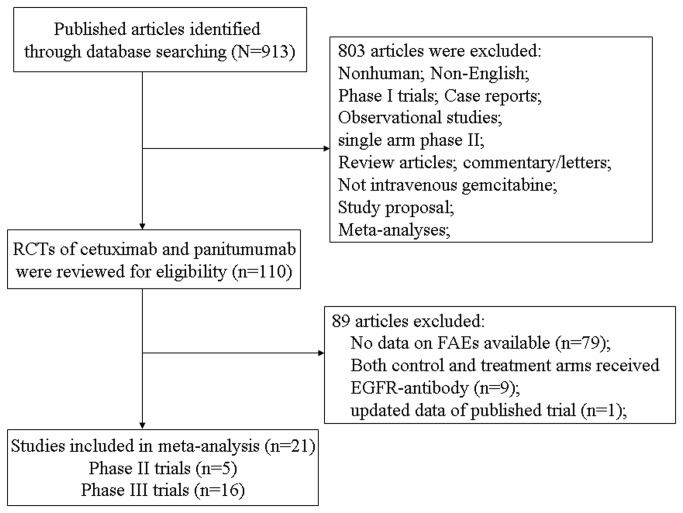
Methods: Databases from PubMed, Web of Science and abstracts presented at ASCO meeting up to May 31, 2013 were searched to identify relevant studies. Eligible studies included prospective randomized controlled trials evaluating MoAbs in cancer patients with adequate data on FAEs. Statistical analyses were conducted to calculate the summary incidence, odds ratio and 95% confidence intervals (CIs) by using either random effects or fixed effect models according to the heterogeneity of included studies.
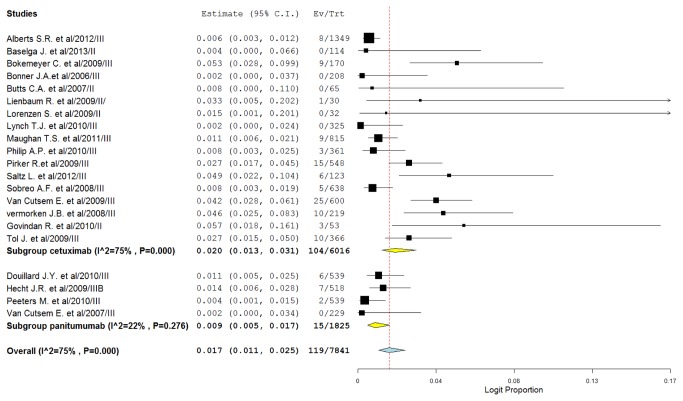
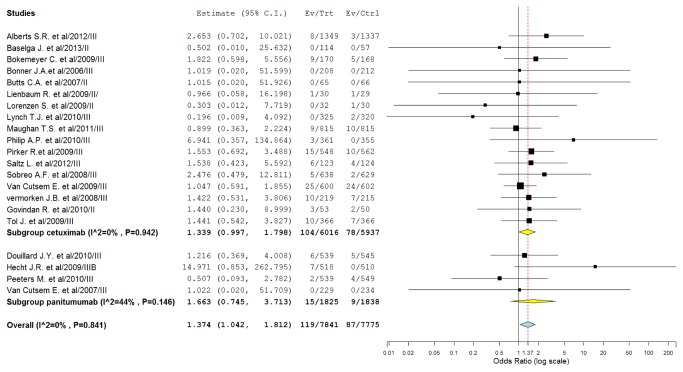
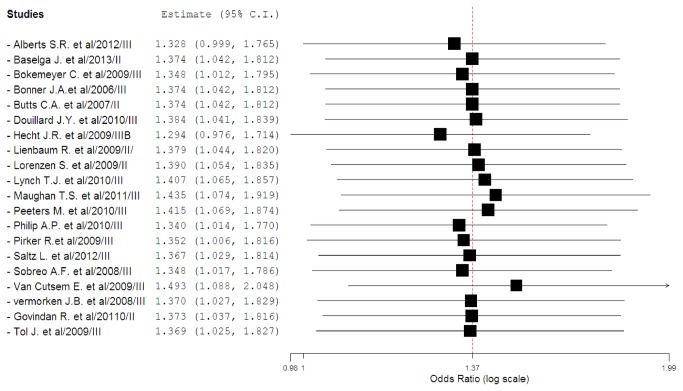
Results: A total of 14,776 patients with a variety of solid tumors from 21 clinical trials were included in our analysis. The overall incidence of MoAbs associated FAEs was 1.7% (95%CI: 1.1-2.5%), and the incidence of cetuximab-related FAEs was higher than that of panitumumab (2.0% versus 0.9%). Compared with the controls, the use of MoAbs was associated with a significantly increased risk of FAEs, with an OR of 1.37 (95%CI: 1.04-1.81, p=0.024). Subgroup analysis based on EGFR-MoAbs drugs, phase of trials and tumor types demonstrated a tendency to increase the risk of FAEs, but the risk did not increase in breast cancer, esophagus cancer and phase II trials.
Conclusions: With present evidence, the use of EGFR-MoAbs is associated with an increased risk of FAEs in patients with advanced solid tumors.
Conflict of interest statement
Figures
References
-
- Itakura Y, Sasano H, Shiga C, Furukawa Y, Shiga K et al. (1994) Epidermal growth factor receptor overexpression in esophageal carcinoma. An immunohistochemical study correlated with clinicopathologic findings and DNA amplification. Cancer 74: 795-804. doi: 10.1002/1097-0142(19940801)74:3. PubMed: 8039107. - DOI - PubMed
Publication types
MeSH terms
Substances
LinkOut - more resources
Full Text Sources
Other Literature Sources
Medical
Research Materials
Miscellaneous
