Comparative Study
. 2013 Dec 3;8(12):e79953.
doi: 10.1371/journal.pone.0079953. eCollection 2013.

Genome-wide comparison of cowpox viruses reveals a new clade related to Variola virus

Affiliations
Comparative Study

Genome-wide comparison of cowpox viruses reveals a new clade related to Variola virus

Piotr Wojtek Dabrowski et al. PLoS One. .

Abstract

Zoonotic infections caused by several orthopoxviruses (OPV) like monkeypox virus or vaccinia virus have a significant impact on human health. In Europe, the number of diagnosed infections with cowpox viruses (CPXV) is increasing in animals as well as in humans. CPXV used to be enzootic in cattle; however, such infections were not being diagnosed over the last decades. Instead, individual cases of cowpox are being found in cats or exotic zoo animals that transmit the infection to humans. Both animals and humans reveal local exanthema on arms and legs or on the face. Although cowpox is generally regarded as a self-limiting disease, immunosuppressed patients can develop a lethal systemic disease resembling smallpox. To date, only limited information on the complex and, compared to other OPV, sparsely conserved CPXV genomes is available. Since CPXV displays the widest host range of all OPV known, it seems important to comprehend the genetic repertoire of CPXV which in turn may help elucidate specific mechanisms of CPXV pathogenesis and origin. Therefore, 22 genomes of independent CPXV strains from clinical cases, involving ten humans, four rats, two cats, two jaguarundis, one beaver, one elephant, one marah and one mongoose, were sequenced by using massive parallel pyrosequencing. The extensive phylogenetic analysis showed that the CPXV strains sequenced clearly cluster into several distinct clades, some of which are closely related to Vaccinia viruses while others represent different clades in a CPXV cluster. Particularly one CPXV clade is more closely related to Camelpox virus, Taterapox virus and Variola virus than to any other known OPV. These results support and extend recent data from other groups who postulate that CPXV does not form a monophyletic clade and should be divided into multiple lineages.


Conflict of interest statement

Competing Interests: The authors have declared that no competing interests exist.

Figures

Figure 1
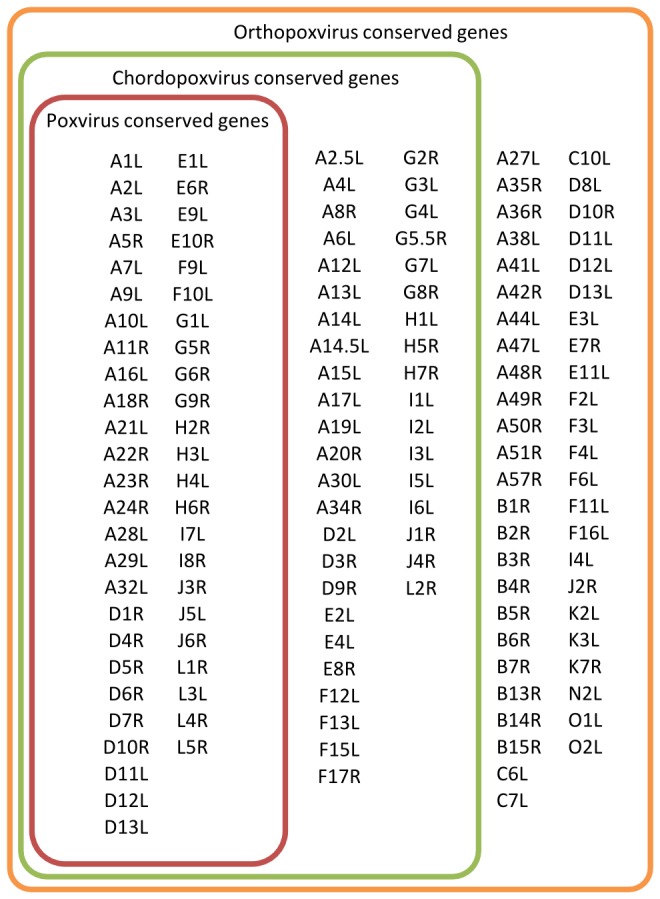
Figure 1. Groups of gene families that are specific for a phylogenetic level within the poxviruses.
Genes are named after their VACV-Cop homolog. PVC: 49 genes; CVC: 49 PVC genes plus 41 CVC genes; OVC: 90 PVC/CVC genes plus 48 OVC genes.
Figure 2
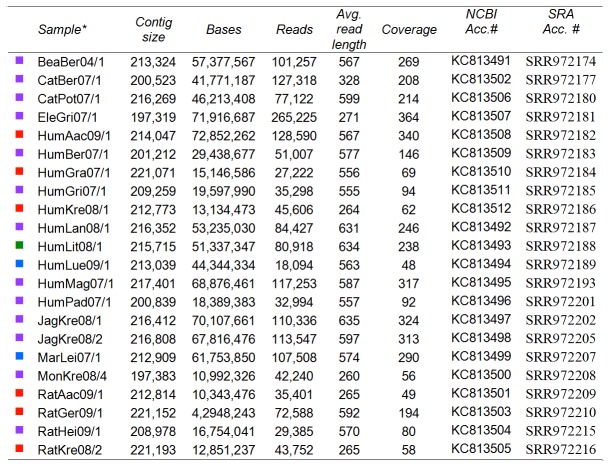
Figure 2. Overview of the sequencing results.
*Nomenclature: the first three letters indicate the host species and the second three letters the geographical location/city from which the strain was obtained, followed by two digits for the year plus internal numbers. The color code on the left side of the table indicates the color of the corresponding clade in the tree figures.
Figure 3
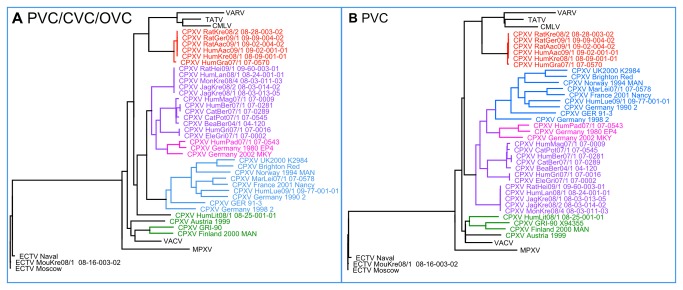
Figure 3. Phylogenetic trees resulting from the analysis of the DNA sequences of (a) PVC/CVC/OVC and (b) PVC gene families as shown in Figure 1.
The VARV-like CPXV clade marked in red is visible when using any of the gene sets. VARV, VACV, CMLV and MPXV represent collapsed clades containing data from all whole genome sequences available in GenBank. All displayed branches have a Chi2-statistic value of at least 0.99.
Figure 4
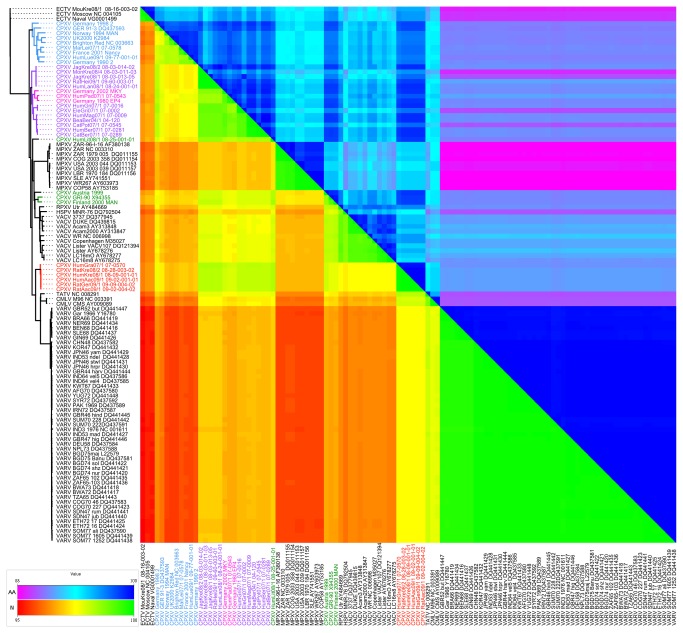
Figure 4. Identity between Orthopoxviruses based on the Poxvirus, Chordopoxvirus and Orthopoxvirus gene families.
The lower left shows the identity on nucleic acid level, while the upper right shows the identity on amino acid level. The phylogenetic tree on the left is also based on a DNA sequence alignment of the Poxvirus, Chordopoxvirus and Orthopoxvirus gene families.
Figure 5
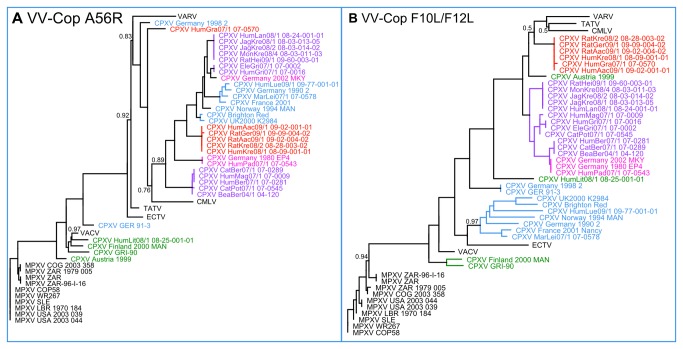
Figure 5. Phylogenetic trees resulting from the analysis of the DNA sequences of (a) the HA gene and (b) 1 kb from VACV-Cop F10L and VACV-Cop F12L each.
The different CPXV clades cannot be resolved when using the sequence of the HA gene for phylogenetic analysis, as they all cluster together. In contrast, the concatenated sequences from F10L and F12L can be used to achieve a clear separation of all groups visible in Figure 3a. VARV, VACV, CMLV and ECTV represent collapsed clades containing data from all whole genome sequences available in GenBank. All displayed branches, unless otherwise indicated, have a Chi2-statistic value of at least 0.99.

References

    1. Fenner F (1993) Smallpox: emergence, global spread, and eradication. Hist Philos Life Sci 15: 397-420. PubMed: 7529932. - PubMed
    1. Essbauer S, Pfeffer M, Meyer H (2010) Zoonotic poxviruses. Vet Microbiol 140: 229-236. doi: 10.1016/j.vetmic.2009.08.026. PubMed: 19828265. - DOI - PMC - PubMed
    1. Gubser C, Hué S, Kellam P, Smith GL (2004) Poxvirus genomes: a phylogenetic analysis. J Gen Virol 85: 105-117. doi: 10.1099/vir.0.19565-0. PubMed: 14718625. - DOI - PubMed
    1. Alzhanova D, Früh K (2010) Modulation of the host immune response by cowpox virus. Microbes Infect 12: 900-909. doi: 10.1016/j.micinf.2010.07.007. PubMed: 20673807. - DOI - PMC - PubMed
    1. McFadden G (2005) Poxvirus tropism. Nat Rev Microbiol 3: 201-213. doi: 10.1038/nrmicro1099. PubMed: 15738948. - DOI - PMC - PubMed

Publication types