


Regulatory dendritic cell therapy: from rodents to clinical application
- PMID: 24316407
- PMCID: PMC4045700
- DOI: 10.1016/j.imlet.2013.11.016
Regulatory dendritic cell therapy: from rodents to clinical application
Abstract
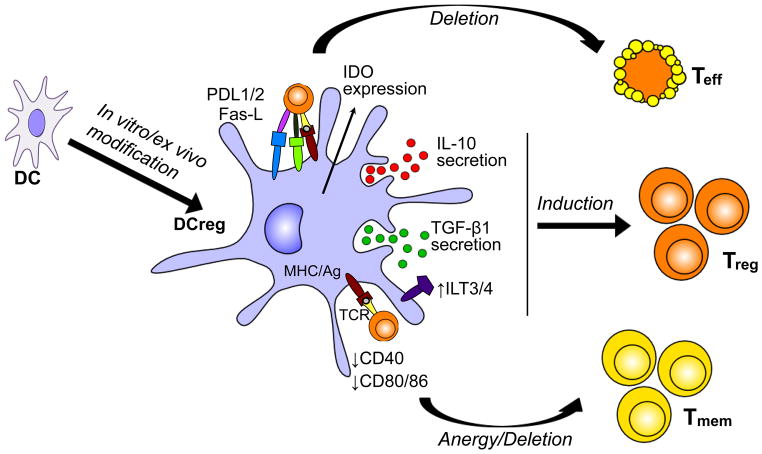
Dendritic cells (DC) are highly-specialized, bone marrow-derived antigen-presenting cells that induce or regulate innate and adaptive immunity. Regulatory or "tolerogenic" DC play a crucial role in maintaining self tolerance in the healthy steady-state. These regulatory innate immune cells subvert naïve or memory T cell responses by various mechanisms. Regulatory DC (DCreg) also exhibit the ability to induce or restore T cell tolerance in many animal models of autoimmune disease or transplant rejection. There is also evidence that adoptive transfer of DCreg can regulate T cell responses in non-human primates and humans. Important insights gained from in vitro studies and animal models have led recently to the development of clinical grade human DCreg, with potential to treat autoimmune disease or enhance transplant survival while reducing patient dependency on immunosuppressive drugs. Phase I trials have been conducted in type-1 diabetes and rheumatoid arthritis, with results that emphasize the feasibility and safety of DCreg therapy. This mini-review will outline how observations made using animal models have been translated into human use, and discuss the challenges faced in further developing this form of regulatory immune cell therapy in the fields of autoimmunity and transplantation.
Keywords: Autoimmunity; Cell therapy; Dendritic cells; Tolerance; Transplantation.
Copyright © 2013 Elsevier B.V. All rights reserved.
Figures
References
-
- Wood KJ, Bushell A, Hester J. Regulatory immune cells in transplantation. Nat Rev Immunol. 2012;12:417–430. - PubMed
-
- Morelli AE, Thomson AW. Tolerogenic dendritic cells and the quest for transplant tolerance. Nat Rev Immunol. 2007;7:610–621. - PubMed
-
- Lombardi G, Sagoo P, Scotta C, Fazekasova H, Smyth L, Tsang J, et al. Cell therapy to promote transplantation tolerance: a winning strategy? Immunotherapy. 2011;3:28–31. - PubMed
-
- Brusko TM, Putnam AL, Bluestone JA. Human regulatory T cells: role in autoimmune disease and therapeutic opportunities. Immunol Rev. 2008;223:371–390. - PubMed
Publication types
MeSH terms
Grants and funding
LinkOut - more resources
Full Text Sources
Other Literature Sources
