


Men who have sex with men sensitivity training reduces homoprejudice and increases knowledge among Kenyan healthcare providers in coastal Kenya
- PMID: 24321111
- PMCID: PMC3852129
- DOI: 10.7448/IAS.16.4.18748
Men who have sex with men sensitivity training reduces homoprejudice and increases knowledge among Kenyan healthcare providers in coastal Kenya
Abstract
Introduction: Healthcare workers (HCWs) in Africa typically receive little or no training in the healthcare needs of men who have sex with men (MSM), limiting the effectiveness and reach of population-based HIV control measures among this group. We assessed the effect of a web-based, self-directed sensitivity training on MSM for HCWs (www.marps-africa.org), combined with facilitated group discussions on knowledge and homophobic attitudes among HCWs in four districts of coastal Kenya.
Methods: We trained four district "AIDS coordinators" to provide a two-day training to local HCWs working at antiretroviral therapy-providing facilities in coastal Kenya. Self-directed learning supported by group discussions focused on MSM sexual risk practices, HIV prevention and healthcare needs. Knowledge was assessed prior to training, immediately after training and three months after training. The Homophobia Scale assessed homophobic attitudes and was measured before and three months after training.
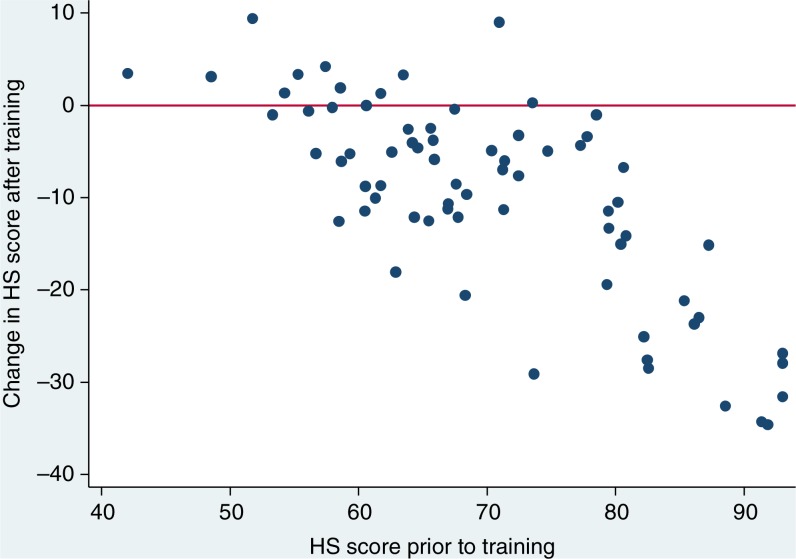
Results: Seventy-four HCWs (68% female; 74% clinical officers or nurses; 84% working in government facilities) from 49 health facilities were trained, of whom 71 (96%) completed all measures. At baseline, few HCWs reported any prior training on MSM anal sexual practices, and most HCWs had limited knowledge of MSM sexual health needs. Homophobic attitudes were most pronounced among HCWs who were male, under 30 years of age, and working in clinical roles or government facilities. Three months after training, more HCWs had adequate knowledge compared to baseline (49% vs. 13%, McNemar's test p<0.001); this was most pronounced in those with clinical or administrative roles and in those from governmental health providers. Compared to baseline, homophobic attitudes had decreased significantly three months after training, particularly among HCWs with high homophobia scores at baseline, and there was some evidence of correlation between improvements in knowledge and reduction in homophobic sentiment.
Conclusions: Scaling up MSM sensitivity training for African HCWs is likely to be a timely, effective and practical means to improve relevant sexual health knowledge and reduce personal homophobic sentiment among HCWs involved in HIV prevention, testing and care in sub-Saharan Africa.
Keywords: Homophobia Scale; Kenya; MSM behaviour; healthcare workers; homoprejudice; sensitivity training.
Figures
References
-
- Smith AD, Tapsoba P, Peshu N, Sanders EJ, Jaffe HW. Men who have sex with men and HIV/AIDS in sub-Saharan Africa. Lancet. 2009;374(9687):416–22. - PubMed
-
- Geibel S, Luchters S, King'Ola N, Esu-Williams E, Rinyiru A, Tun W. Factors associated with self-reported unprotected anal sex among male sex workers in Mombasa, Kenya. Sex Transm Dis. 2008;35(8):746–52. - PubMed
Publication types
MeSH terms
Grants and funding
LinkOut - more resources
Full Text Sources
Other Literature Sources
Medical
