Review
. 2013 Feb;4(1):25-39.
doi: 10.1007/s12975-012-0226-1. Epub 2012 Nov 15.

Preconditioning for traumatic brain injury

Affiliations
Review

Preconditioning for traumatic brain injury

Shoji Yokobori et al. Transl Stroke Res. 2013 Feb.

Abstract

Traumatic brain injury (TBI) treatment is now focused on the prevention of primary injury and reduction of secondary injury. However, no single effective treatment is available as yet for the mitigation of traumatic brain damage in humans. Both chemical and environmental stresses applied before injury have been shown to induce consequent protection against post-TBI neuronal death. This concept termed "preconditioning" is achieved by exposure to different pre-injury stressors to achieve the induction of "tolerance" to the effect of the TBI. However, the precise mechanisms underlying this "tolerance" phenomenon are not fully understood in TBI, and therefore even less information is available about possible indications in clinical TBI patients. In this review, we will summarize TBI pathophysiology, and discuss existing animal studies demonstrating the efficacy of preconditioning in diffuse and focal type of TBI. We will also review other non-TBI preconditioning studies, including ischemic, environmental, and chemical preconditioning, which maybe relevant to TBI. To date, no clinical studies exist in this field, and we speculate on possible future clinical situations, in which pre-TBI preconditioning could be considered.


Figures
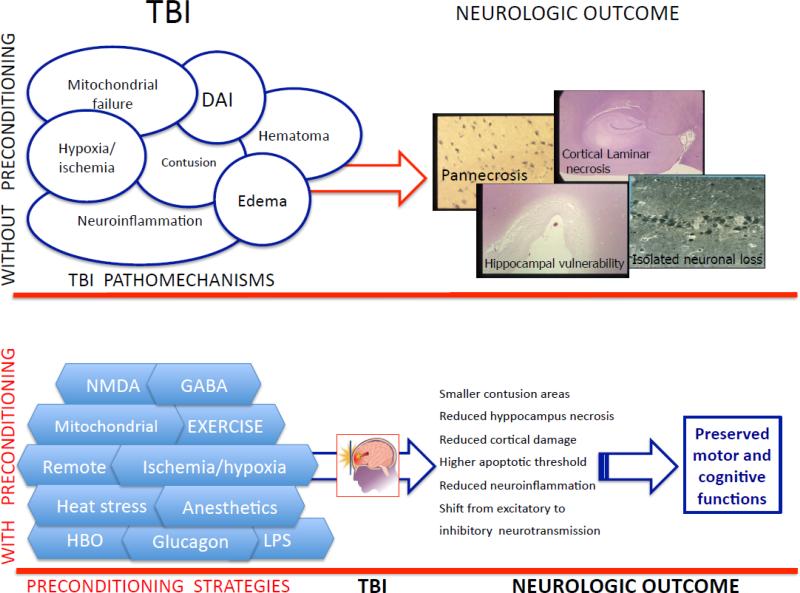
Fig.1
Fig.1. Schematic representation of the effect of preconditioning in traumatic brain injury (TBI)
In the upper part of the illustration, the main pathomechanisms responsible for the injurious cascade after TBI are represented, which can result in different kind of brain damage and adversely affect neurologic outcome. In the lower part of the figure, preconditioning strategies applied before TBI, acting alone or in combination, result in the phenomenon of preconditioning, which may reduce the extent of subsequent brain damage and result in improved neurologic outcome.
Fig.2
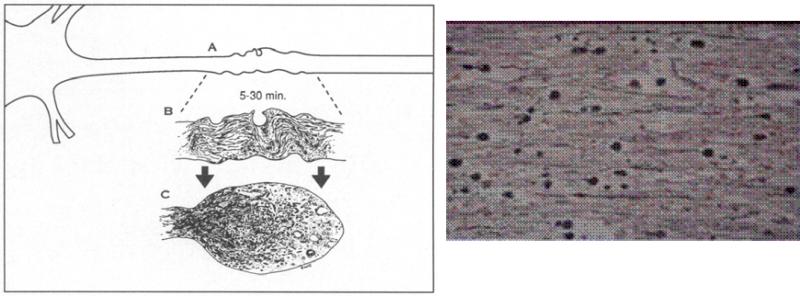
Fig.2. Microscopic characteristics in DAI
a) Schematic illustration which shows the fate of the axon subjected to focal cytoskeletal perturbation[21]. At the site of injury (A) traumatically induced neurofilamentous misalignment detectable after a brief period of survival and depicted in this enlargement (B) results in focal impairment of axonal transport. The subsequent accumulation of organelles results in formation of a reactive axonal swelling, its continued expansion, and its eventual disconnection (C) from the distal segment of the axon, often by 6 h. b) Microscopic image of retraction balls (silver stain×800). This is the most representative, microscopic feature of DAI.
Fig.3
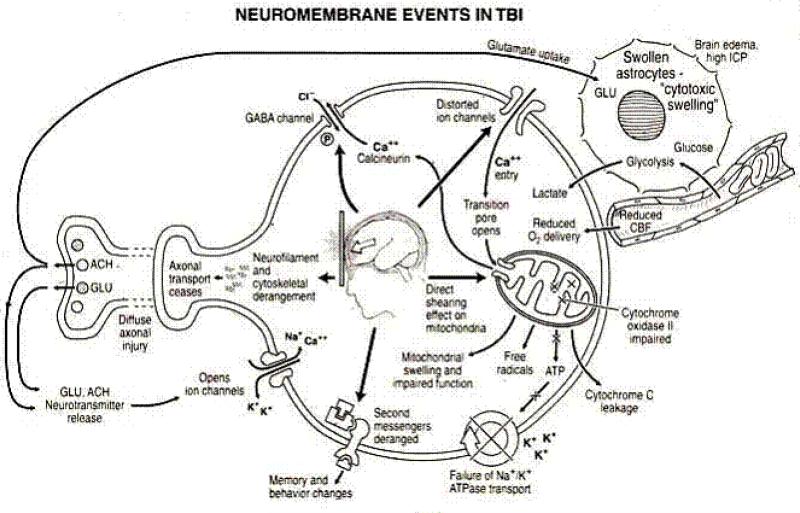
Fig.3. Neuromembrane events in post traumatic phase
Neurotransmitter release causes the opening of ion channels and influx of Na+ and Ca++, The resultant combination of intracellular volume and Ca2+ overload induces cell swelling, plasma membrane swelling, necrosis, and apoptosis and leads to the activation of destructive enzymes[112].
Fig.4
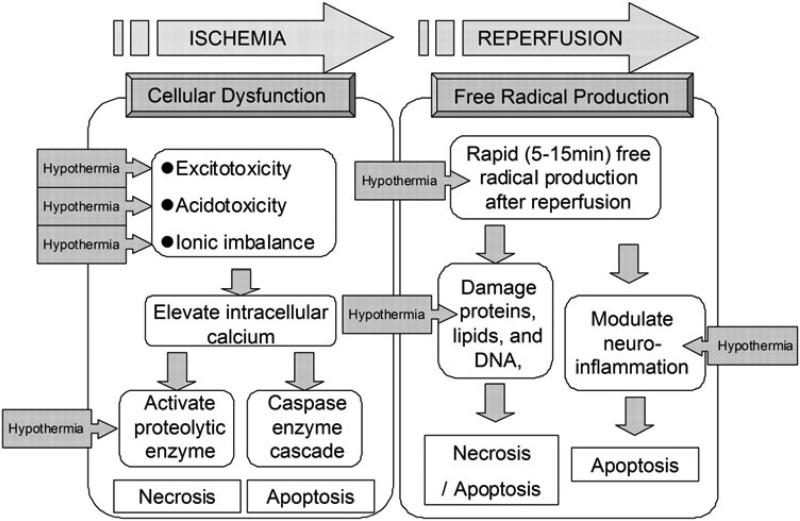
Fig.4. Schematic illustrating the mechanisms of ischemic/reperfusional (I/R) injury and the effects of therapeutic hypothermia
The pathology of I/R injury is approximately separated as two mechanisms, that is, the cell death after cellular dysfunction in ischemic phase, and the free radical production in reperfusion phase. The boxed arrow with entered “Hypothermia” means the estimated effective points in I/R cascade (illustration from 〔53〕)
Fig.5
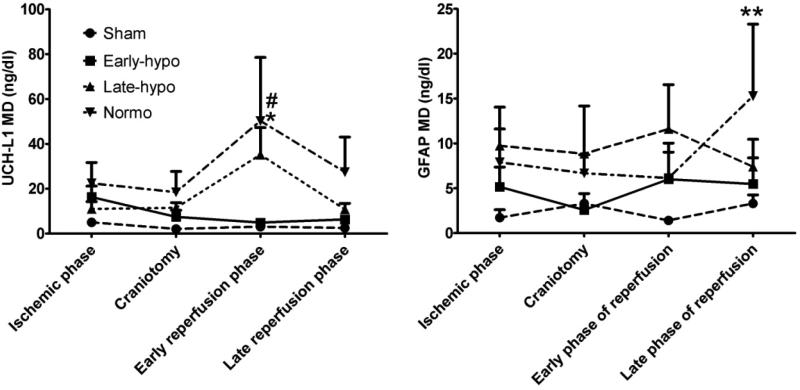
Fig.5. Efficacy of hypothermic preconditioning for reperfusional injury in the decompressive craniotomy ASDH rat model
Ubiquitin carboxyl-terminal hydrolase -L1 (UCH-L1) and GFAP concentrations in microdialysate. In early phase of reperfusion UCH-L1 MD concentration in normothermia group was highest and significantly higher than sham rat group (*; p<0.01). Also, UCH-L1 MD in early hypothermia group was significantly lower than normothermia group (#; p<0.01). GFAP concentration in normothermia was highest and peaked in the late phase of reperfusion (**; p<0.05 vs sham). Abbreviations; E-Hypo; early hypothermia group, L-Hypo; late hypothermia group, Normo; normothermia group.

References

    1. Langlois JA, Marr A, Mitchko J, Johnson RL. Tracking the silent epidemic and educating the public: CDC's traumatic brain injury-associated activities under the TBI Act of 1996 and the Children's Health Act of 2000. J Head Trauma Rehabil. 2005;20(3):196–204. - PubMed
    1. Binder S, Corrigan JD, Langlois JA. The public health approach to traumatic brain injury: an overview of CDC's research and programs. J Head Trauma Rehabil. 2005;20(3):189–95. - PubMed
    1. Fu ES, Tummala RP. Neuroprotection in brain and spinal cord trauma. Curr Opin Anaesthesiol. 2005;18(2):181–7. doi:10.1097/01.aco.0000162838.56344.88. - PubMed
    1. Vink R, Nimmo AJ. Multifunctional drugs for head injury. Neurotherapeutics. 2009;6(1):28–42. doi:10.1016/j.nurt.2008.10.036. - PMC - PubMed
    1. Cole TB. Global road safety crisis remedy sought: 1.2 million killed, 50 million injured annually. JAMA. 2004;291(21):2531–2. doi:10.1001/jama.291.21.2531. - PubMed

Publication types

LinkOut - more resources