


Vascular neural network phenotypic transformation after traumatic injury: potential role in long-term sequelae
- PMID: 24323723
- PMCID: PMC4028405
- DOI: 10.1007/s12975-013-0304-z
Vascular neural network phenotypic transformation after traumatic injury: potential role in long-term sequelae
Abstract
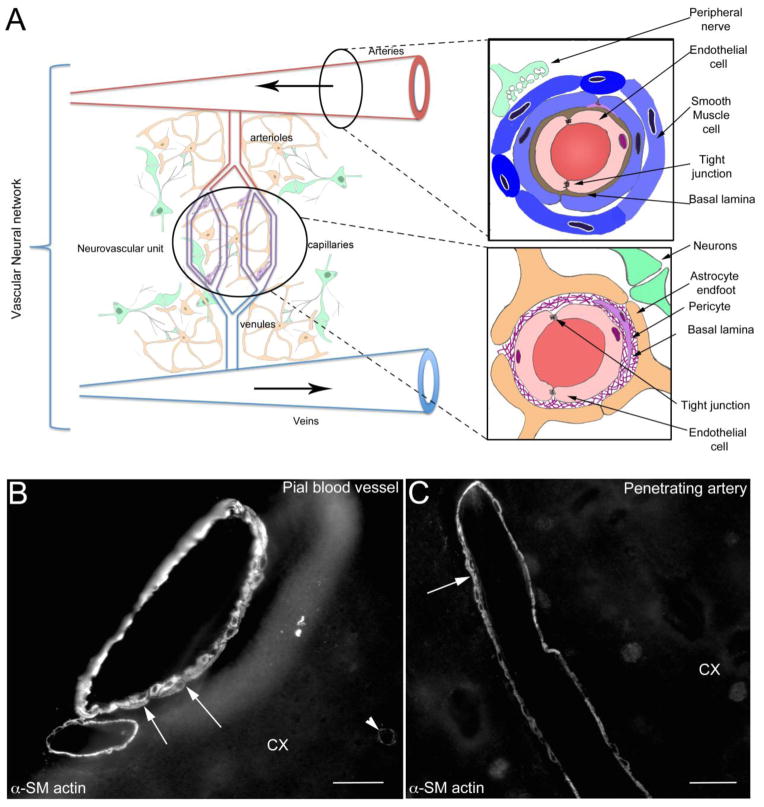
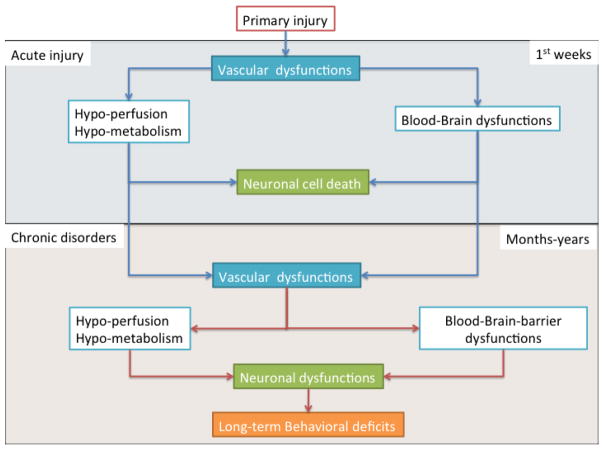
The classical neurovascular unit (NVU), composed primarily of endothelium, astrocytes, and neurons, could be expanded to include smooth muscle and perivascular nerves present in both the up- and downstream feeding blood vessels (arteries and veins). The extended NVU, which can be defined as the vascular neural network (VNN), may represent a new physiological unit to consider for therapeutic development in stroke, traumatic brain injury, and other brain disorders (Zhang et al., Nat Rev Neurol 8(12):711-716, 2012). This review is focused on traumatic brain injury and resultant post-traumatic changes in cerebral blood flow, smooth muscle cells, matrix, blood-brain barrier structures and function, and the association of these changes with cognitive outcomes as described in clinical and experimental reports. We suggest that studies characterizing TBI outcomes should increase their focus on changes to the VNN, as this may yield meaningful therapeutic targets to resolve posttraumatic dysfunction.
Conflict of interest statement
Jerome Badaut and Gregory Bix declare that they have no conflict of interest.
Figures
References
-
- Coronado VG, Xu L, Basavaraju SV, McGuire LC, Wald MM, Faul MD, et al. Surveillance for traumatic brain injury-related deaths--United States, 1997–2007. MMWR Surveill Summ. 2011;60(5):1–32. ss6005a1 [pii] - PubMed
-
- Thurman D, Guerrero J. Trends in hospitalization associated with traumatic brain injury. JAMA. 1999;282(10):954–7. joc91173 [pii] - PubMed
Publication types
MeSH terms
Grants and funding
LinkOut - more resources
Full Text Sources
Other Literature Sources
