


Risk of preterm delivery associated with prior treatment of cervical precancerous lesion according to the depth of the cone
- PMID: 24324288
- PMCID: PMC3845428
- DOI: 10.1155/2013/686027
Risk of preterm delivery associated with prior treatment of cervical precancerous lesion according to the depth of the cone
Abstract
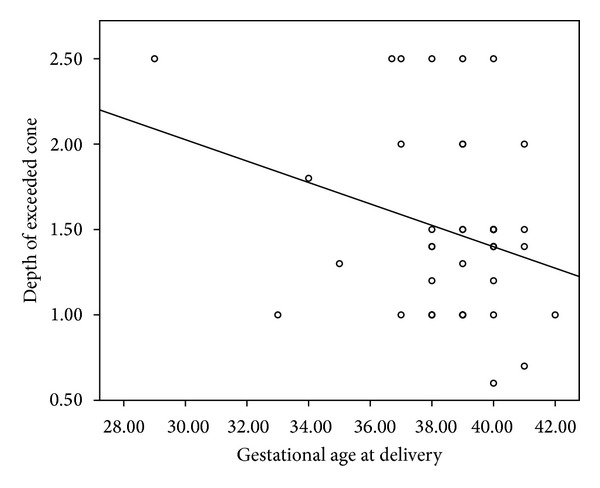
The aim of this study was to evaluate the impact of the surgical excisional procedures for cervical intraepithelial neoplasia (CIN) treatment both on subsequent fertility (cervical factor) and pregnancy complication (risk of spontaneous preterm delivery). We retrospectively analyzed 236 fertile women who underwent conization for CIN. We included in the study 47 patients who carried on pregnancy and delivered a viable fetus. Patients were asked about postconization pregnancies, obstetrical outcomes, and a possible diagnosis of secondary infertility caused by cervical stenosis. We evaluated the depth of surgical excision, the timing between cervical conization and subsequent pregnancies, surgical technique, and maternal age at delivery. We recorded 47 deliveries, 10 cases of preterm delivery; 8 of them were spontaneous. The depth of surgical excision showed a statistically significant inverse correlation with gestational age at birth. The risk of spontaneous preterm delivery increased when conization depth exceeded a cut-off value of 1.5 cm. Our data do not demonstrated a relation between conization and infertility due to cervical stenosis.
Figures
References
-
- Mitchell MF, Hittelman WN, Hong WK, Lotan R, Schottenfeld D. The natural history of cervical intraepithelial neoplasia: an argument for intermediate endpoint biomarkers. Cancer Epidemiology Biomarkers and Prevention. 1994;3(7):619–626. - PubMed
-
- McCredie MR, Sharples KJ, Paul C, et al. Natural history of cervical neoplasia and risk of invasive cancer in women with cervical intraepithelial neoplasia 3: a retrospective cohort study. The Lancet Oncology. 2008;9(5):425–434. - PubMed
-
- Saccardi C, Gizzo S, Noventa M, et al. High-riskhuman papillomavirus DNA test: could it be useful in low-grade cervical lesion triage? five-year follow-Up. Reproductive Sciences. In press. - PubMed
-
- Wright TC, Jr., Massad LS, Dunton CJ, Spitzer M, Wilkinson EJ, Solomon D. 2006 consensus guidelines for the management of women with cervical intraepithelial neoplasia or adenocarcinoma in situ. American Journal of Obstetrics and Gynecology. 2007;197(4):340–345. - PubMed
-
- Jordan J, Arbyn M, Martin-Hirsch P, et al. European guidelines for quality assurance in cervical cancer screening: recommendations for clinical management of abnormal cervical cytology, part 1. Cytopathology. 2008;19(6):342–354. - PubMed
MeSH terms
LinkOut - more resources
Full Text Sources
Other Literature Sources
Medical
