


A nonsense mutation in the IKBKG gene in mares with incontinentia pigmenti
- PMID: 24324710
- PMCID: PMC3852476
- DOI: 10.1371/journal.pone.0081625
A nonsense mutation in the IKBKG gene in mares with incontinentia pigmenti
Abstract
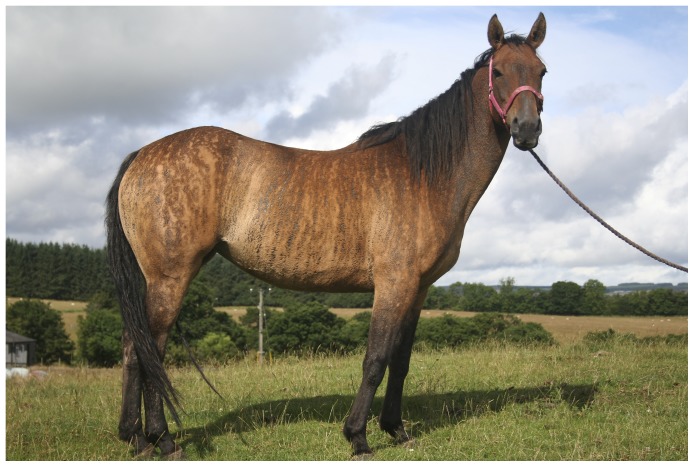
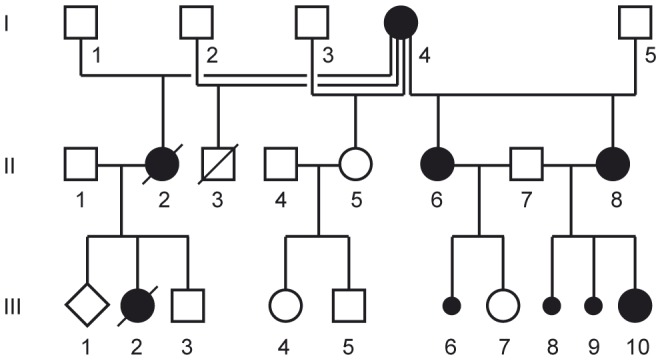
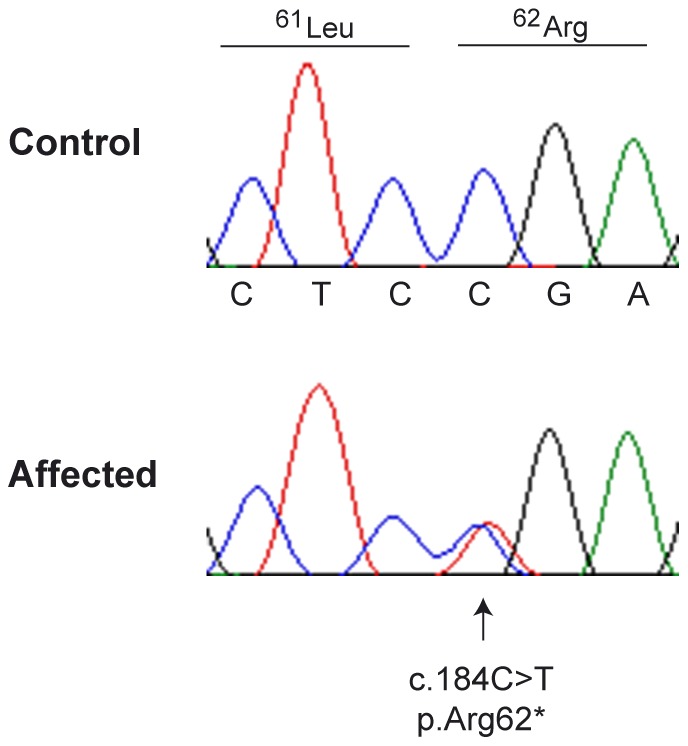
Ectodermal dysplasias (EDs) are a large and heterogeneous group of hereditary disorders characterized by abnormalities in structures of ectodermal origin. Incontinentia pigmenti (IP) is an ED characterized by skin lesions evolving over time, as well as dental, nail, and ocular abnormalities. Due to X-linked dominant inheritance IP symptoms can only be seen in female individuals while affected males die during development in utero. We observed a family of horses, in which several mares developed signs of a skin disorder reminiscent of human IP. Cutaneous manifestations in affected horses included the development of pruritic, exudative lesions soon after birth. These developed into wart-like lesions and areas of alopecia with occasional wooly hair re-growth. Affected horses also had streaks of darker and lighter coat coloration from birth. The observation that only females were affected together with a high number of spontaneous abortions suggested an X-linked dominant mechanism of transmission. Using next generation sequencing we sequenced the whole genome of one affected mare. We analyzed the sequence data for non-synonymous variants in candidate genes and found a heterozygous nonsense variant in the X-chromosomal IKBKG gene (c.184C>T; p.Arg62*). Mutations in IKBKG were previously reported to cause IP in humans and the homologous p.Arg62* variant has already been observed in a human IP patient. The comparative data thus strongly suggest that this is also the causative variant for the observed IP in horses. To our knowledge this is the first large animal model for IP.
Conflict of interest statement
Figures
References
-
- García-Martín P, Hernández-Martín A, Torrelo A (2013) Ectodermal dysplasias: A clinical and molecular review. Actas Dermosifiliogr 104: 451–470. - PubMed
-
- Priolo M (2009) Ectodermal dysplasias: an overview and update of clinical and molecular-functional mechanism. Am J Med Genet A 149A: 2003–2013. - PubMed
-
- Wright JT, Morris C, Clements SE, D'Souza R, Gaide O, et al. (2009) Classifying ectodermal dysplasias: Incorporating the molecular basis and pathways (Workshop II). Am J Med Genet A 149A: 2062–2067. - PubMed
-
- Drögemüller C, Peters M, Pohlenz J, Distl O, Leeb T (2002) A single point mutation within the ED1 gene disrupts correct splicing at two different splice sites and leads to anhidrotic ectodermal dysplasia in cattle. J Mol Med 80: 319–323. - PubMed
Publication types
MeSH terms
Substances
LinkOut - more resources
Full Text Sources
Other Literature Sources
Miscellaneous
