


Serum albumin and body weight as biomarkers for the antemortem identification of bone and gastrointestinal disease in the common marmoset
- PMID: 24324827
- PMCID: PMC3855796
- DOI: 10.1371/journal.pone.0082747
Serum albumin and body weight as biomarkers for the antemortem identification of bone and gastrointestinal disease in the common marmoset
Abstract
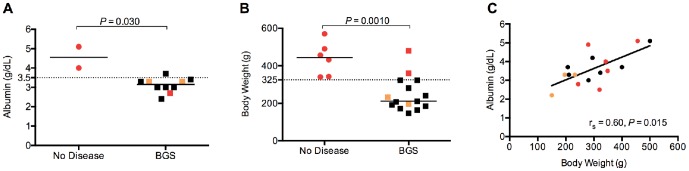
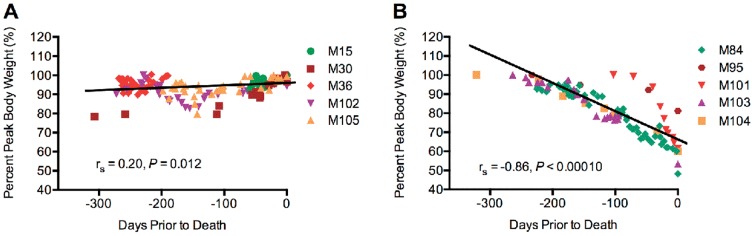
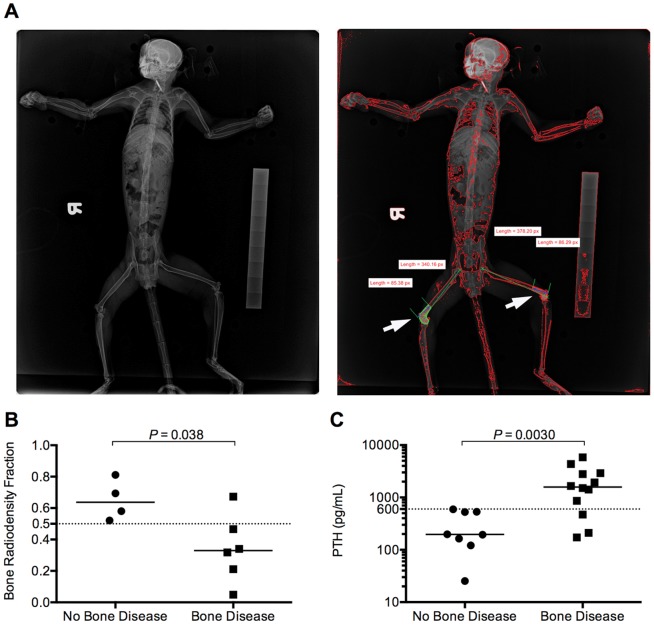
The increasing use of the common marmoset (Callithrix jacchus) in research makes it important to diagnose spontaneous disease that may confound experimental studies. Bone disease and gastrointestinal disease are two major causes of morbidity and mortality in captive marmosets, but currently no effective antemortem tests are available to identify affected animals prior to the terminal stage of disease. In this study we propose that bone disease and gastrointestinal disease are associated disease entities in marmosets and aim to establish the efficacy of several economical antemortem tests in identifying and predicting disease. Tissues from marmosets were examined to define affected animals and unaffected controls. Complete blood count, serum chemistry values, body weight, quantitative radiographs, and tissue-specific biochemical markers were evaluated as candidate biomarkers for disease. Bone and gastrointestinal disease were associated, with marmosets being over seven times more likely to have either concurrent bone and gastrointestinal disease or neither disease as opposed to lesions in only one organ system. When used in tandem, serum albumin <3.5 g/dL and body weight <325 g identified 100% of the marmosets affected with concurrent bone and gastrointestinal disease. Progressive body weight loss of 0.05% of peak body weight per day predicted which marmosets would develop disease prior to the terminal stage. Bone tissue-specific tests, such as quantitative analysis of radiographs and serum parathyroid hormone levels, were effective for distinguishing between marmosets with bone disease and those without. These results provide an avenue for making informed decisions regarding the removal of affected marmosets from studies in a timely manner, preserving the integrity of research results.
Conflict of interest statement
Figures
References
-
- Mansfield K (2003) Marmoset models commonly used in biomedical research. Comp Med 53: 383–392. - PubMed
-
- Abbott DH, Barnett DK, Colman RJ, Yamamoto ME, Schultz-Darken NJ (2003) Aspects of common marmoset basic biology and life history important for biomedical research. Comp Med 53: 339–350. - PubMed
-
- Scott L (1994) The marmoset: role in pharmaceutical development. Fowler JSL, editor Ipswich, UK: Pharmaco LSR. pp. 1–5.
-
- Mansfield K, Tardif S, Eichler E (2004) White Paper for Complete Sequencing of the Common Marmoset (Callithrix jacchus) genome.
Publication types
MeSH terms
Substances
Grants and funding
LinkOut - more resources
Full Text Sources
Other Literature Sources
Medical
