


A comparative analysis of biomarker selection techniques
- PMID: 24324960
- PMCID: PMC3842054
- DOI: 10.1155/2013/387673
A comparative analysis of biomarker selection techniques
Abstract
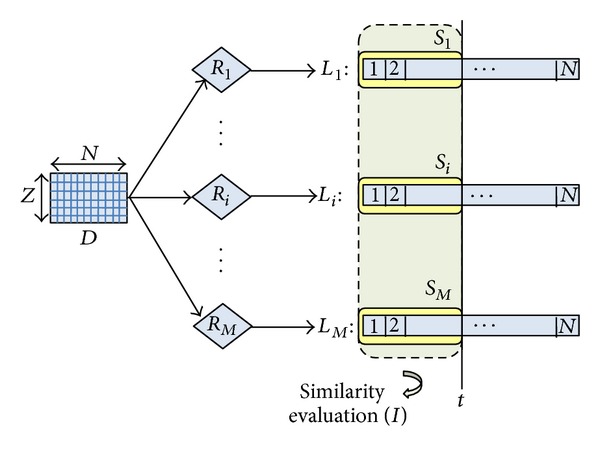
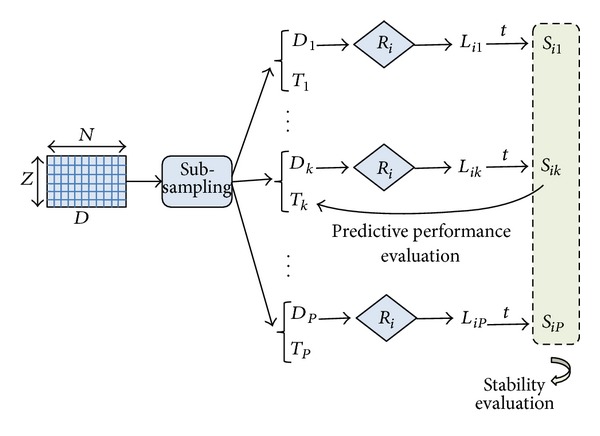
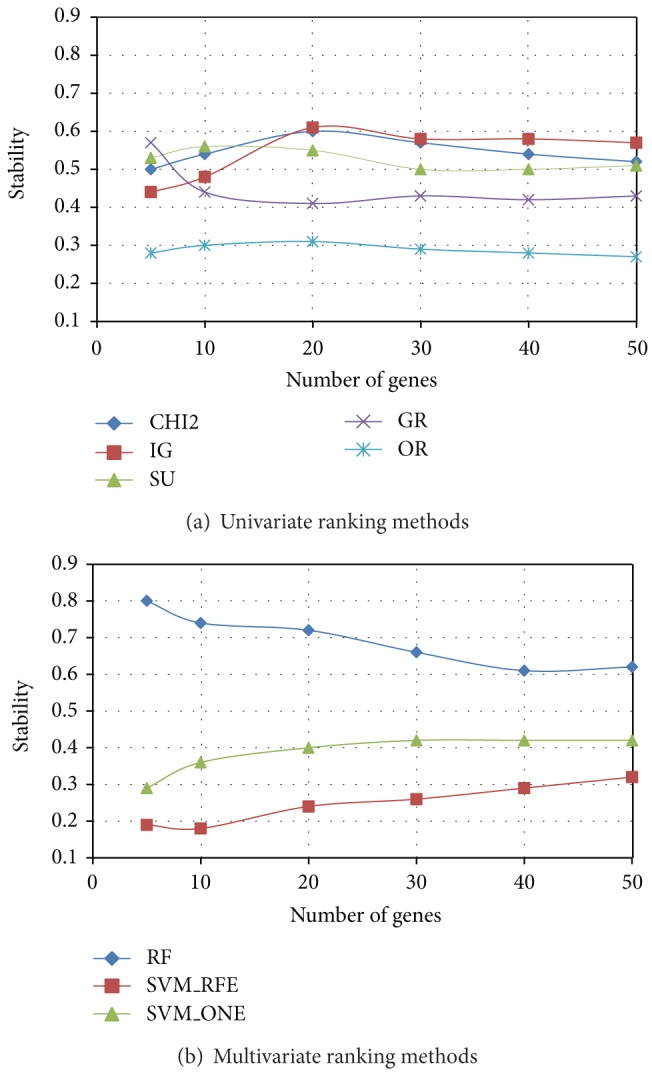
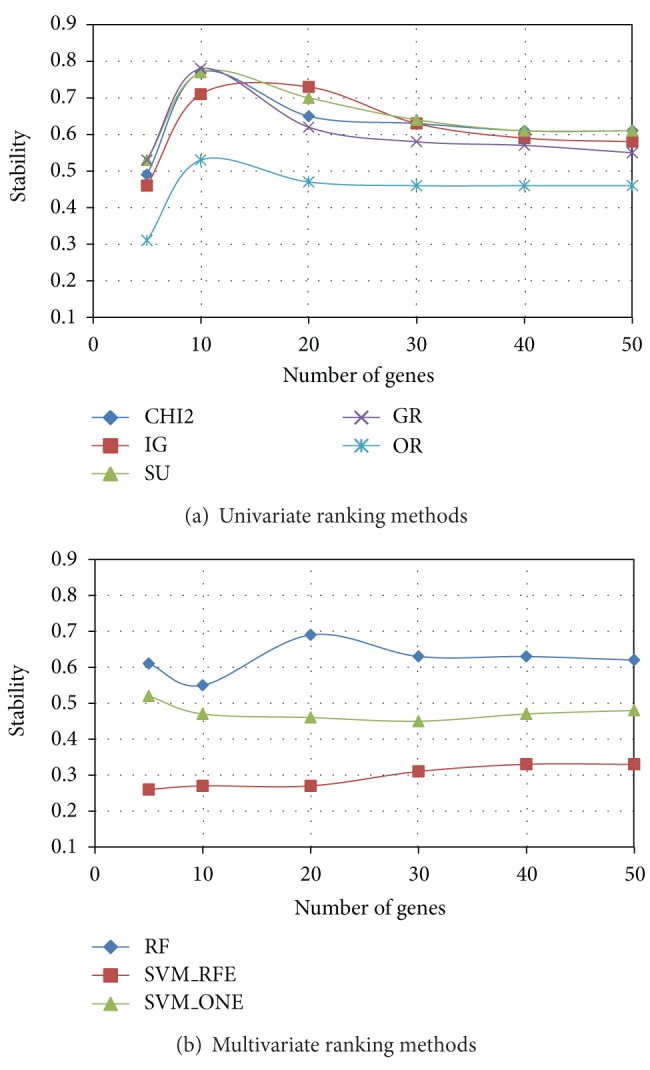
Feature selection has become the essential step in biomarker discovery from high-dimensional genomics data. It is recognized that different feature selection techniques may result in different set of biomarkers, that is, different groups of genes highly correlated to a given pathological condition, but few direct comparisons exist which quantify these differences in a systematic way. In this paper, we propose a general methodology for comparing the outcomes of different selection techniques in the context of biomarker discovery. The comparison is carried out along two dimensions: (i) measuring the similarity/dissimilarity of selected gene sets; (ii) evaluating the implications of these differences in terms of both predictive performance and stability of selected gene sets. As a case study, we considered three benchmarks deriving from DNA microarray experiments and conducted a comparative analysis among eight selection methods, representatives of different classes of feature selection techniques. Our results show that the proposed approach can provide useful insight about the pattern of agreement of biomarker discovery techniques.
Figures
References
-
- Arthur JA, Colburn WA, DeGruttola VG, et al. Biomarkers and surrogate endpoints: preferred definitions and conceptual framework. Clinical Pharmacology and Therapeutics. 2001;69(3):89–95. - PubMed
-
- Saeys Y, Inza I, Larrañaga P. A review of feature selection techniques in bioinformatics. Bioinformatics. 2007;23(19):2507–2517. - PubMed
-
- Ioannidis JPA. Microarrays and molecular research: noise discovery? The Lancet. 2005;365(9458):454–455. - PubMed
Publication types
MeSH terms
Substances
LinkOut - more resources
Full Text Sources
Other Literature Sources
Research Materials
