


Skeletal and dental effects produced by functional regulator-2 in pre-pubertal class II patients: a controlled study
- PMID: 24325832
- PMCID: PMC4394410
- DOI: 10.1186/2196-1042-14-18
Skeletal and dental effects produced by functional regulator-2 in pre-pubertal class II patients: a controlled study
Abstract
Background: Whether skeletal effects are obtained by functional appliances in class II subjects is still controversial. In this regard, most of the available studies did not clearly identify the growth phases (i.e. pubertal or not) of the treated patients. This retrospective controlled study aimed at evaluating the skeletal and dental changes in class II subjects produced by the functional regulator (FR)-2 treatment during the pre-pubertal growth phase.
Methods: The data were derived from records obtained at a university dental clinic. A total of 17 treated subjects and a total of 17 untreated controls, all pre-pubertal, matched for malocclusion, age (8.8±1.5 years) and sex (18 females, 16 males), were included. The overall observational period was 1.6±0.8 years for both groups.
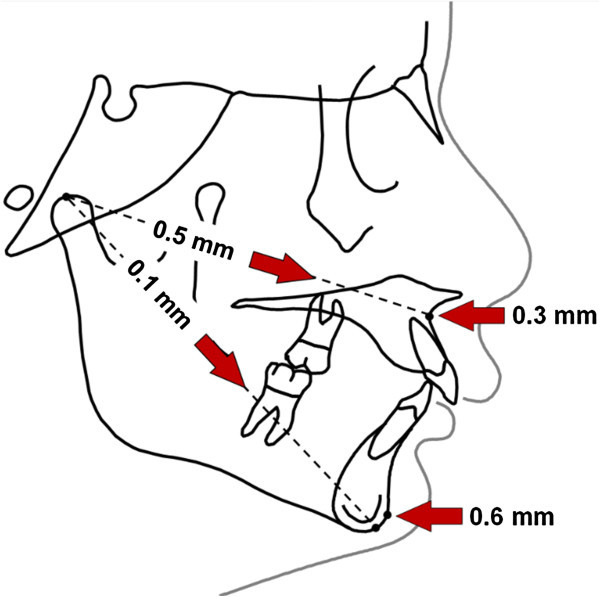
Results: Only minor skeletal changes with very little clinical relevance were seen after the observational period. Most of the changes produced by the FR-2 treatment were at the dental level including palatal tipping of the maxillary incisors and slight proclination of the mandibular incisors, both accounting for the noteworthy overjet reduction.
Conclusions: The present study has shown that functional treatment of class II malocclusion by FR-2 appliance during the pre-pubertal growth phase is limited to modification at the dental level.
Figures

References
-
- Proffit WR, Fields HW, Jr, Moray LJ. Prevalence of malocclusion and orthodontic treatment need in the United States: estimates from the NHANES III survey. Int J Adult Orthodon Orthognath Surg. 1998;13:97–106. - PubMed
-
- Perinetti G, Cordella C, Pellegrini F, Esposito P. The prevalence of malocclusal traits and their correlations in mixed dentition children: results from the Italian OHSAR Survey. Oral Health Prev Dent. 2008;6:119–29. - PubMed
-
- McNamara JA., Jr Components of class II malocclusion in children 8–10 years of age. Angle Orthod. 1981;51:177–202. - PubMed
-
- Cozza P, Baccetti T, Franchi L, De Toffol L, McNamara JA., Jr Mandibular changes produced by functional appliances in class II malocclusion: a systematic review. Am J Orthod Dentofacial Orthop. 2006;129:599 e1–599 e12. - PubMed
Publication types
MeSH terms
LinkOut - more resources
Full Text Sources
Other Literature Sources
