


Hypothermic endpoint for an intranasal invasive pulmonary aspergillosis mouse model
- PMID: 24326222
- PMCID: PMC3866986
Hypothermic endpoint for an intranasal invasive pulmonary aspergillosis mouse model
Abstract
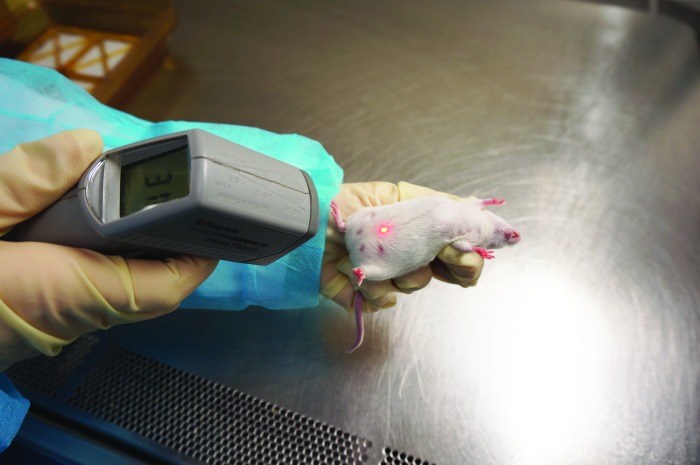
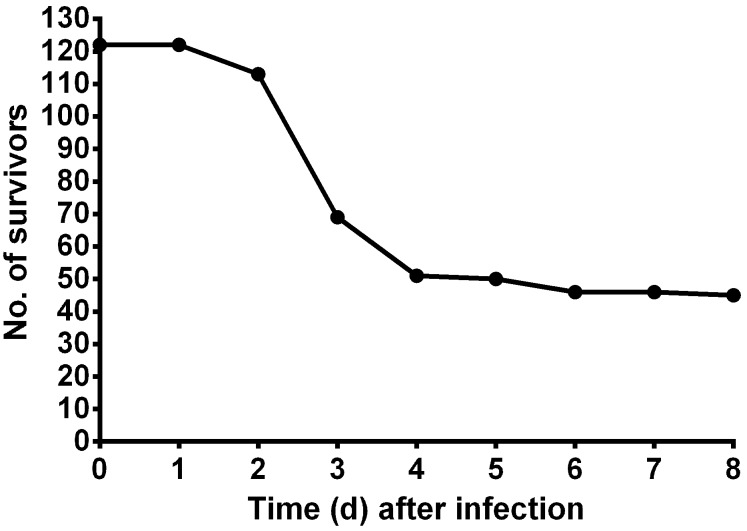
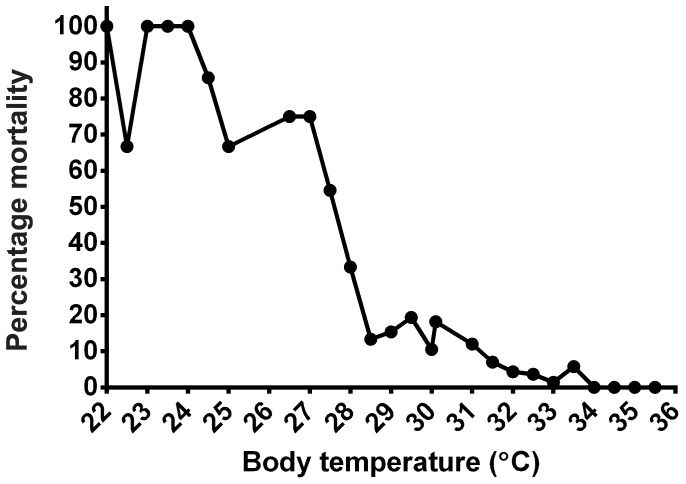
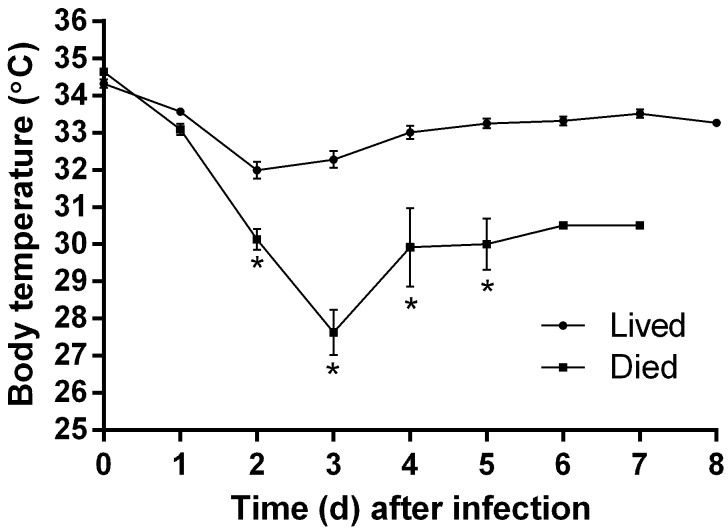
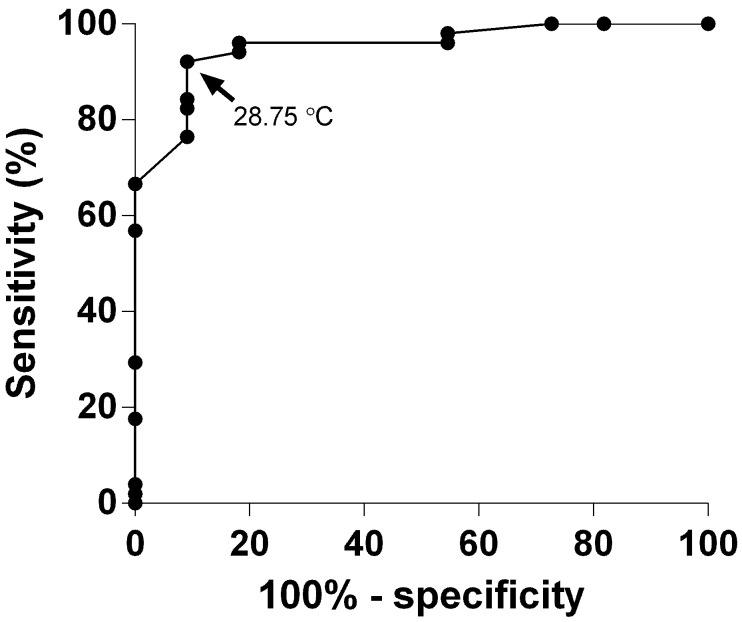
Immunocompromised mice were infected intranasally with Aspergillus fumigatus as part of a vaccine efficacy study. Although body temperature was measured throughout the study, a formal evaluation of its usefulness as an endpoint criterion was not performed. We retrospectively evaluated survival data and temperature records to determine whether body temperature can be used as an objective predictor of death and included in the humane endpoint criteria for this mouse model. CF1 mice were immunosuppressed with either cortisone acetate or by treatment with antiGR1 (a neutrophil-depleting antibody) and then intranasally challenged with A. fumigatus. Body temperature was measured by using an infrared noncontact thermometer a maximum of 3 times daily until death or euthanasia. A surface body temperature below 29.0 °C was correlated with a poor chance of survival, and using this cutoff point with signs of morbidity (hunched, ruffled fur, respiratory distress) reliably indicates mice for euthanasia without negatively affecting data collection. Using 2 subsequent readings of less than 31.0 °C as an endpoint would have led to premature euthanasia of only one mouse (2.2%). As a single reading, a body temperature of 28.8 °C had a sensitivity of 92.2% and specificity of 90.9%. Hypothermia proved to be a useful addition to the humane endpoint criteria for this mouse model, and veterinary and research groups should discuss their study needs in relation to animal welfare to best determine the most appropriate means of including this parameter.
Figures
References
-
- Ben-Ami R, Lewis RE, Kontoyiannis DP. 2010. Enemy of the (immunosuppressed) state: an update on the pathogenesis of Aspergillus fumigatus infection. Br J Haematol 150:406–417 - PubMed
-
- Clemons KV, Stevens DA. 2005. The contribution of animal models of aspergillosis to understanding pathogenesis, therapy, and virulence. Med Mycol 43:S101–S110 - PubMed
-
- Fawcett T. 2006. An introduction to ROC analysis. Pattern Recognit Lett 27:861–874
Publication types
MeSH terms
Grants and funding
LinkOut - more resources
Full Text Sources
Medical