


Regulation of β-cell function by RNA-binding proteins
- PMID: 24327951
- PMCID: PMC3854999
- DOI: 10.1016/j.molmet.2013.09.003
Regulation of β-cell function by RNA-binding proteins
Abstract
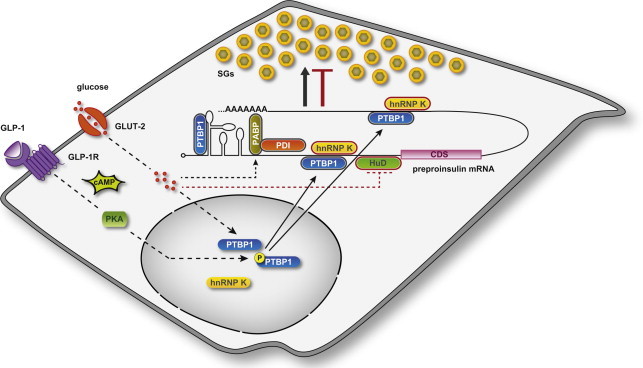
β-cells of the pancreatic islets are highly specialized and high-throughput units for the production of insulin, the key hormone for maintenance of glucose homeostasis. Elevation of extracellular glucose and/or GLP-1 levels triggers a rapid upregulation of insulin biosynthesis through the activation of post-transcriptional mechanisms. RNA-binding proteins are emerging as key factors in the regulation of these mechanisms as well as in other aspects of β-cell function and glucose homeostasis at large, and thus may be implicated in the pathogenesis of diabetes. Here we review current research in the field, with a major emphasis on RNA-binding proteins that control biosynthesis of insulin and other components of the insulin secretory granules by modulating the stability and translation of their mRNAs.
Keywords: Diabetes; Insulin; RNA-binding proteins; Translation; mRNA stability; β-cells.
Figures
References
-
- Dodson G., Steiner D. The role of assembly in insulin's biosynthesis. Current Opinion in Structural Biology. 1998;8:189–194. - PubMed
-
- Rorsman P., Renström E. Insulin granule dynamics in pancreatic beta cells. Diabetologia. 2003;46:1029–1045. - PubMed
-
- Suckale J., Solimena M. The insulin secretory granule as a signaling hub. Trends in Endocrinology and Metabolism. 2010;21:599–609. - PubMed
-
- Goodge K.A., Hutton J.C. Translational regulation of proinsulin biosynthesis and proinsulin conversion in the pancreatic beta-cell. Seminars in Cell & Developmental Biology. 2000;11:235–242. - PubMed
Publication types
LinkOut - more resources
Full Text Sources
Other Literature Sources
