


Diet-induced changes in the Lean Brain: Hypercaloric high-fat-high-sugar snacking decreases serotonin transporters in the human hypothalamic region
- PMID: 24327957
- PMCID: PMC3855045
- DOI: 10.1016/j.molmet.2013.07.006
Diet-induced changes in the Lean Brain: Hypercaloric high-fat-high-sugar snacking decreases serotonin transporters in the human hypothalamic region
Abstract
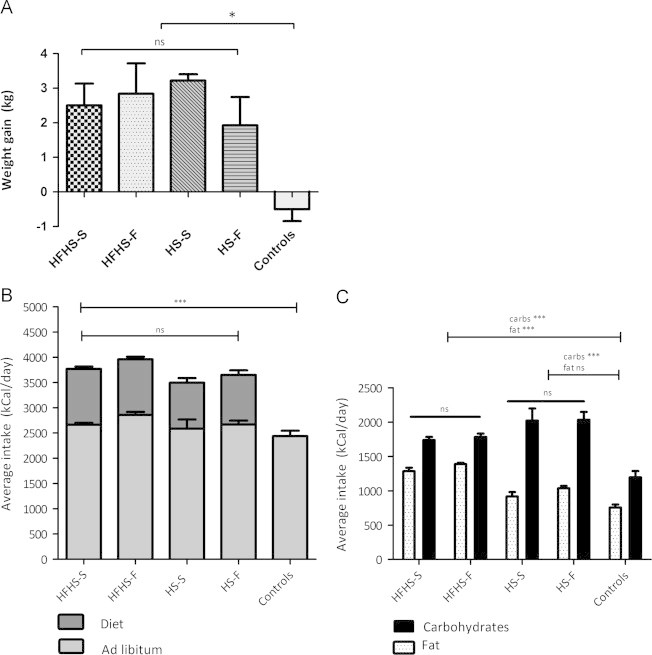
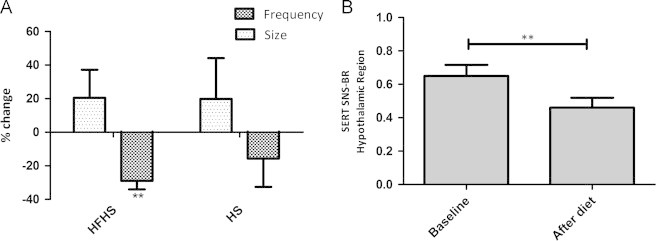
It is evident that there is a relationship between the brain's serotonin system and obesity. Although it is clear that drugs affecting the serotonin system regulate appetite and food intake, it is unclear whether changes in the serotonin system are cause or consequence of obesity. To determine whether obesogenic eating habits result in reduced serotonin transporter (SERT)-binding in the human hypothalamic region, we included 25 lean, male subjects who followed a 6-week-hypercaloric diet, which were high-fat-high-sugar (HFHS) or high-sugar (HS) with increased meal size or -frequency (=snacking pattern). We measured SERT-binding in the hypothalamic region with SPECT. All hypercaloric diets significantly increased body weight by 3-3.5%. Although there were no differences in total calories consumed between the diets, only a hypercaloric HFHS-snacking diet decreased SERT-binding significantly by 30%. We here show for the first time in humans that snacking may change the serotonergic system increasing the risk to develop obesity.
Keywords: Fat; Human imaging; Hypercaloric diet; Meal pattern; Serotonin transporters; Sugar.
Figures
References
-
- Horvath T.L. The hardship of obesity: a soft-wired hypothalamus. Nature Neuroscience. 2005;8:561–565. - PubMed
-
- Morrison C.D., Berthoud H.R. Neurobiology of nutrition and obesity. Nutrition Reviews. 2007;65:517–534. - PubMed
-
- Lam D.D., Garfield A.S., Marston O.J., Shaw J., Heisler L.K. Brain serotonin system in the coordination of food intake and body weight. Pharmacology Biochemistry & Behavior. 2010;97:84–91. - PubMed
-
- Halford J.C., Harrold J.A., Boyland E.J., Lawton C.L., Blundell J.E. Serotonergic drugs: effects on appetite expression and use for the treatment of obesity. Drugs. 2007;67:27–55. - PubMed
-
- Breisch S.T., Zemlan F.P., Hoebel B.G. Hyperphagia and obesity following serotonin depletion by intraventricular p-chlorophenylalanine. Science. 1976;192:382–385. - PubMed
LinkOut - more resources
Full Text Sources
Other Literature Sources
