Cigarette smoking and mental illness: a study of nicotine withdrawal
- PMID: 24328637
- PMCID: PMC3935702
- DOI: 10.2105/AJPH.2013.301502
Cigarette smoking and mental illness: a study of nicotine withdrawal
Abstract
Objectives: We compared prevalence, severity, and specific symptom profiles for nicotine withdrawal across categories of mental illness. We also examined the influence of nicotine withdrawal on efforts to quit smoking among those with mental illness.
Methods: We analyzed data from 2 sources: wave 1 of the National Epidemiologic Survey on Alcohol and Related Conditions, limiting the sample to current smokers (2001-2002; n = 9913); and a 2-wave cohort telephone survey of a national sample of adult smokers (2004-2006; n = 751).
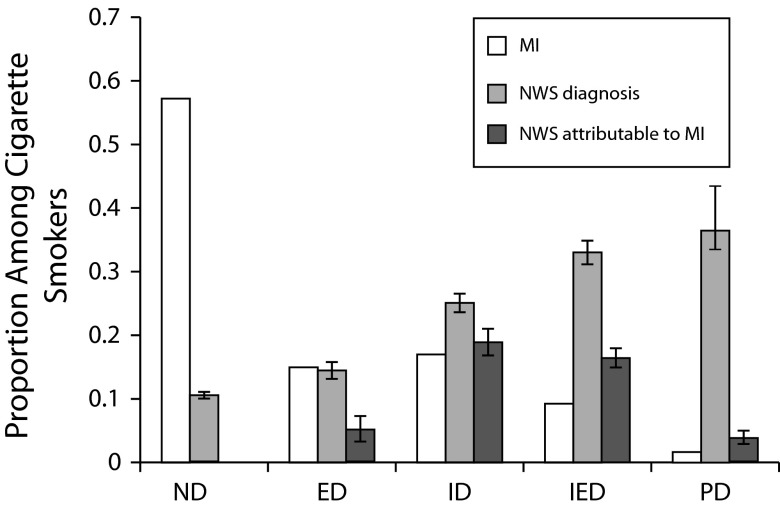
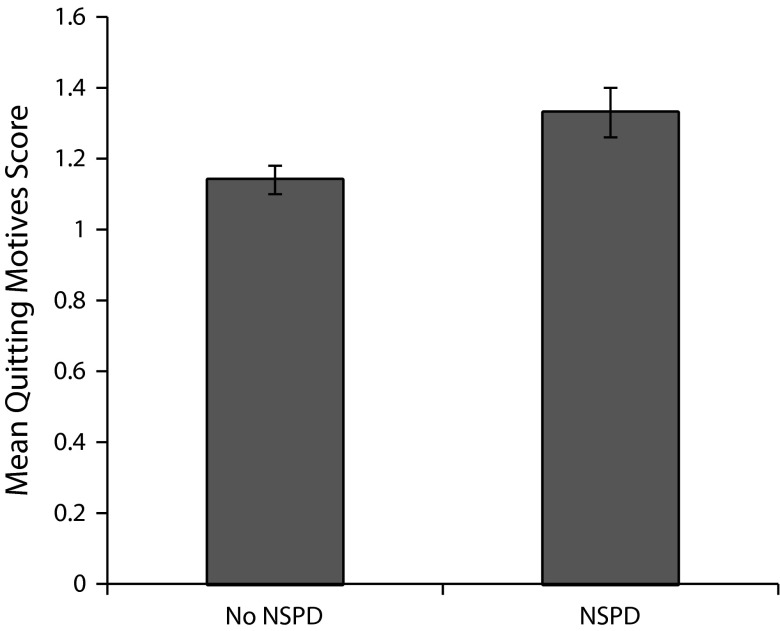
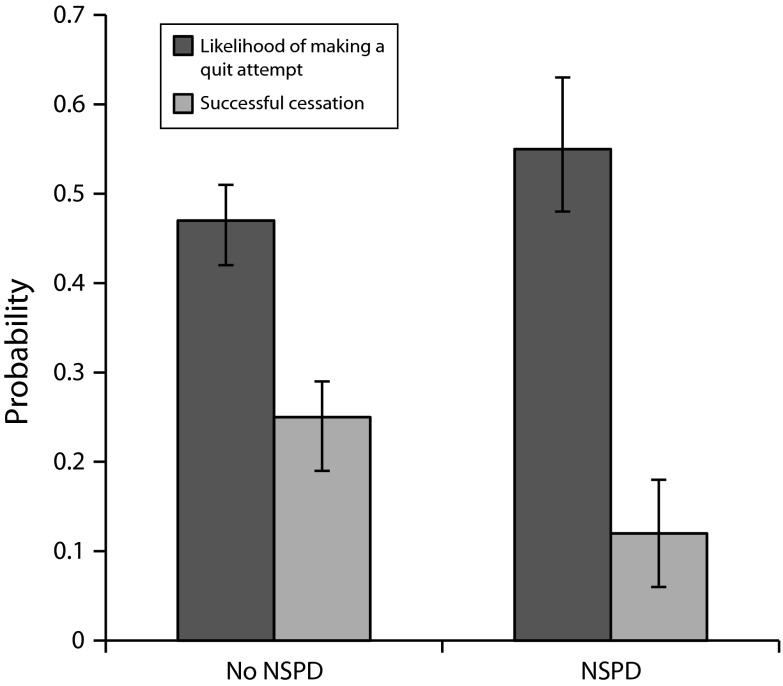
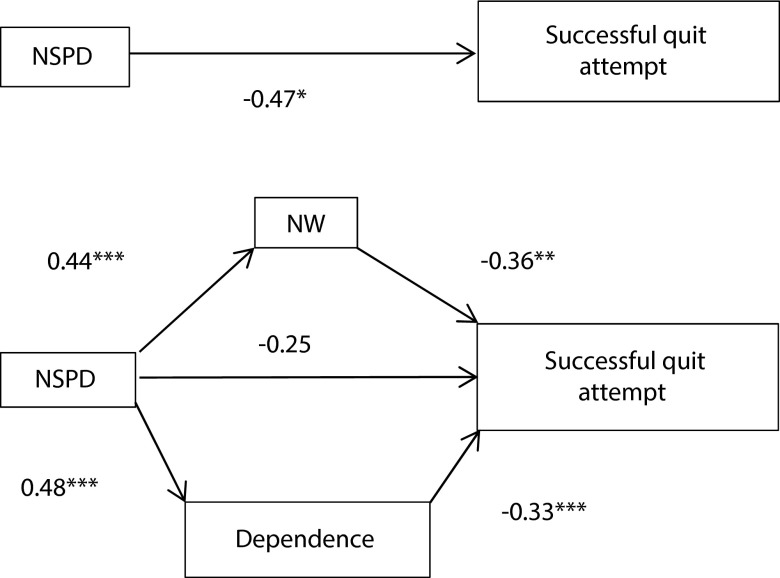
Results: Mental illness was associated with a substantially greater likelihood of nicotine withdrawal syndrome; approximately 44% of nicotine withdrawal syndrome diagnoses were attributable to mental illness. Symptom profiles were highly comparable between mental illness categories, although anxiety-related symptoms were better markers of withdrawal for those with an internalizing disorder. Smokers with mental illness were motivated to quit but were less likely to be successful in their quit attempts, and both dependence and withdrawal independently accounted for this lower likelihood of success.
Conclusions: Nicotine withdrawal may be a particularly important target for intervention among those with mental illness who smoke cigarettes.
Figures
References
-
- Lasser K, Boyd JW, Woolhandler S, Himmelstein DU, McCormick D, Bor DH. Smoking and mental illness. JAMA. 2000;284(20):2606–2610. - PubMed
-
- Grant BF, Hasin DS, Chou SP, Stinson FS, Dawson DA. Nicotine dependence and psychiatric disorders in the United States: results from the National Epidemiologic Survey on Alcohol and Related Conditions. Arch Gen Psychiatry. 2004;61(11):1107–1115. - PubMed
-
- Ziedonis D, Hitsman B, Beckham JC et al. Tobacco use and cessation in psychiatric disorders: National Institute of Mental Health report. Nicotine & Tobacco Research. 2008;10(12):1691–1715. - PubMed
-
- Harris JG, Kongs S, Allensworth D et al. Effects of nicotine on cognitive deficits in schizophrenia. Neuropsychopharmacology. 2004;29(7):1378–1385. - PubMed
-
- Picciotto MR, Brunzell DH, Caldarone BJ. Effect of nicotine and nicotinic receptors on anxiety and depression. Neuroreport. 2002;13(9):1097–1106. - PubMed
Publication types
MeSH terms
Substances
LinkOut - more resources
Full Text Sources
Other Literature Sources
Medical