


Basic research and clinical applications of bisphosphonates in bone disease: what have we learned over the last 40 years?
- PMID: 24330728
- PMCID: PMC3874605
- DOI: 10.1186/1479-5876-11-303
Basic research and clinical applications of bisphosphonates in bone disease: what have we learned over the last 40 years?
Abstract
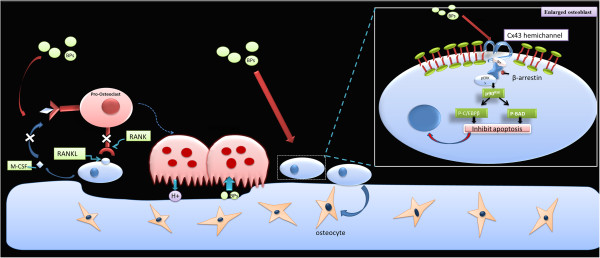
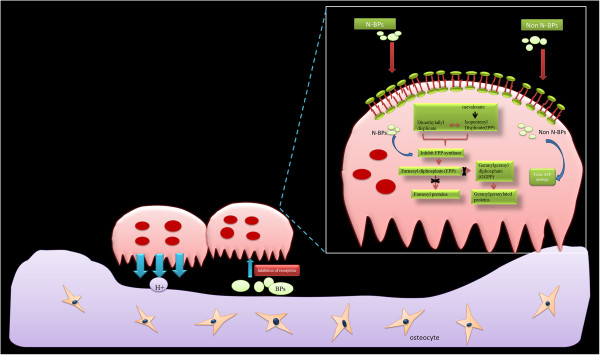
It is now 40 years since bisphosphonates (BPs) were first used in the clinic. So, it is timely to provide a brief review of what we have learned about these agents in bone disease. BPs are bone-specific and have been classified into two major groups on the basis of their distinct molecular modes of action: amino-BPs and non-amino-BPs. The amino-BPs are more potent and they inhibit farnesyl pyrophosphate synthase (FPPS), a key enzyme of the mavalonate/cholesterol biosynthetic pathway, while the non-amino-BPs inhibit osteoclast activity, by incorporation into non-hydrolyzable analogs of ATP. Both amino-BPs and non-amino-BPs can protect osteoblasts and osteocytes against apoptosis. The BPs are widely used in the clinic to treat various diseases characterized by excessive bone resorption, including osteoporosis, myeloma, bone metastasis, Legg-Perthes disease, malignant hyperparathyroidism, and other conditions featuring bone fragility. This review provides insights into some of the adverse effects of BPs, such as gastric irritation, osteonecrosis of the jaw, atypical femoral fractures, esophageal cancer, atrial fibrillation, and ocular inflammation. In conclusion, this review covers the biochemical and molecular mechanisms of action of BPs in bone, particularly the discovery that BPs have direct anti-apoptotic effects on osteoblasts and osteocytes, and the current situation of BP use in the clinic.
Figures
References
Publication types
MeSH terms
Substances
LinkOut - more resources
Full Text Sources
Other Literature Sources
Medical
