


Natural killer cell-mediated host defense against uropathogenic E. coli is counteracted by bacterial hemolysinA-dependent killing of NK cells
- PMID: 24331464
- PMCID: PMC3868942
- DOI: 10.1016/j.chom.2013.11.004
Natural killer cell-mediated host defense against uropathogenic E. coli is counteracted by bacterial hemolysinA-dependent killing of NK cells
Abstract
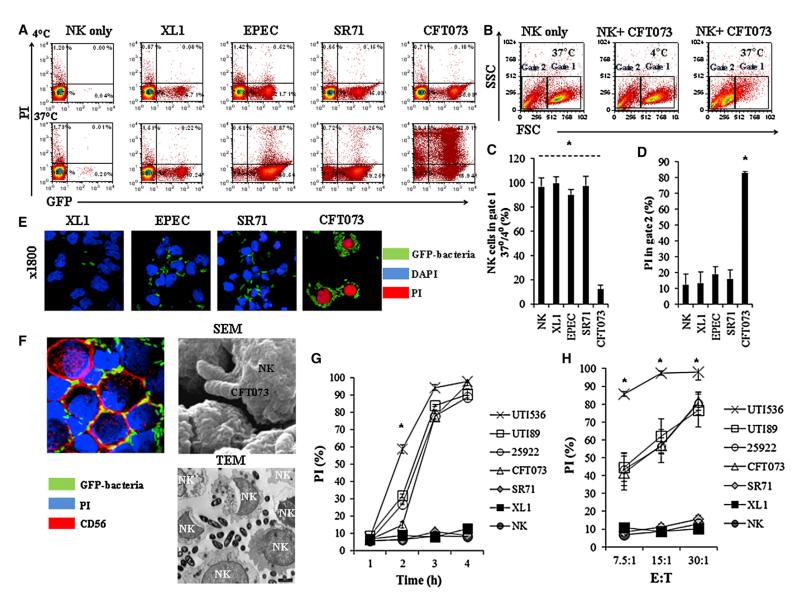
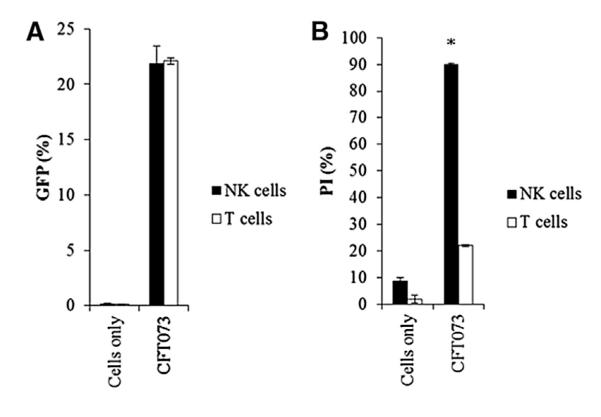
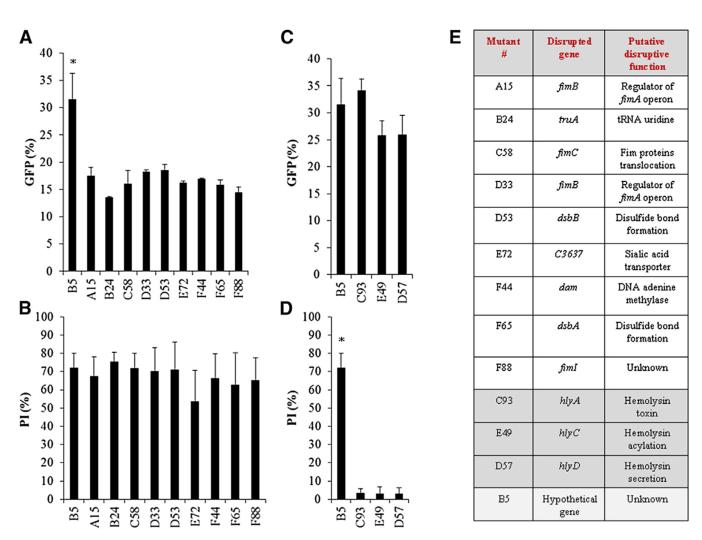
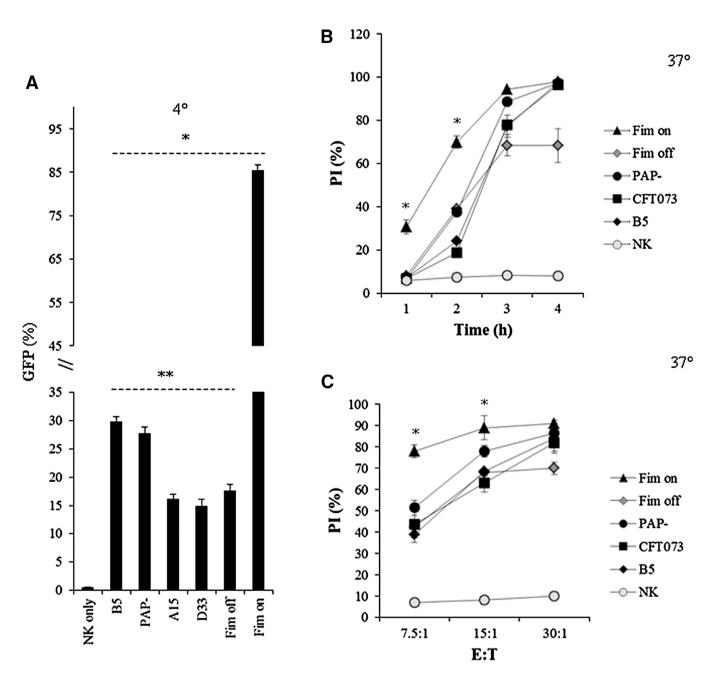
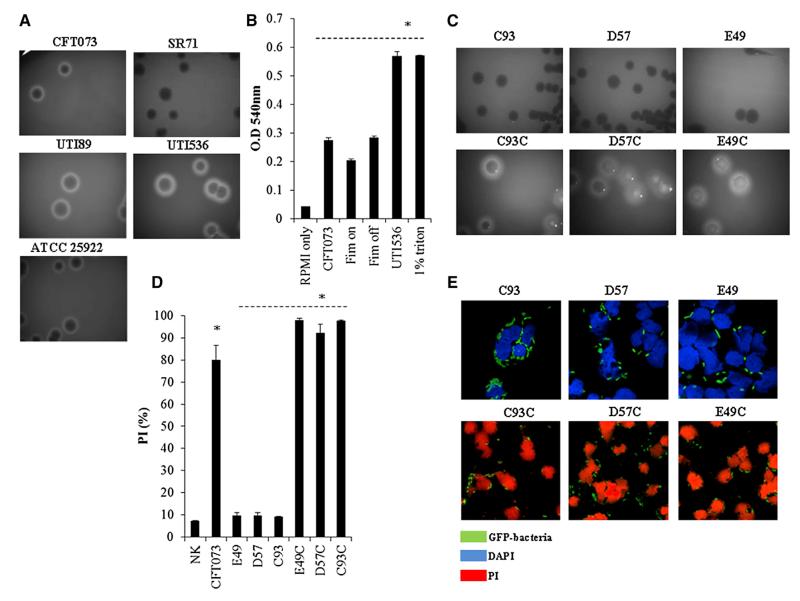
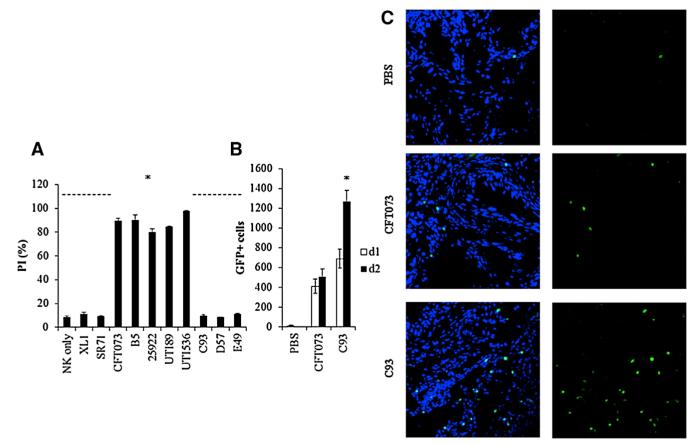
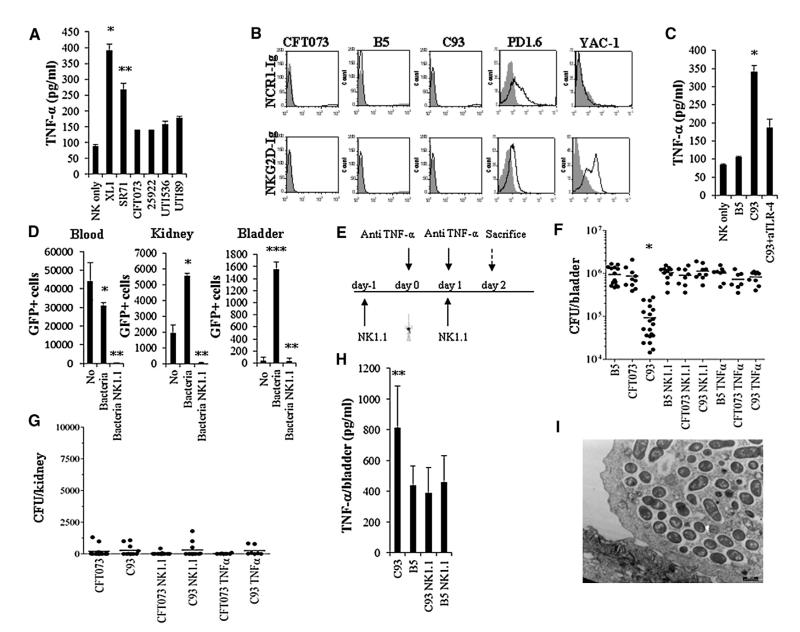
Uropathogenic Escherichia coli (UPEC) are a common cause of urinary tract infections (UTIs) in humans. While the importance of natural killer (NK) cells in innate immune protection against tumors and viral infections is well documented, their role in defense against bacterial infections is still emerging, and their involvement in UPEC-mediated UTI is practically unknown. Using a systematic mutagenesis approach, we found that UPEC adheres to NK cells primarily via its type I fimbriae and employs its hemolysinA toxin to kill NK cells. In the absence of hemolysinA, NK cells directly respond to the bacteria and secrete the cytokine TNF-α, which results in decreased bacterial numbers in vitro and reduction of bacterial burden in the infected bladders. Thus, NK cells control UPEC via TNF-α production, which UPEC counteracts by hemolysinA-mediated killing of NK cells, representing a previously unrecognized host defense and microbial counterattack mechanism in the context of UTI.
Copyright © 2013 Elsevier Inc. All rights reserved.
Figures
References
-
- Bahar O, Goffer T, Burdman S. Type IV Pili are required for virulence, twitching motility, and biofilm formation of acidovorax avenae subsp. Citrulli. Mol. Plant Microbe Interact. 2009;22:909–920. - PubMed
-
- Balsalobre C, Silván JM, Berglund S, Mizunoe Y, Uhlin BE, Wai SN. Release of the type I secreted alpha-haemolysin via outer membrane vesicles from Escherichia coli. Mol. Microbiol. 2006;59:99–112. - PubMed
Publication types
MeSH terms
Substances
Grants and funding
LinkOut - more resources
Full Text Sources
Other Literature Sources
Molecular Biology Databases
