Review
. 2014 Jul:73:56-70.
doi: 10.1016/j.neuint.2013.11.009. Epub 2013 Dec 8.

Genetic targeting of the amphetamine and methylphenidate-sensitive dopamine transporter: on the path to an animal model of attention-deficit hyperactivity disorder

Affiliations
Review

Genetic targeting of the amphetamine and methylphenidate-sensitive dopamine transporter: on the path to an animal model of attention-deficit hyperactivity disorder

Marc A Mergy et al. Neurochem Int. 2014 Jul.

Abstract

Alterations in dopamine (DA) signaling underlie the most widely held theories of molecular and circuit level perturbations that lead to risk for attention-deficit hyperactivity disorder (ADHD). The DA transporter (DAT), a presynaptic reuptake protein whose activity provides critical support for DA signaling by limiting DA action at pre- and postsynaptic receptors, has been consistently associated with ADHD through pharmacological, behavioral, brain imaging and genetic studies. Currently, the animal models of ADHD exhibit significant limitations, stemming in large part from their lack of construct validity. To remedy this situation, we have pursued the creation of a mouse model derived from a functional nonsynonymous variant in the DAT gene (SLC6A3) of ADHD probands. We trace our path from the identification of these variants to in vitro biochemical and physiological studies to the production of the DAT Val559 mouse model. We discuss our initial findings with these animals and their promise in the context of existing rodent models of ADHD.

Keywords: ADHD; Animal model; Dopamine; Mouse; Transgenic; Transporter.


Figures

Fig. 1
Fig. 1
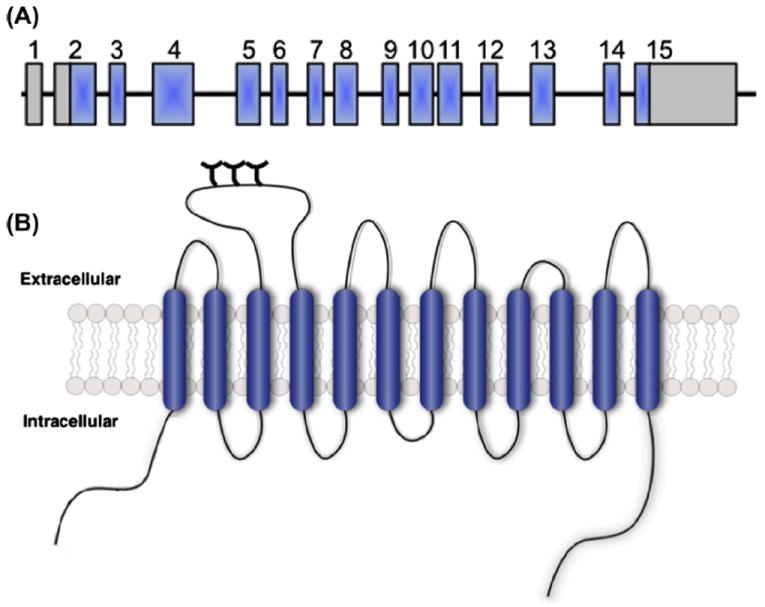
Gene and protein structure of the SLC6A3 gene encoding DAT. (A) The SLC6A3 gene consists of 15 exons (blue boxes), spanning 60 kb of genomic DNA sequence, with both 5′ and 3′ untranslated regions (gray boxes). Please note, gene structure is not depicted to scale. (B) Schematic representation of the DAT protein, a 620 amino acid protein with 12 transmembrane domains and intracellular N- and C-termini. Figure reproduced from Mazei-Robison and Blakely, 2006.
Fig. 2
Fig. 2
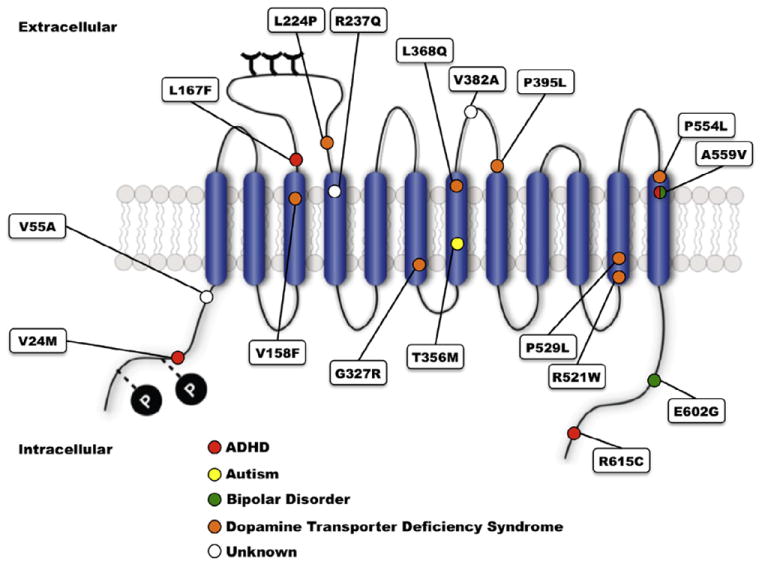
Location of disease-associated hDAT variants. ADHD-associated variants are marked with red circles, ASD-associated variants with yellow circles, bipolar disorder-associated variants with green circles, DAT deficiency syndrome-associated variants with orange circles, and variants without disease association with white circles.
Fig. 3
Fig. 3
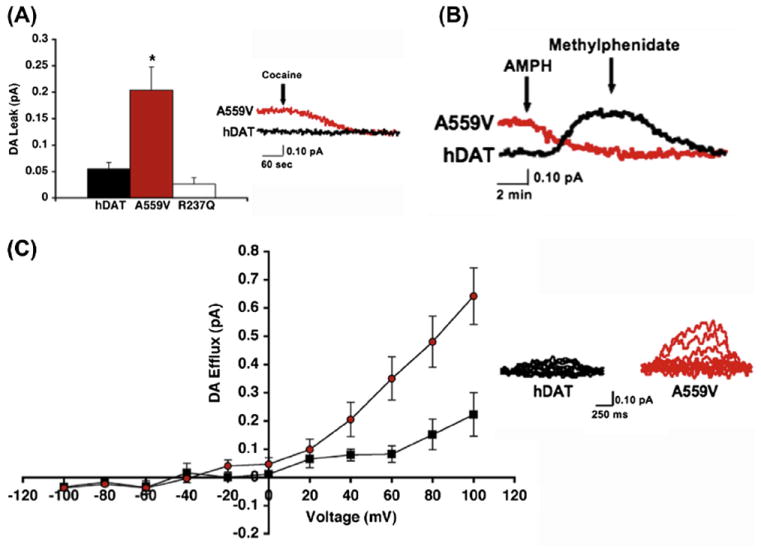
The hDAT A559V mutation supports anomalous DA efflux. (A) DAT Val559 mediates enhanced outward DA leak, reported as mean amperometric current ± SEM. (B) DAT Val559-transfected cells display enhanced voltage-dependent DA amperometric currents; left: mean amperometric current ± SEM, right: representative amperometric traces from WT DAT and DAT Val559 cells. (C) Representative amperometric trace showing that AMPH-evoked DA release can be blocked by methylphenidate in WT DAT-transfected cells (black trace), whereas AMPH blocks basal DA efflux in DAT Val559-transfected cells (red trace). No further reduction in amperometric current is observed upon application of MPH with AMPH. Figure reproduced from Mazei-Robison et al., 2008.
Fig. 4
Fig. 4
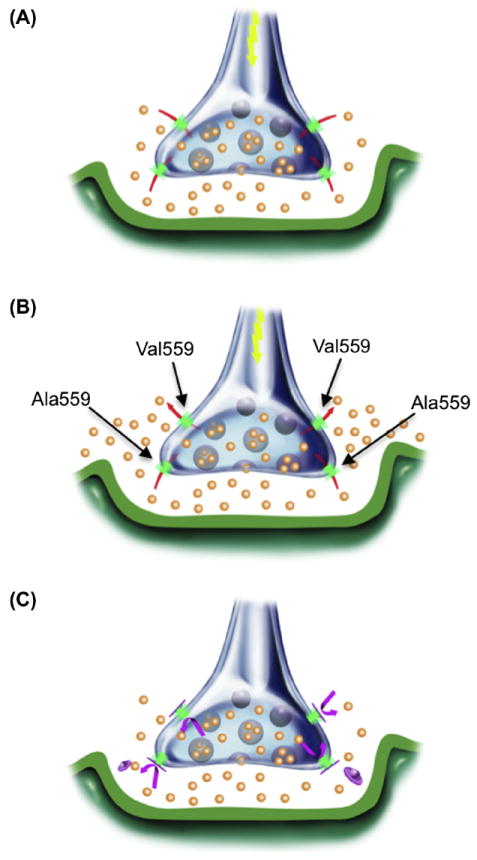
Illustration of disrupted synaptic transmission as a result of DAT-mediated ADE in ADHD subjects (A) Under normal circumstances, presynaptic DAT (green) inactivates and recycles DA (orange) released via vesicular fusion. (B) AMPH (red) acts both as a DAT substrate and as a reuptake inhibitor, eliciting reverse transport and blocking normal DA reuptake, thereby increasing synaptic DA levels. (C) At heterozygous DAT Val559 synapses, basal DAT-mediated DA efflux is a second, unexpected and temporally distinct mechanism for DA release, although normal DA reuptake can still occur. (D) Drugs such as MPH or cocaine (magenta) that block DAT-mediated ADE limit DA released only to that arising from vesicular fusion. Figure reproduced from Mazei-Robison et al., 2008.
Fig. 5
Fig. 5
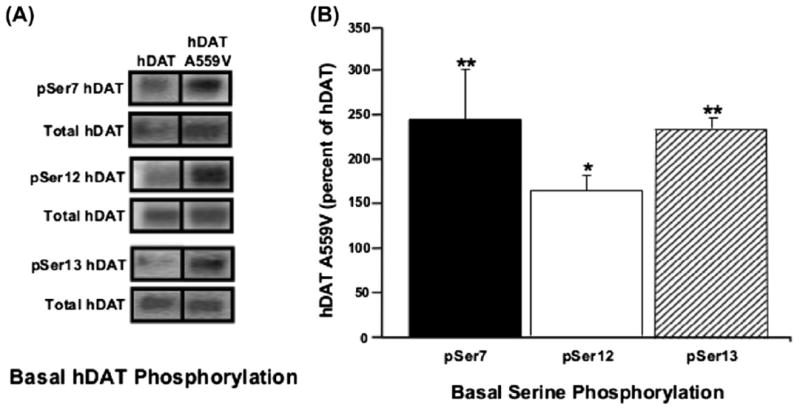
CaMKII-mediated hyperphosphorylation of the DAT Val559N-terminus. (A) Representative immunoblots of WT DAT and DAT Val559-transfected cells for phosphorylated serines at amino acids 7, 12, and 13 (pSer7, pSer12, and pSer13, respectively), and for total DAT. Inset: immunoblot for dopamine D2 receptor (top) and CaMKII (bottom), confirming their presence in the heterologous cell system. (B) Quantification of pSer DAT band intensities, normalized to total DAT. Figure reproduced from Bowton et al., 2010.
Fig. 6
Fig. 6
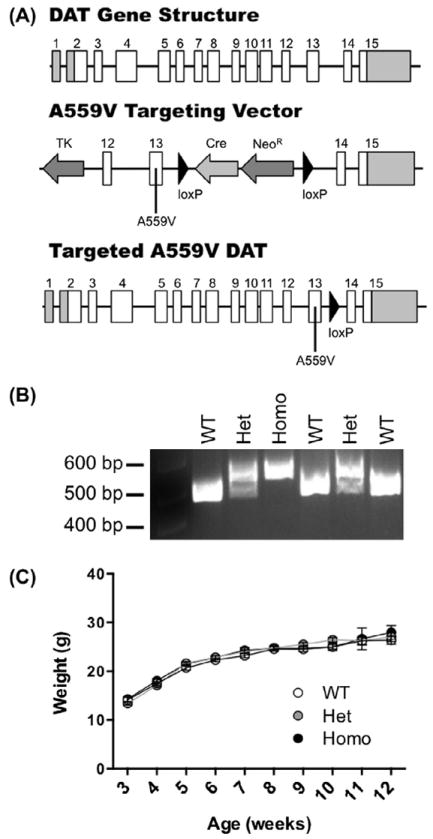
Generation of DAT Val559 mice by homologous recombination. (A) Structure of the Slc6a3 gene (top), DAT Val559 targeting construct (middle), and successfully recombined DAT gene (bottom). Coding exons are displayed as white boxes and non-coding exonic sequence as gray boxes. Following successful recombination and excision of Cre recombinase and neomycin resistance (NeoR) cassettes, (B) genotypes of all mice are determined by PCR (490 base pair (bp) band = WT, 561 bp band = DAT Val559 homozygote, 490 and 561 bp bands = DAT Val559 heterozygote). (C) Growth and development of mice post-weaning does not differ among DAT genotypes.

References

    1. American Psychiatric Association. Diagnostic and Statistical Manual of Mental Disorders: DSM IV. 4. Am Psychiatric Assoc; Washington, DC: 1994. Attention-deficit and disruptive behavior disorders.
    1. Bakare MO. Attention deficit hyperactivity symptoms and disorder (ADHD) among African children: a review of epidemiology and co-morbidities. Afr J Psychiatry. 2012;15:358–361. - PubMed
    1. Barake M, Evins AE, Stoeckel L, Pachas GN, Nachtigall LB, Miller KK, Biller BMK, Tritos NA, Klibanski A. Pituitary. 2013 epub ahead of print. - PMC - PubMed
    1. Bellgrove MA, Hawi Z, Kirley A, Gill M, Robertson IH. Dissecting the attention deficit hyperactivity disorder (ADHD) phenotype: sustained attention, response variability and spatial attentional asymmetries in relation to dopamine transporter (DAT1) genotype. Neuropsychologia. 2005;43:1847–1857. - PubMed
    1. Berlanga ML, Price DL, Phung BS, Giuly R, Terada M, Yamada N, Cyr M, Caron MG, Laasko A, Martone ME, Ellisman MH. Multiscale imaging characterization of dopamine transporter knockout mice reveals regional alterations in spine density of medium spiny neurons. Brain Res. 2011;1390:41–49. - PMC - PubMed

Publication types

MeSH terms

Substances