


The influence of storage age on iron status, oxidative stress and antioxidant protection in paediatric packed cell units
- PMID: 24333084
- PMCID: PMC4039703
- DOI: 10.2450/2013.0142-13
The influence of storage age on iron status, oxidative stress and antioxidant protection in paediatric packed cell units
Abstract
Background: Receipt of blood transfusions is associated with the major consequences of prematurity such as bronchopulmonary dysplasia. Transfusion-mediated (iron-induced) oxidative damage, coupled with the limited ability of the premature baby to deal with enhanced iron and oxidative load may contribute to this. Adverse effects of transfusion may be related to duration of storage. This study examined the influence of storage on iron and oxidative status in paediatric packed red blood cell units.
Materials and methods: Paediatric packed red blood cell units were sampled 3 days post-donation, then at 7 days and weekly until day 35. The extracellular medium was separated and the following measured: total iron concentration, total iron binding capacity, non-transferrin-bound iron, haemoglobin, total and reduced ascorbate, glutathione and malondialdehyde.
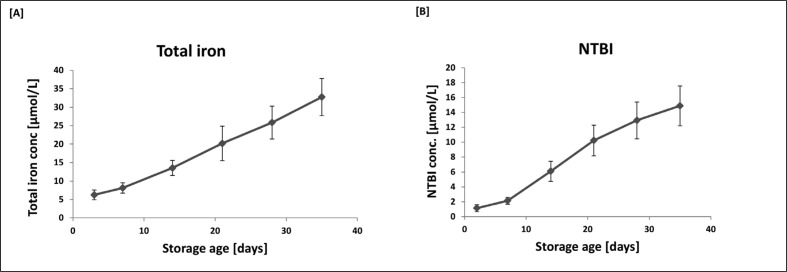
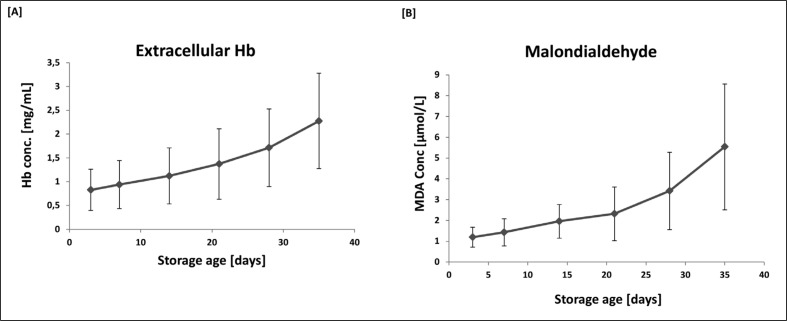
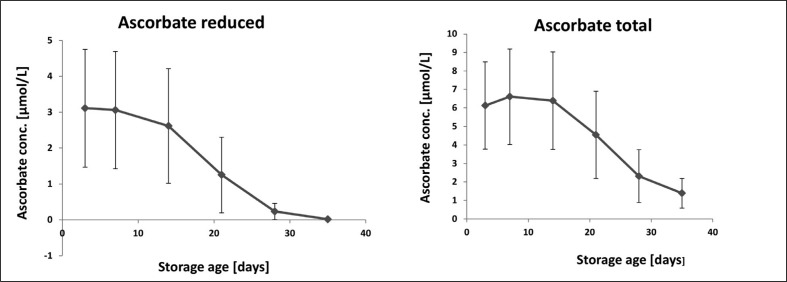
Results: Measurable total and non-transferrin bound iron were present in the extracellular fluid of paediatric packs on day 3. Both parameters rose almost linearly to maximal values at 35 days. Haemoglobin and malondialdehyde levels rose gradually from day 3 to day 21, then more steeply to day 35. Ascorbate existed mainly in the oxidised form and fell rapidly towards the end of storage. Intracellular GSH fell throughout the period of storage. Strong correlations existed between biomarkers of oxidative damage and iron parameters.
Discussion: These data suggest that iron released following the initial preparation of packed red blood cell units may derive from free radical-mediated oxidative damage to the red blood cells and haemoglobin, rather than from extracellular haemoglobin. Iron continues to be released during storage as antioxidant protection declines. A cycle of free radical-mediated damage may initiate and then further exacerbate iron release during storage which, in turn, may mediate further free radical-mediated cellular damage. The potential consequences to recipients of older stored blood may be significant.
Figures
References
-
- Baer VL, Lambert DK, Henry E, et al. Among very-low-birth-weight neonates is red blood cell transfusion an independent risk factor for subsequently developing a severe intraventricular hemorrhage? Transfusion. 2011;51:1170–8. - PubMed
-
- El-Dib M, Narang S, Lee E, et al. Red blood cell transfusion, feeding and necrotizing enterocolitis in preterm infants. J Perinatol. 2011;31:183–7. - PubMed
-
- Romagnoli C. Risk factors and growth factors in ROP. Early Hum Devel. 2009;85:S79–82. - PubMed
-
- Akkoyun I, Oto S, Yilmaz G, et al. Risk factors in the development of mild and severe retinopathy of prematurity. J Am Ass Pediatr Ophthalmol Strabismus. 2006;10:449–53. - PubMed
Publication types
MeSH terms
Substances
LinkOut - more resources
Full Text Sources
Medical
