


Reaction-based fluorescent sensor for investigating mobile Zn2+ in mitochondria of healthy versus cancerous prostate cells
- PMID: 24335702
- PMCID: PMC3890804
- DOI: 10.1073/pnas.1310583110
Reaction-based fluorescent sensor for investigating mobile Zn2+ in mitochondria of healthy versus cancerous prostate cells
Abstract
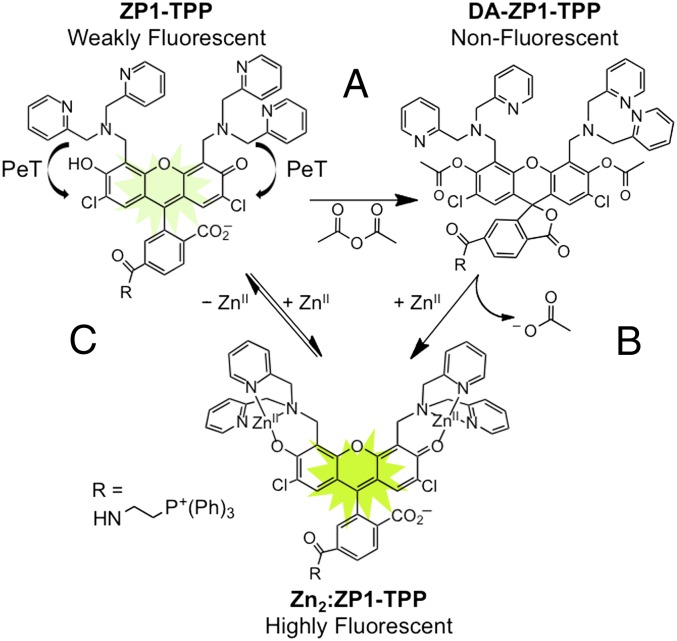
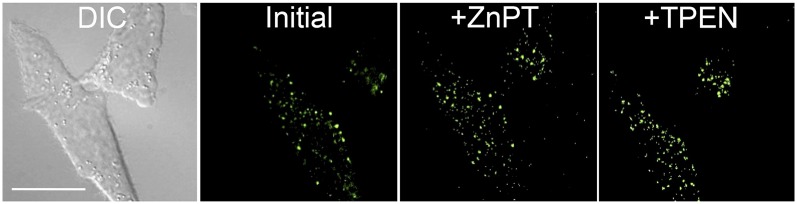
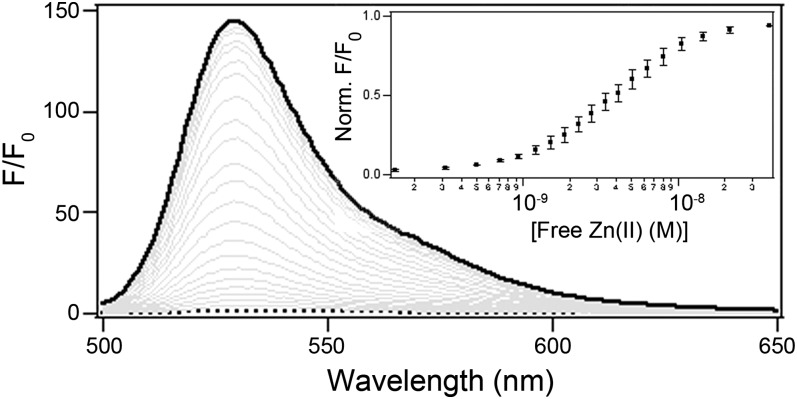
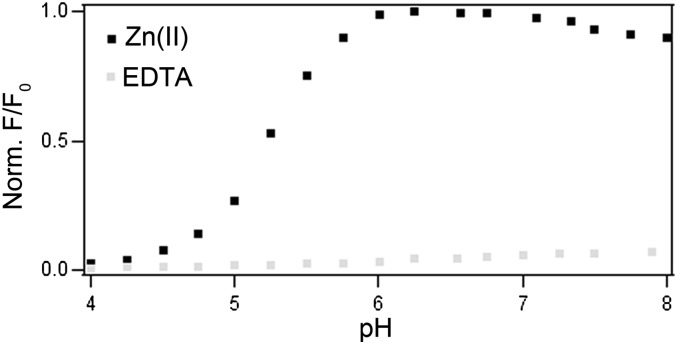
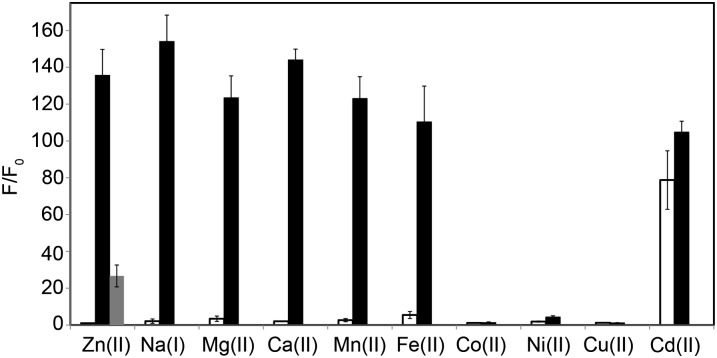
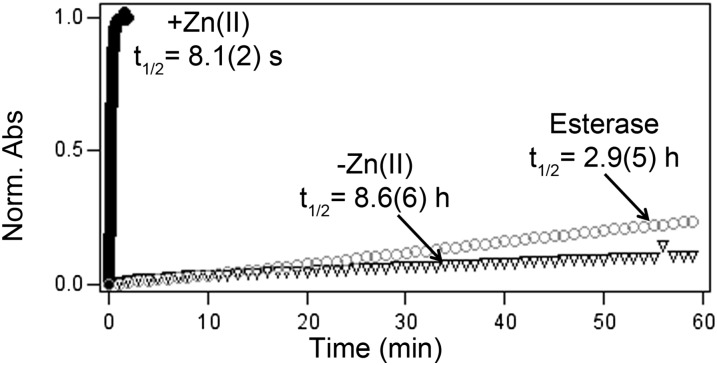
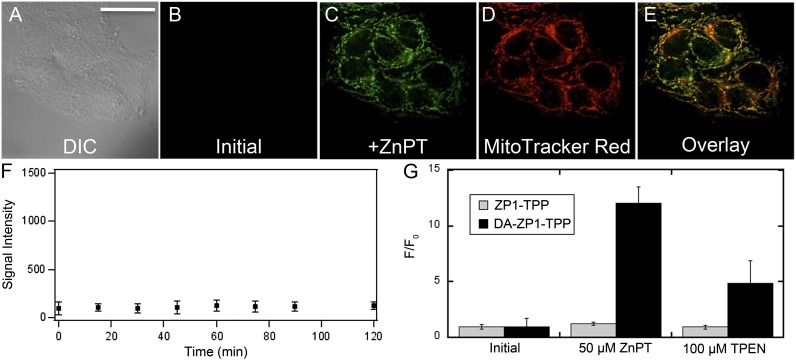
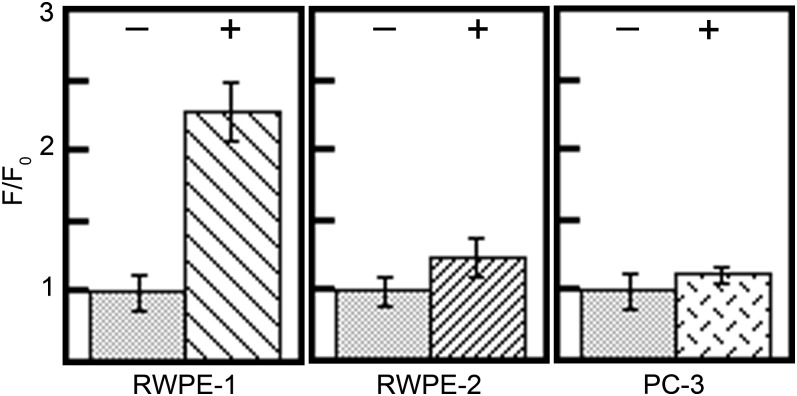
Chelatable, mobile forms of divalent zinc, Zn(II), play essential signaling roles in mammalian biology. A complex network of zinc import and transport proteins has evolved to control zinc concentration and distribution on a subcellular level. Understanding the action of mobile zinc requires tools that can detect changes in Zn(II) concentrations at discrete cellular locales. We present here a zinc-responsive, reaction-based, targetable probe based on the diacetyled form of Zinpyr-1. The compound, (6-amidoethyl)triphenylphosphonium Zinpyr-1 diacetate (DA-ZP1-TPP), is essentially nonfluorescent in the metal-free state; however, exposure to Zn(II) triggers metal-mediated hydrolysis of the acetyl groups to afford a large, rapid, and zinc-induced fluorescence response. DA-ZP1-TPP is insensitive to intracellular esterases over a 2-h period and is impervious to proton-induced turn-on. A TPP unit is appended for targeting mitochondria, as demonstrated by live cell fluorescence imaging studies. The practical utility of DA-ZP1-TPP is demonstrated by experiments revealing that, in contrast to healthy epithelial prostate cells, tumorigenic cells are unable to accumulate mobile zinc within their mitochondria.
Keywords: fluorescence microscopy; prostate cancer; reaction-based probe; zinc biology.
Conflict of interest statement
The authors declare no conflicts of interest.
Figures
References
-
- Bertini I, Gray HB, Stiefel EI, Valentine JS. Biological Inorganic Chemistry: Structure and Reactivity. Sausalito, CA: University Science Books; 2007.
-
- Gundelfinger ED, Boeckers TM, Baron MK, Bowie JU. A role for zinc in postsynaptic density asSAMbly and plasticity? Trends Biochem Sci. 2006;31(7):366–373. - PubMed
Publication types
MeSH terms
Substances
Grants and funding
LinkOut - more resources
Full Text Sources
Other Literature Sources
Medical
Molecular Biology Databases
