


TOR-centric view on insulin resistance and diabetic complications: perspective for endocrinologists and gerontologists
- PMID: 24336084
- PMCID: PMC3877573
- DOI: 10.1038/cddis.2013.506
TOR-centric view on insulin resistance and diabetic complications: perspective for endocrinologists and gerontologists
Abstract
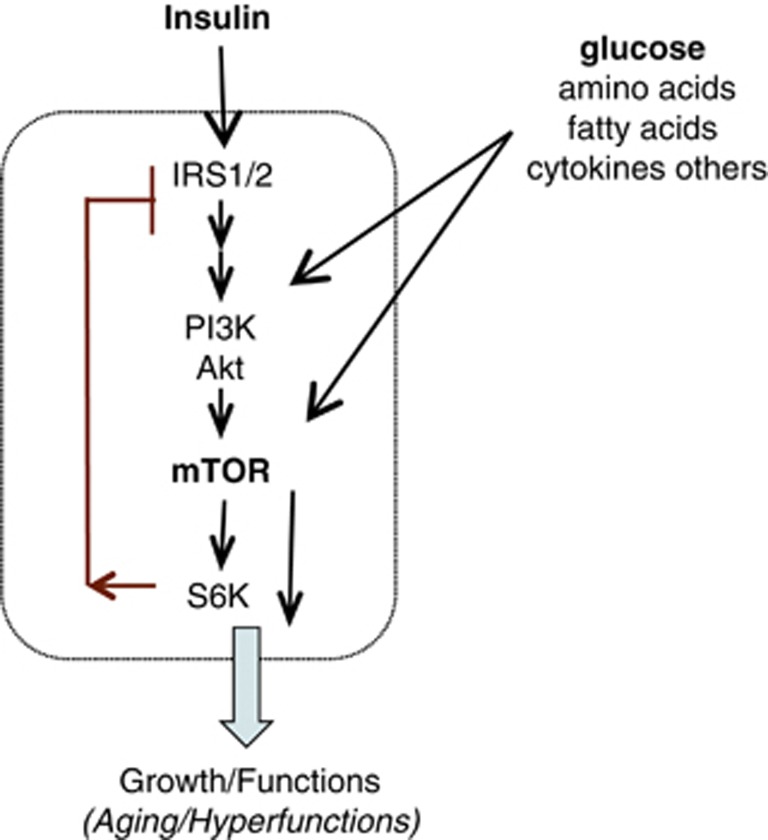
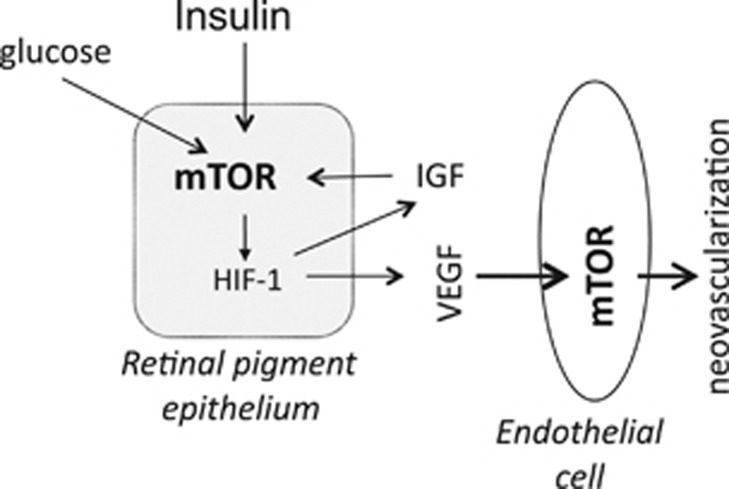
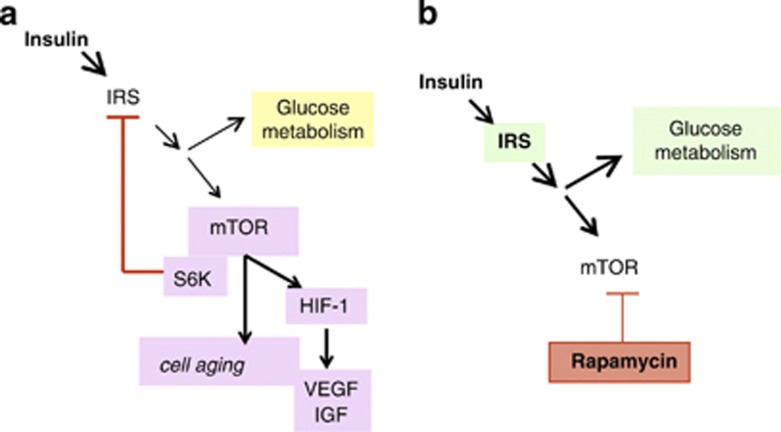
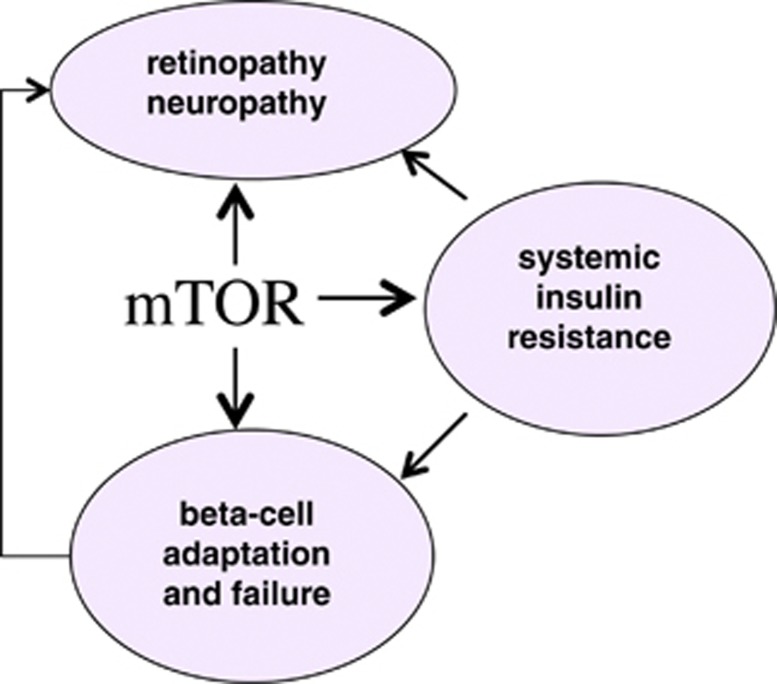
This article is addressed to endocrinologists treating patients with diabetic complications as well as to basic scientists studying an elusive link between diseases and aging. It answers some challenging questions. What is the link between insulin resistance (IR), cellular aging and diseases? Why complications such as retinopathy may paradoxically precede the onset of type II diabetes. Why intensive insulin therapy may initially worsen retinopathy. How nutrient- and insulin-sensing mammalian target of rapamycin (mTOR) pathway can drive insulin resistance and diabetic complications. And how rapamycin, at rational doses and schedules, may prevent IR, retinopathy, nephropathy and beta-cell failure, without causing side effects.
Figures
References
-
- Girach A, Vignati L. Diabetic microvascular complications--can the presence of one predict the development of another. J Diabetes Complications. 2006;20:228–237. - PubMed
-
- Harris MI, Klein R, Welborn TA, Knuiman MW. Onset of NIDDM occurs at least 4–7yr before clinical diagnosis. Diabetes Care. 1992;15:815–819. - PubMed
-
- Ellis JD, Zvandasara T, Leese G, McAlpine R, Macewen CJ, Baines PS, et al. Clues to duration of undiagnosed disease from retinopathy and maculopathy at diagnosis in type 2 diabetes: a cross-sectional study. Br J Ophthalmol. 2011;95:1229–1233. - PubMed
Publication types
MeSH terms
Substances
LinkOut - more resources
Full Text Sources
Other Literature Sources
Medical
Miscellaneous
