


Discovery of protein interactions using parallel analysis of translated ORFs (PLATO)
- PMID: 24336473
- PMCID: PMC4129458
- DOI: 10.1038/nprot.2013.167
Discovery of protein interactions using parallel analysis of translated ORFs (PLATO)
Abstract
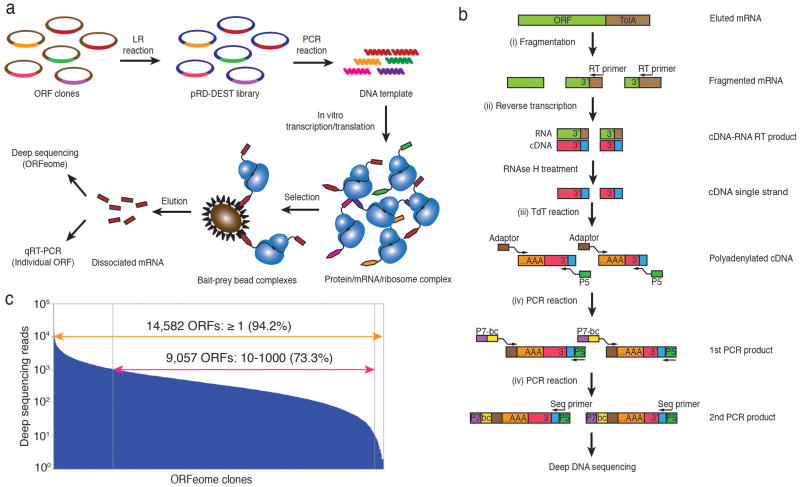
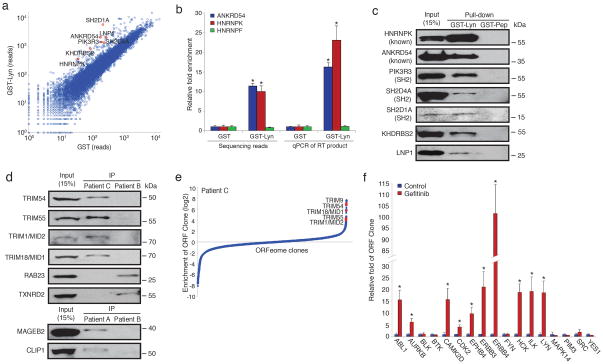
Parallel analysis of translated open reading frames (ORFs) (PLATO) can be used for the unbiased discovery of interactions between full-length proteins encoded by a library of 'prey' ORFs and surface-immobilized 'bait' antibodies, polypeptides or small-molecular-weight compounds. PLATO uses ribosome display (RD) to link ORF-derived mRNA molecules to the proteins they encode, and recovered mRNA from affinity enrichment is subjected to analysis using massively parallel DNA sequencing. Compared with alternative in vitro methods, PLATO provides several advantages including library size and cost. A unique advantage of PLATO is that an alternative reverse transcription-quantitative PCR (RT-qPCR) protocol can be used to test binding of specific, individual proteins. To illustrate a typical experimental workflow, we demonstrate PLATO for the identification of the immune target of serum antibodies from patients with inclusion body myositis (IBM). Beginning with an ORFeome library in an RD vector, the protocol can produce samples for deep sequencing or RT-qPCR within 4 d.
Figures
References
-
- Faix PH, et al. Phage display of cDNA libraries: enrichment of cDNA expression using open reading frame selection. BioTechniques. 2004;36:1018–1022. 1024, 1026–1019. - PubMed
-
- Zhu H, Bilgin M, Snyder M. Proteomics. Annual review of biochemistry. 2003;72:783–812. - PubMed
-
- Amstutz P, Binz Zahnd C, Pluckthun A. Ribosome Display: In Vitro Selection of Protein-Protein Interactions. Cell Biology, A Laborator Manual. 2006;1:13.
Publication types
MeSH terms
Grants and funding
LinkOut - more resources
Full Text Sources
Other Literature Sources
Miscellaneous
