


Parental diabetes and birthweight in 236 030 individuals in the UK biobank study
- PMID: 24336895
- PMCID: PMC3887570
- DOI: 10.1093/ije/dyt220
Parental diabetes and birthweight in 236 030 individuals in the UK biobank study
Abstract
Background: The UK Biobank study provides a unique opportunity to study the causes and consequences of disease. We aimed to use the UK Biobank data to study the well-established, but poorly understood, association between low birthweight and type 2 diabetes.
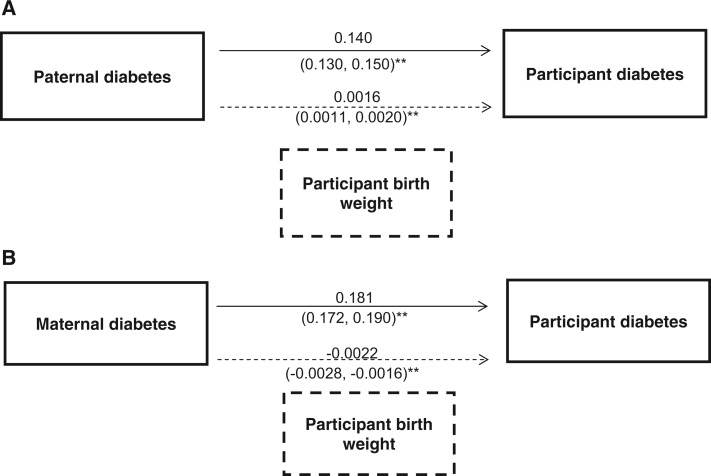
Methods: We used logistic regression to calculate the odds ratio for participants' risk of type 2 diabetes given a one standard deviation increase in birthweight. To test for an association between parental diabetes and birthweight, we performed linear regression of self-reported parental diabetes status against birthweight. We performed path and mediation analyses to test the hypothesis that birthweight partly mediates the association between parental diabetes and participant type 2 diabetes status.
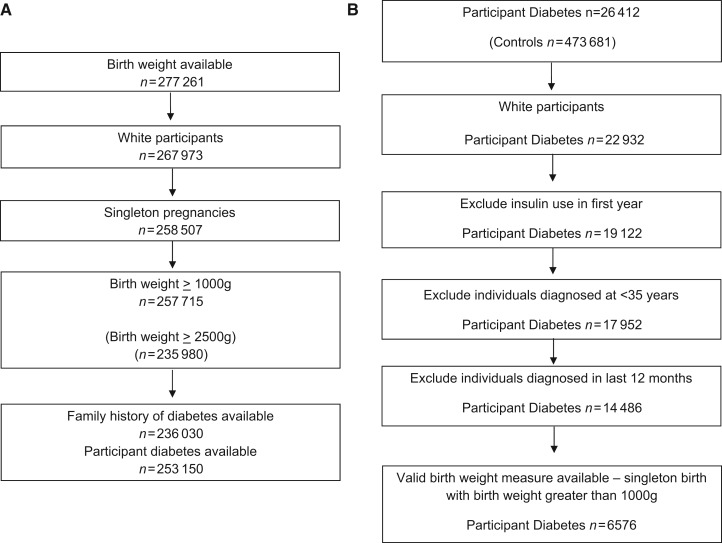
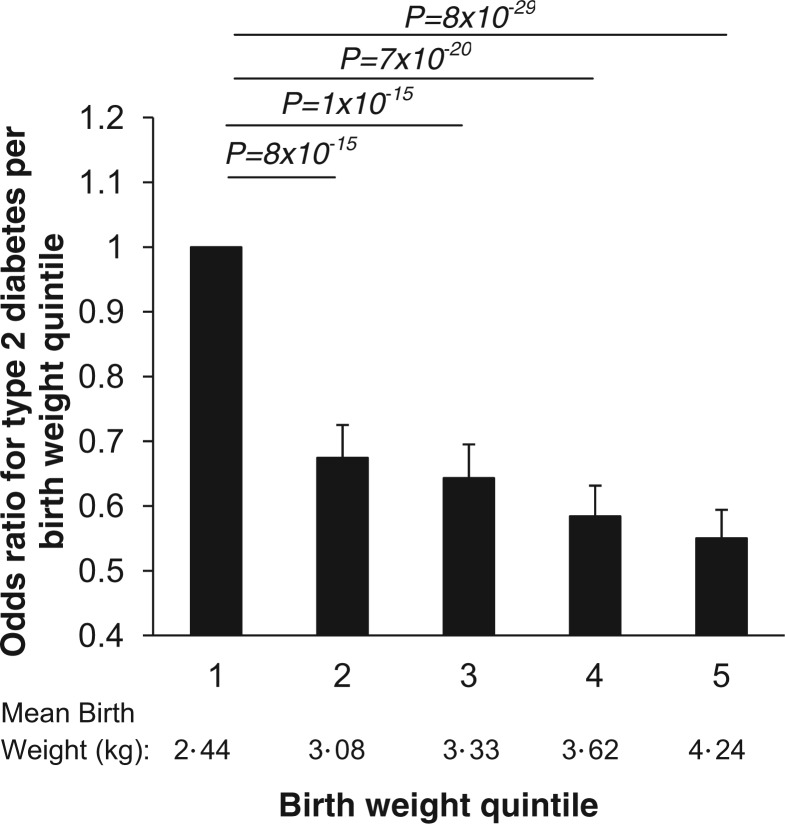
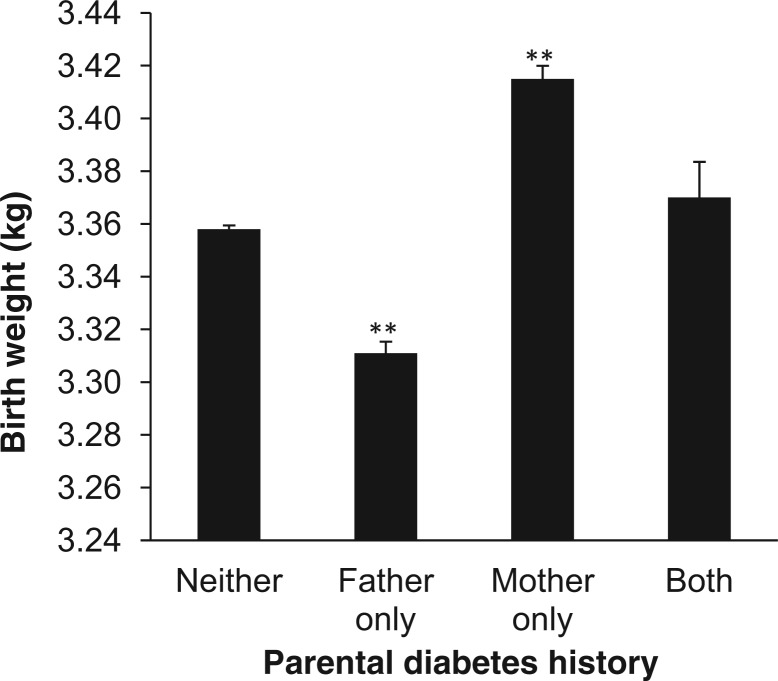
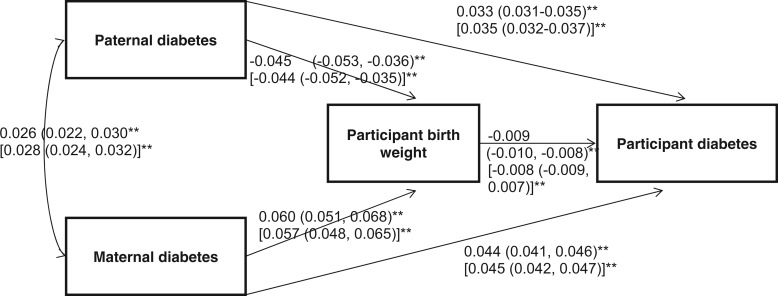
Results: Of the UK Biobank participants, 277 261 reported their birthweight. Of 257 715 individuals of White ethnicity and singleton pregnancies, 6576 had type 2 diabetes, 19 478 reported maternal diabetes (but not paternal), 20 057 reported paternal diabetes (but not maternal) and 2754 participants reported both parents as having diabetes. Lower birthweight was associated with type 2 diabetes in the UK Biobank participants. A one kilogram increase in birthweight was associated with a lower risk of type 2 diabetes (odds ratio: 0.74; 95% CI: 0.71, 0.76; P = 2 × 10(-57)). Paternal diabetes was associated with lower birthweight (45 g lower; 95% CI: 36, 54; P = 2 × 10(-23)) relative to individuals with no parental diabetes. Maternal diabetes was associated with higher birthweight (59 g increase; 95% CI: 50, 68; P = 3 × 10(-37)). Participants' lower birthweight was a mediator of the association between reported paternal diabetes and participants' type 2 diabetes status, explaining 1.1% of the association, and participants' higher birthweight was a mediator of the association between reported maternal diabetes and participants' type 2 diabetes status, explaining 1.2% of the association.
Conclusions: Data from the UK Biobank provides the strongest evidence by far that paternal diabetes is associated with lower birthweight, whereas maternal diabetes is associated with increased birthweight. Our findings with paternal diabetes are consistent with a role for the same genetic factors influencing foetal growth and type 2 diabetes.
Keywords: Type 2 diabetes; UK Biobank; birthweight; genetics; parental history.
Figures
References
-
- Barker DJ, Hales CN, Fall CH, Osmond C, Phipps K, Clark PM. Type 2 (non-insulin-dependent) diabetes mellitus, hypertension and hyperlipidaemia (syndrome X): relation to reduced fetal growth. Diabetologia. 1993;36:62–67. - PubMed
-
- Hattersley AT, Tooke JE. The fetal insulin hypothesis: an alternative explanation of the association of low birthweight with diabetes and vascular disease. Lancet. 1999;353:1789–92. - PubMed
-
- Lindsay RS, Dabelea D, Roumain J, Hanson RL, Bennett PH, Knowler WC. Type 2 diabetes and low birthweight: the role of paternal inheritance in the association of low birthweight and diabetes. Diabetes. 2000;49:445–49. - PubMed
-
- Lindsay RS, Hanson RL, Bennett PH, Knowler WC. Secular trends in birthweight, BMI, and diabetes in the offspring of diabetic mothers. Diabetes Care. 2000;23:1249–54. - PubMed
-
- Diabetes UK. 2012. Available from http://www.diabetes.org.uk/ (21 May 2013, date last accessed)
Publication types
MeSH terms
Grants and funding
LinkOut - more resources
Full Text Sources
Other Literature Sources
Medical
