


Two small (p)ppGpp synthases in Staphylococcus aureus mediate tolerance against cell envelope stress conditions
- PMID: 24336937
- PMCID: PMC3911181
- DOI: 10.1128/JB.01201-13
Two small (p)ppGpp synthases in Staphylococcus aureus mediate tolerance against cell envelope stress conditions
Abstract
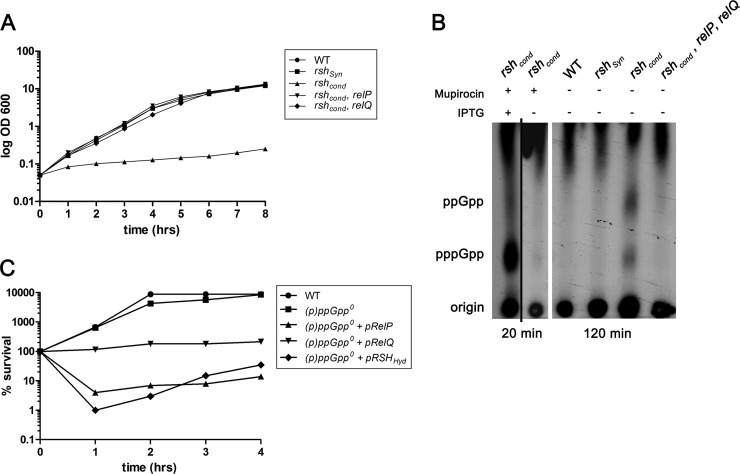
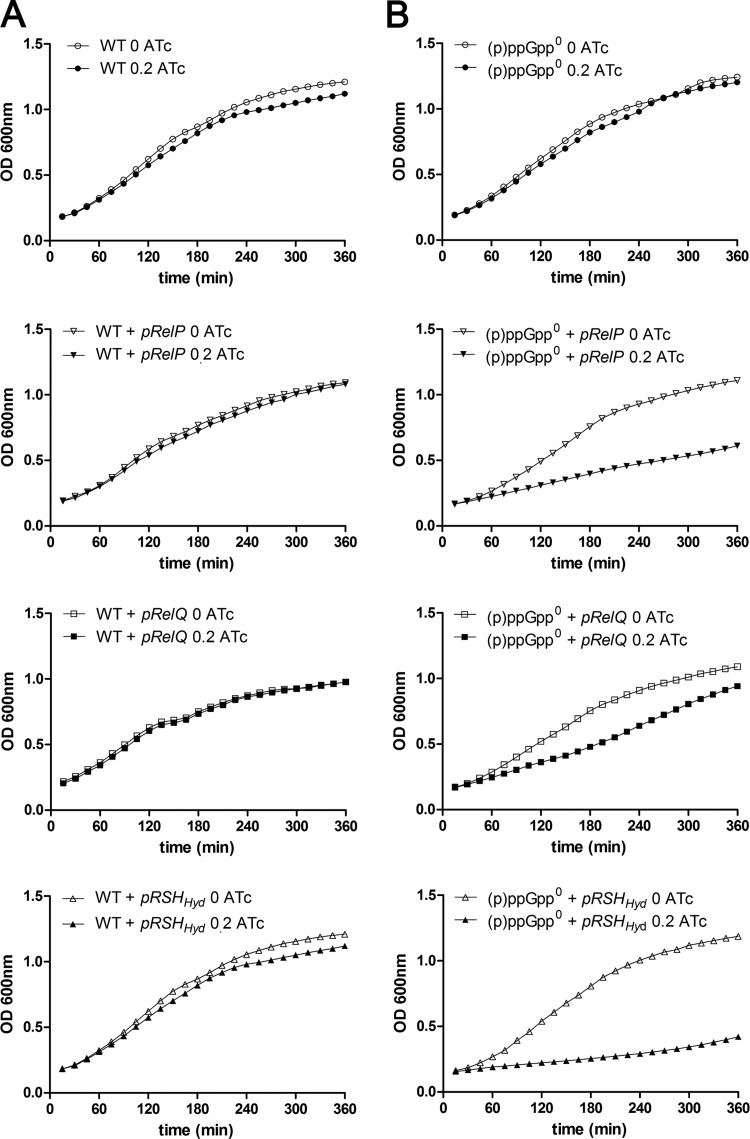
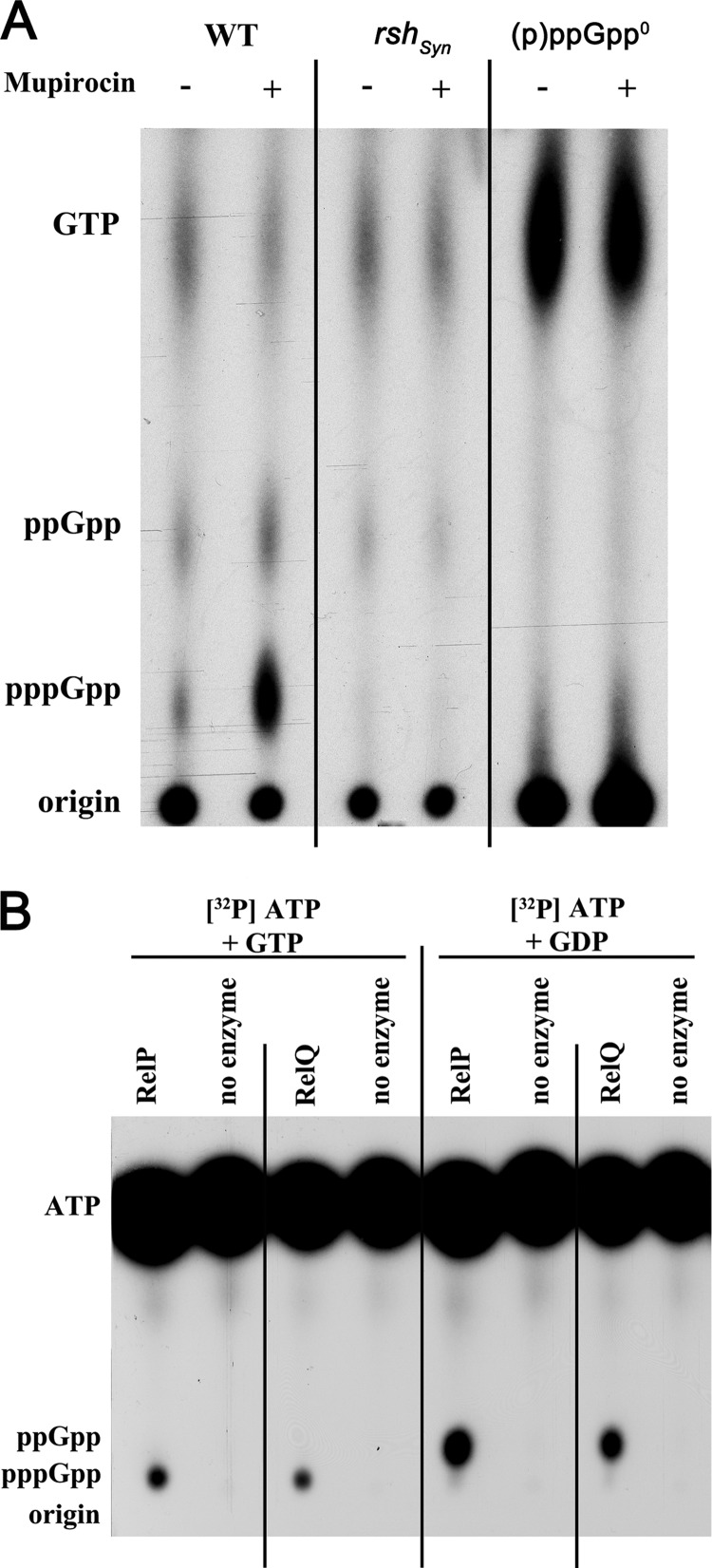
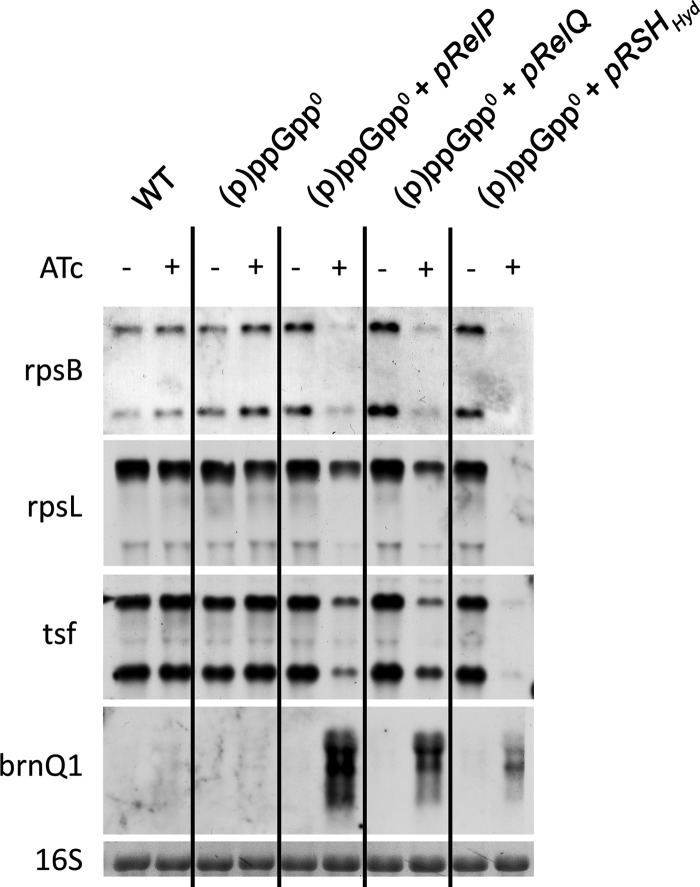
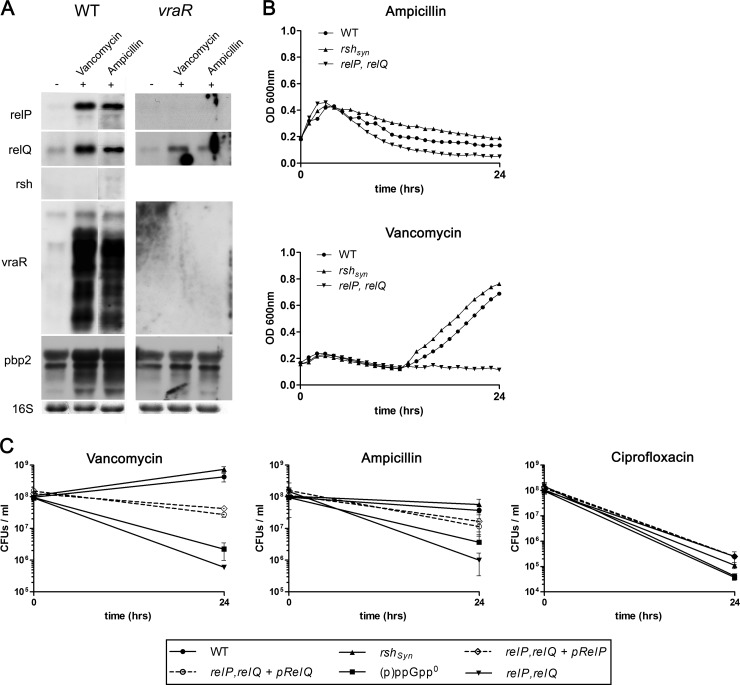
The stringent response is a conserved global regulatory mechanism that is related to the synthesis of (p)ppGpp nucleotides. Gram-positive bacteria, such as Staphylococcus aureus, possess three (p)ppGpp synthases: the bifunctional RSH (RelA/SpoT homolog) protein, which consists of a (p)ppGpp synthase and a (p)ppGpp hydrolase domain, and two truncated (p)ppGpp synthases, designated RelP and RelQ. Here, we characterized these two small (p)ppGpp synthases. Biochemical analyses of purified proteins and in vivo studies revealed a stronger synthetic activity for RelP than for RelQ. However, both enzymes prefer GDP over GTP as the pyrophosphate recipient to synthesize ppGpp. Each of the enzymes was shown to be responsible for the essentiality of the (p)ppGpp hydrolase domain of the RSH protein. The staphylococcal RSH-hydrolase is an efficient enzyme that prevents the toxic accumulation of (p)ppGpp. Expression of (p)ppGpp synthases in a hydrolase-negative background leads not only to growth arrest but also to cell death. Transcriptional analyses showed that relP and relQ are strongly induced upon vancomycin and ampicillin treatments. Accordingly, mutants lacking relP and relQ showed a significantly reduced survival rate upon treatments with cell wall-active antibiotics. Thus, RelP and RelQ are active (p)ppGpp synthases in S. aureus that are induced under cell envelope stress to mediate tolerance against these conditions.
Figures
References
-
- Xiao H, Kalman M, Ikehara K, Zemel S, Glaser G, Cashel M. 1991. Residual guanosine 3′,5′-bispyrophosphate synthetic activity of relA null mutants can be eliminated by spoT null mutations. J. Biol. Chem. 266:5980–5990 - PubMed
Publication types
MeSH terms
Substances
LinkOut - more resources
Full Text Sources
Other Literature Sources
Molecular Biology Databases
