Neurology as career option among postgraduate medical students
- PMID: 24339563
- PMCID: PMC3841584
- DOI: 10.4103/0972-2327.120427
Neurology as career option among postgraduate medical students
Abstract
Background: In the context of inadequacy of neurology workforce in India, it is important to understand factors that post-graduate medical students consider for and against choosing neurology as their career option. Understanding these factors will help in planning strategies to encourage students to pursue a career in neurology. At present, there is a paucity of studies addressing this issue in India.
Aims and objectives: (1) To analyze factors, which post-graduate students consider for and against choosing neurology as a career specialty. (2) To access the level and quality of neurology exposure in the current MBBS and MD curricula.
Materials and methods: Statewide questionnaire based study was conducted in the state of Maharashtra for students eligible to take DM neurology entrance examination (MD Medicine and MD Pediatrics).
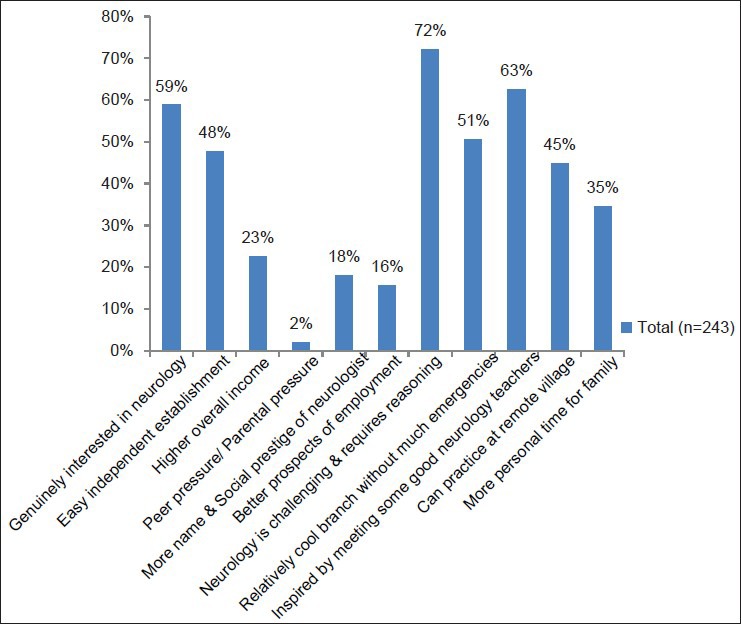
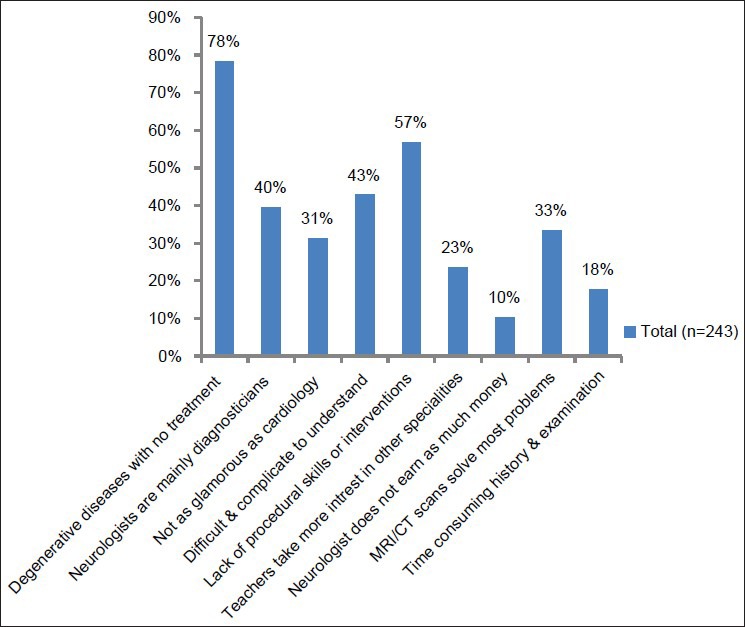
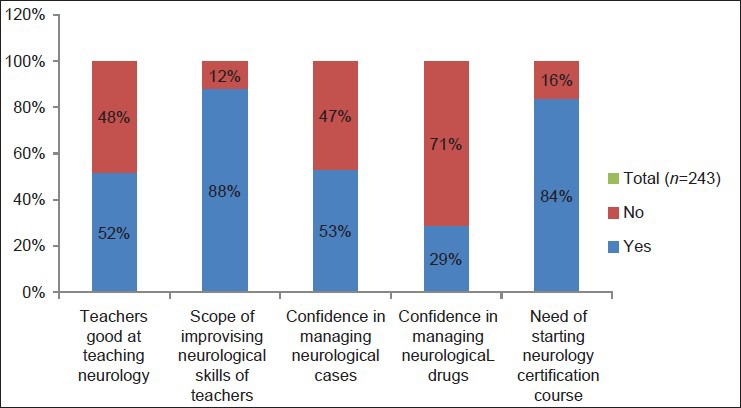
Results: In this survey, 243 students were enrolled. Factors bringing students to neurology were - intellectual challenge and logical reasoning (72%), inspired by role model teachers (63%), better quality-of-life (51%) and scope for independent practice without expensive infrastructure (48%). Factors preventing students from taking neurology were - perception that most neurological diseases are degenerative (78%), neurology is mainly an academic specialty (40%), neurophobia (43%) and lack of procedures (57%). Inadequate exposure and resultant lack of self-confidence were common (31%, 70-80%). 84% of the students felt the need for a short term certification course in neurology after MD.
Conclusions: To attract more students to neurology, "role model" teachers of neurology could interact and teach students extensively. Neurologists' efforts to shed their diagnostician's image and to shift their focus to therapeutics will help change the image of neurology. Out-patient neurology clinics should be incorporated early in the student's career. Procedures attract students; hence, they should be made conversant with procedures and interventions. Increasing the level of neurological exposure in our current MBBS and MD curriculum is necessary. A case could be made for consideration of short certification course in neurology for physicians.
Keywords: Career; neurology; postgraduate; students.
Conflict of interest statement
Figures
References
-
- Jagjit CS. History of Indian academy of neurology. In: Srinivas HV, editor. A Saga of Indian Neurology Reflections of Former Presidents. Bangalore: Aditi Enterprises; 2011. pp. xix–xx.
-
- Wadia NH. Introduction to Indian neurology. In: Wadia NH, editor. Textbook – Neurological Practice: An Indian Perspective. 1st ed. New Delhi: Elsevier; 2005. p. 3.
-
- Gourie-Devi M. Organization of neurology services in India: Unmet needs and the way forward. Neurol India. 2008;56:4–12. - PubMed
-
- Khadilkar SV, Wagh S. Practice patterns of neurology in India: Fewer hands, more work. Neurol India. 2007;55:27–30. - PubMed
-
- Lefevre JH, Roupret M, Kerneis S, Karila L. Career choices of medical students: A national survey of 1780 students. Med Educ. 2010;44:603–12. - PubMed
LinkOut - more resources
Full Text Sources
Other Literature Sources