Comparison of complications between endoscopic and percutaneous replacement of percutaneous endoscopic gastrostomy tubes
- PMID: 24339709
- PMCID: PMC3857375
- DOI: 10.3346/jkms.2013.28.12.1781
Comparison of complications between endoscopic and percutaneous replacement of percutaneous endoscopic gastrostomy tubes
Abstract
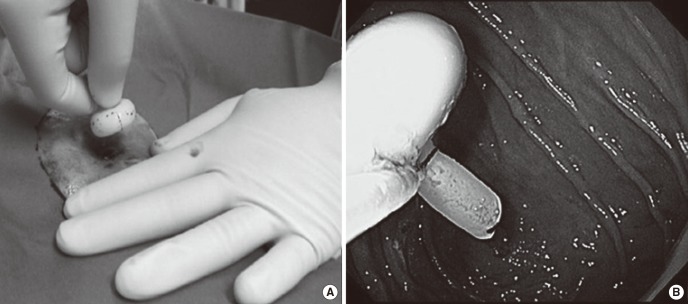
When replacing percutaneous endoscopic gastrostomy (PEG) tubes, an internal bolster may be retrieved either percutaneously or endoscopically. The aim of this study was to compare the complications of percutaneous and endoscopic method during PEG tube replacement. The medical records of 330 patients who received PEG tube replacement were retrospectively analyzed. According to the removal method of internal bolster, we categorized as endoscopic group and percutaneous group. Demographic data, procedure-related complications and risk factors were investigated. There were 176 cases (53.3%) in endoscopic group and 154 cases (46.7%) in percutaneous group. The overall immediate complication rate during PEG tube replacement was 4.8%. Bleeding from the stoma (1.3%) occurred in percutaneous group, whereas esophageal mucosal laceration (7.4%) and microperforation (0.6%) occurred in endoscopic group. The immediate complication rate was significantly lower in the percutaneous method (OR, 6.57; 95% CI, 1.47-29.38, P=0.014). In multivariate analysis, old age was a significant risk factor of esophageal laceration and microperforation during PEG tube replacement (OR, 3.83; 95% CI, 1.04-14.07, P=0.043). The percutaneous method may be more safe and feasible for replacing PEG tubes than the endoscopic method in old patients.
Keywords: Complications; Gastrostomy; Methods.
Conflict of interest statement
The authors have no conflicts of interest to disclose.
Figures
References
-
- Safadi BY, Marks JM, Ponsky JL. Percutaneous endoscopic gastrostomy: an update. Endoscopy. 1998;30:781–789. - PubMed
-
- Roche V. Percutaneous endoscopic gastrostomy: clinical care of PEG tubes in older adults. Geriatrics. 2003;58:22–29. - PubMed
-
- Turner JK, Berrill JW, Dolwani S, Green JT, Swift G. Percutaneous endoscopic gastrostomy tube replacement. Endoscopy. 2010;42:E146–E147. - PubMed
-
- Schrag SP, Sharma R, Jaik NP, Seamon MJ, Lukaszczyk JJ, Martin ND, Hoey BA, Stawicki SP. Complications related to percutaneous endoscopic gastrostomy (PEG) tubes: a comprehensive clinical review. J Gastrointestin Liver Dis. 2007;16:407–418. - PubMed
Publication types
MeSH terms
LinkOut - more resources
Full Text Sources
Other Literature Sources
Medical