Clinical Trial
. 2013 Dec 10;8(12):e82187.
doi: 10.1371/journal.pone.0082187. eCollection 2013.

Helicobacter pylori genomic microevolution during naturally occurring transmission between adults

Affiliations
Clinical Trial

Helicobacter pylori genomic microevolution during naturally occurring transmission between adults

Bodo Linz et al. PLoS One. .

Abstract

The human gastric pathogen Helicobacter pylori is usually acquired during childhood and, in the absence of treatment, chronic infection persists through most of the host's life. However, the frequency and importance of H. pylori transmission between adults is underestimated. Here we sequenced the complete genomes of H. pylori strains that were transmitted between spouses and analysed the genomic changes. Similar to H. pylori from chronic infection, a significantly high proportion of the determined 31 SNPs and 10 recombinant DNA fragments affected genes of the hop family of outer membrane proteins, some of which are known to be adhesins. In addition, changes in a fucosyltransferase gene modified the LPS component of the bacterial cell surface, suggesting strong diversifying selection. In contrast, virulence factor genes were not affected by the genomic changes. We propose a model of the genomic changes that are associated with the transmission and adaptation of H. pylori to a new human host.


Conflict of interest statement

Competing Interests: The authors have declared that no competing interests exist.

Figures

Figure 1
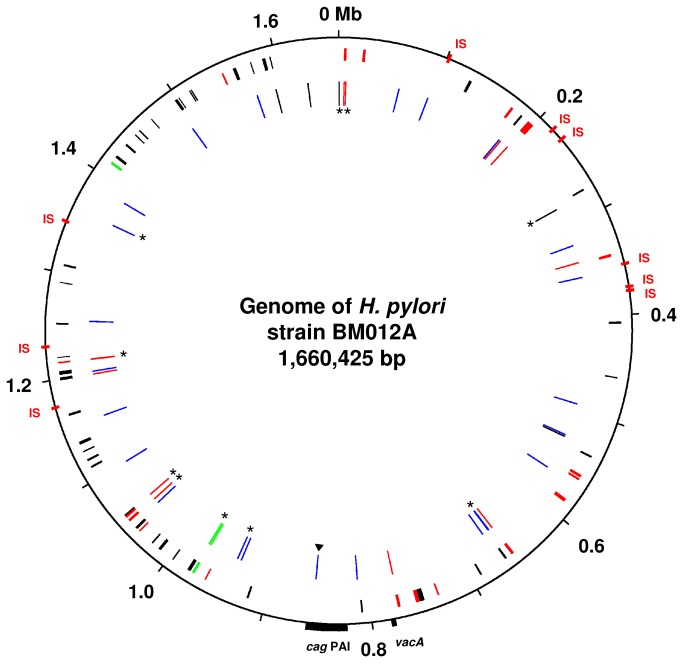
Figure 1. Genomic changes that accumulated in the H. pylori genome following transmission between spouses.
Circle 1: Genome of strain BM012A with ticks every 0.1 Mb and the positions of the vacA gene, the cag PAI and IS607 (IS). Circle 2: Distribution of OMP genes of the hop family (red), other OMP genes (black) and fucosyltransferases (green) in the genome of H. pylori strain BM012A. Circle 3: Distribution of the 31 SNPs and 10 CNPs (asterisks) that accumulated in the H. pylori genome following transmission between spouses. Red - changes in OMP genes; Blue - changes in housekeeping genes; Green - changes in the fucosyltransferase gene fucT; Black - changes in non-coding regions; Triangle - the nonsense mutation in the cagD gene.
Figure 2
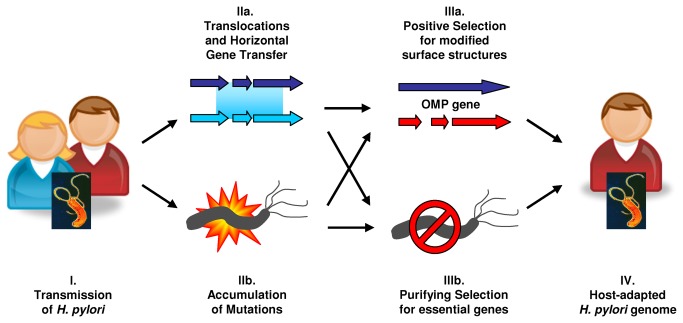
Figure 2. Model of genomic changes associated with H. pylori transmission to a new human host.
Following transmission (I) of H. pylori, mutations (IIb) and recombinant DNA fragments accumulate that result from horizontal gene transfer and intra-chromosomal translocation (IIa). Purifying selection preserves the function of essential genes (IIIb), while diversifying selection by the host's immune system favours growth of bacterial clones with modified surface structures such as OMPs (IIIa). The genomic changes, particularly changes in the expression of bacterial surface components, facilitate adaption of H. pylori to a new human host (IV), a dynamic, continuous process that is anticipated to continue throughout the host-pathogen association.

References

    1. Moodley Y, Linz B, Bond RP, Nieuwoudt M, Soodyall H et al. (2012) Age of the association between Helicobacter pylori and man. PLoS Pathog 8: e1002693 PubMed: 22589724. - PMC - PubMed
    1. Linz B, Balloux F, Moodley Y, Manica A, Liu H et al. (2007) An African origin for the intimate association between humans and Helicobacter pylori . Nature 445: 915-918. doi:10.1038/nature05562. PubMed: 17287725. - DOI - PMC - PubMed
    1. Moodley Y, Linz B, Yamaoka Y, Windsor HM, Breurec S et al. (2009) The peopling of the Pacific from a bacterial perspective. Science 323: 527-530. doi:10.1126/science.1166083. PubMed: 19164753. - DOI - PMC - PubMed
    1. Kersulyte D, Mukhopadhyay AK, Velapatiño B, Su W, Pan Z et al. (2000) Differences in genotypes of Helicobacter pylori from different human populations. J Bacteriol 182: 3210-3218. doi:10.1128/JB.182.11.3210-3218.2000. PubMed: 10809702. - DOI - PMC - PubMed
    1. Morelli G, Didelot X, Kusecek B, Schwarz S, Bahlawane C et al. (2010) Microevolution of Helicobacter pylori during prolonged infection of single hosts and within families. PLoS Genet 6: e1001036 PubMed: 20661309. - PMC - PubMed

Publication types