


Rethinking evidence-based practice and two-generation programs to create the future of early childhood policy
- PMID: 24342860
- PMCID: PMC4745587
- DOI: 10.1017/S0954579413000813
Rethinking evidence-based practice and two-generation programs to create the future of early childhood policy
Abstract
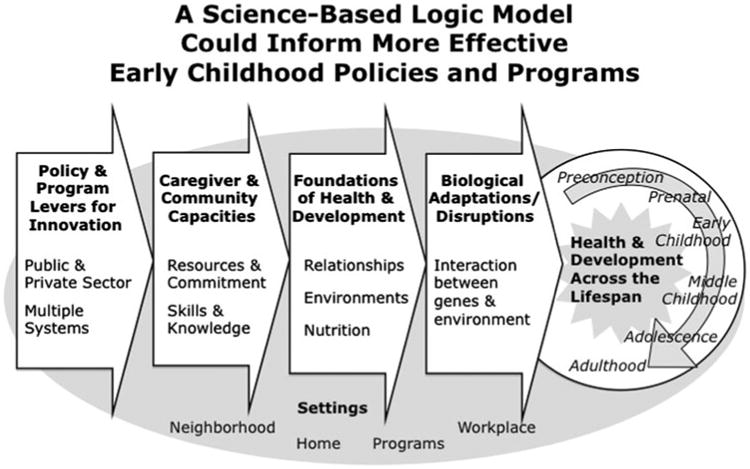
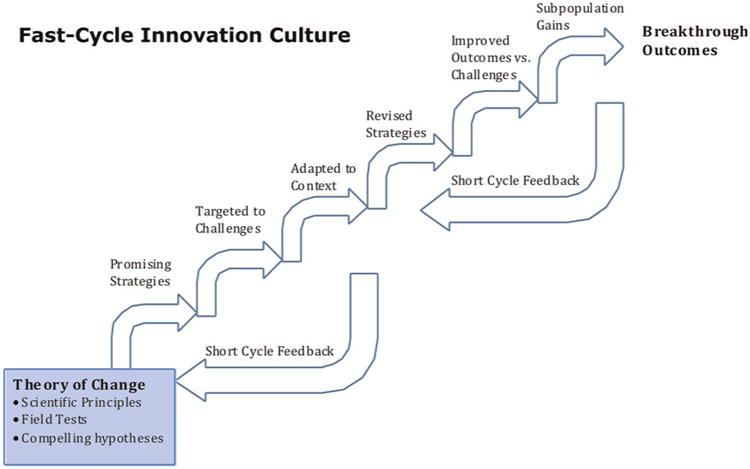
Half a century of research and program evaluation has fueled a diverse landscape of early childhood policies and practices that produce a range of positive effects on the life prospects of children who face the burdens of significant adversity. Drawing on advances in neurobiology, developmental psychology, developmental psychopathology, and prevention science, this paper presents a framework for elucidating underlying causal mechanisms that explain differences in outcomes, formulating enhanced theories of change about how to shift developmental trajectories, designing creative interventions and rethinking the concept of a two-generation strategy to produce breakthrough impacts, and launching a new era of investment in young children and their families that will achieve greater reductions in intergenerational disparities in learning, behavior, and health than those produced by current best practices. Particular attention is focused on the hypothesis that substantially better outcomes for vulnerable, young children could be achieved by greater attention to strengthening the resources and capabilities of the adults who care for them rather than by continuing to focus primarily on the provision of child-focused enrichment, parenting education, and informal support. Central to achieving this goal is the need to establish an innovation-friendly environment that embraces fast-cycle sharing, supports risk taking, and celebrates learning from failure.
Figures
References
-
- Almas AN, Degnan KA, Radulescu A, Nelson CA, III, Zeanah CH, Fox NA. Effects of early intervention and the moderating effects of brain activity on institutionalized children's social skills at age 8. Proceedings of the National Academy of Sciences of the United States of America. 2012;109:17228–17231. - PMC - PubMed
-
- Astuto J, Allen L. Home visitation and young children: An approach worth investing in? Society for Research in Child Development. 2009;23:3–21.
-
- Awh E, Vogel EK. The bouncer in the brain. Nature Neuroscience. 2008;11:5–6. - PubMed
-
- Barnett WS. Benefit–cost analysis of the Perry Preschool Program and its policy implications. Educational Evaluation & Policy Analysis. 1985;7:333–342.
Publication types
MeSH terms
Grants and funding
LinkOut - more resources
Full Text Sources
Other Literature Sources
Medical
