


Sustained complete responses in patients with lymphoma receiving autologous cytotoxic T lymphocytes targeting Epstein-Barr virus latent membrane proteins
- PMID: 24344220
- PMCID: PMC3940538
- DOI: 10.1200/JCO.2013.51.5304
Sustained complete responses in patients with lymphoma receiving autologous cytotoxic T lymphocytes targeting Epstein-Barr virus latent membrane proteins
Abstract
Purpose: Tumor cells from approximately 40% of patients with Hodgkin or non-Hodgkin lymphoma express the type II latency Epstein-Barr virus (EBV) antigens latent membrane protein 1 (LMP1) and LMP2, which represent attractive targets for immunotherapy. Because T cells specific for these antigens are present with low frequency and may be rendered anergic by the tumors that express them, we expanded LMP-cytotoxic T lymphocytes (CTLs) from patients with lymphoma using autologous dendritic cells and EBV-transformed B-lymphoblastoid cell lines transduced with an adenoviral vector expressing either LMP2 alone (n = 17) or both LMP2 and ΔLMP1 (n = 33).
Patients and methods: These genetically modified antigen-presenting cells expanded CTLs that were enriched for specificity against type II latency LMP antigens. When infused into 50 patients with EBV-associated lymphoma, the expanded CTLs did not produce infusional toxicities.
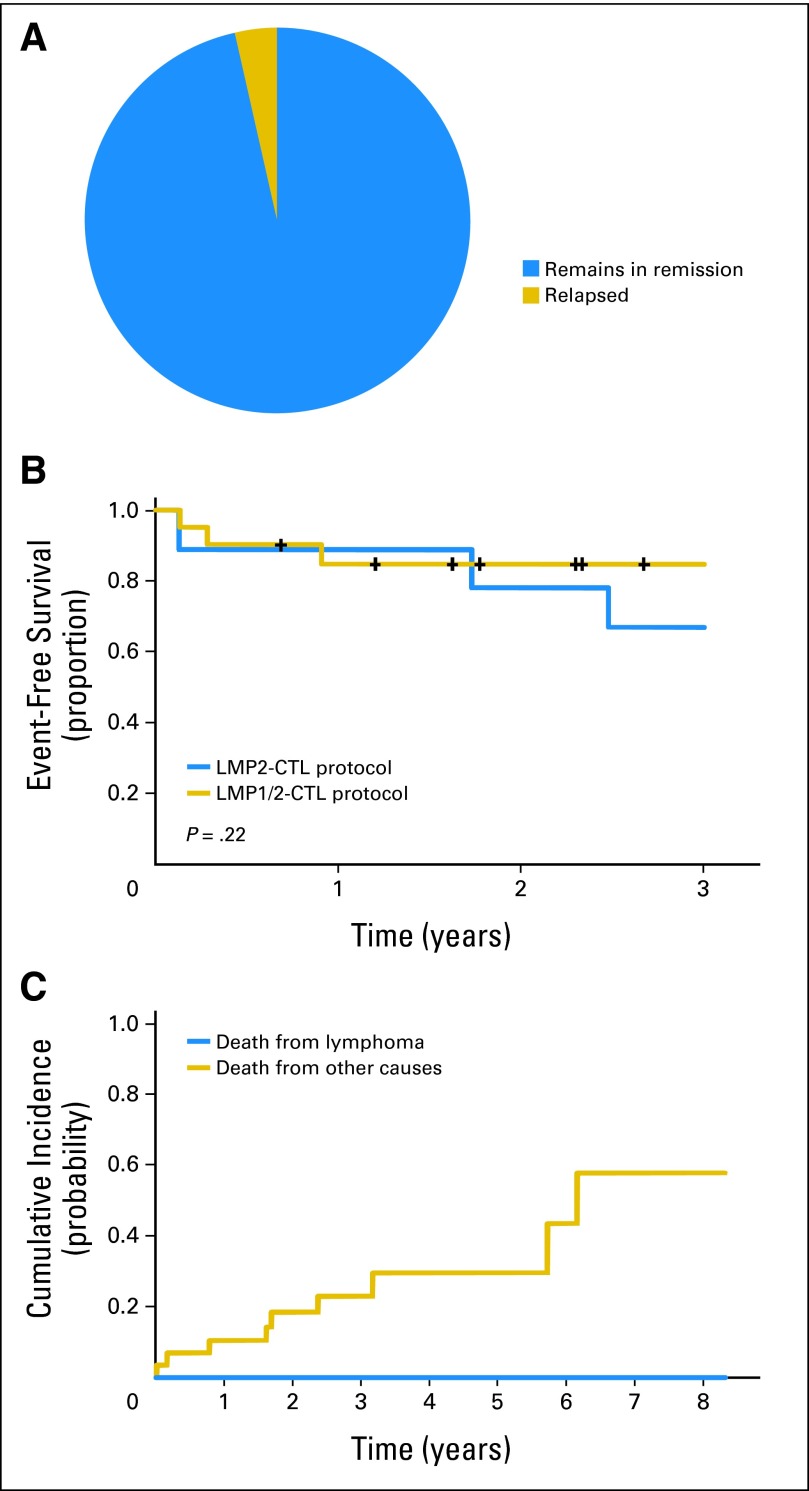
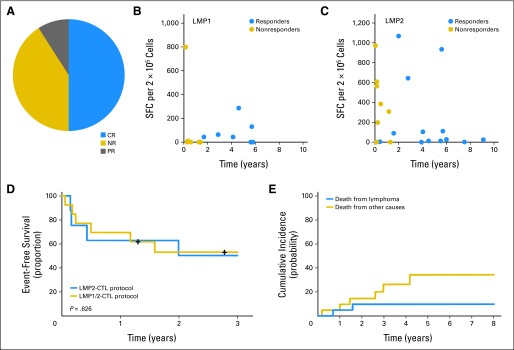
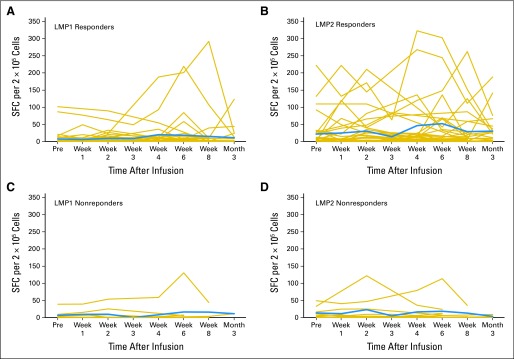
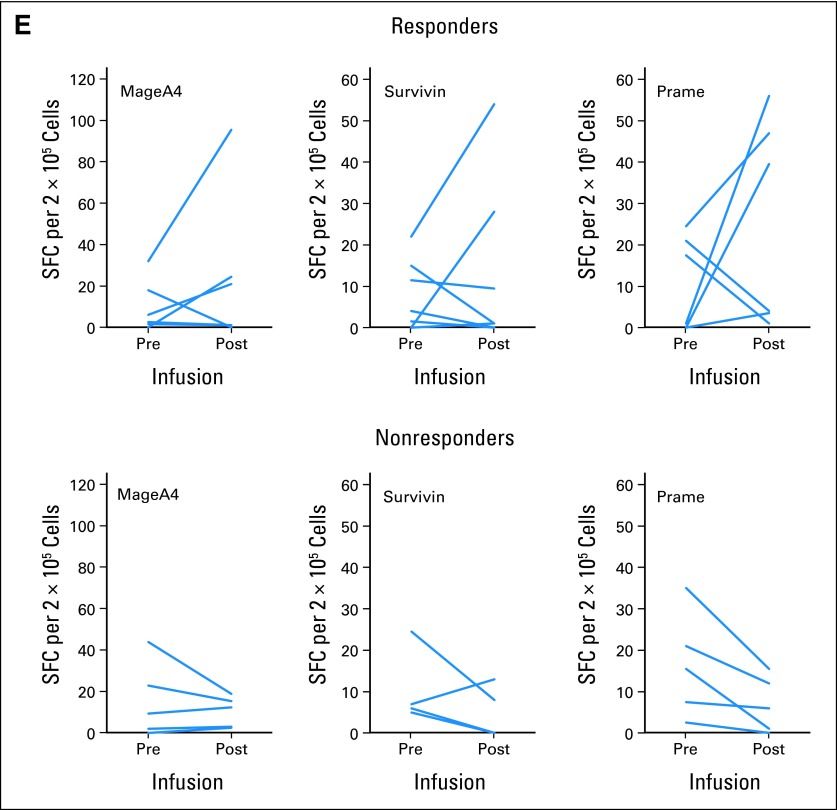
Results: Twenty-eight of 29 high-risk or multiple-relapse patients receiving LMP-CTLs as adjuvant therapy remained in remission at a median of 3.1 years after CTL infusion. None subsequently died as a result of lymphoma, but nine succumbed to complications associated with extensive prior chemoradiotherapy, including myocardial infarction and secondary malignancies. Of 21 patients with relapsed or resistant disease at the time of CTL infusion, 13 had clinical responses, including 11 complete responses. T cells specific for LMP as well as nonviral tumor-associated antigens (epitope spreading) could be detected in the peripheral blood within 2 months after CTL infusion, but this evidence for epitope spreading was seen only in patients achieving clinical responses.
Conclusion: Autologous T cells directed to the LMP2 or LMP1 and LMP2 antigens can induce durable complete responses without significant toxicity. Their earlier use in the disease course may reduce delayed treatment-related mortality.
Trial registration: ClinicalTrials.gov NCT00671164.
Conflict of interest statement
Authors' disclosures of potential conflicts of interest and author contributions are found at the end of this article.
Figures
Comment in
-
Targeting Epstein-Barr virus-associated lymphomas.J Clin Oncol. 2014 Mar 10;32(8):830-2. doi: 10.1200/JCO.2013.53.2994. Epub 2014 Feb 3. J Clin Oncol. 2014. PMID: 24493729 No abstract available.
-
Reply to S. Yuan et al.J Clin Oncol. 2014 Sep 1;32(25):2820-1. doi: 10.1200/JCO.2014.56.8469. Epub 2014 Jul 21. J Clin Oncol. 2014. PMID: 25049328 Free PMC article. No abstract available.
-
Latent membrane protein-specific cytotoxic T lymphocytes: new hope for patients with natural killer/T-cell lymphoma?J Clin Oncol. 2014 Sep 1;32(25):2819-20. doi: 10.1200/JCO.2014.56.3551. Epub 2014 Jul 21. J Clin Oncol. 2014. PMID: 25049331 No abstract available.
References
-
- Riddell SR, Watanabe KS, Goodrich JM, et al. Restoration of viral immunity in immunodeficient humans by the adoptive transfer of T cell clones. Science. 1992;257:238–241. - PubMed
-
- Peggs KS, Verfuerth S, Chow C, et al. Adoptive cellular therapy for cytomegalovirus following allogeneic stem cell transplantation: Toxicity and efficacy. Blood. 2005:104. (abstr 191) - PubMed
-
- Heslop HE, Brenner MK, Rooney CM. Donor T cells to treat EBV-associated lymphoma. N Engl J Med. 1994;331:679–680. - PubMed
-
- Leen AM, Myers GD, Sili U, et al. Monoculture-derived T lymphocytes specific for multiple viruses expand and produce clinically relevant effects in immunocompromised individuals. Nat Med. 2006;12:1160–1166. - PubMed
Publication types
MeSH terms
Substances
Associated data
Grants and funding
LinkOut - more resources
Full Text Sources
Other Literature Sources
Medical
Research Materials
