


Mutation spectrum in South American Lynch syndrome families
- PMID: 24344984
- PMCID: PMC3904200
- DOI: 10.1186/1897-4287-11-18
Mutation spectrum in South American Lynch syndrome families
Abstract
Background: Genetic counselling and testing for Lynch syndrome have recently been introduced in several South American countries, though yet not available in the public health care system.
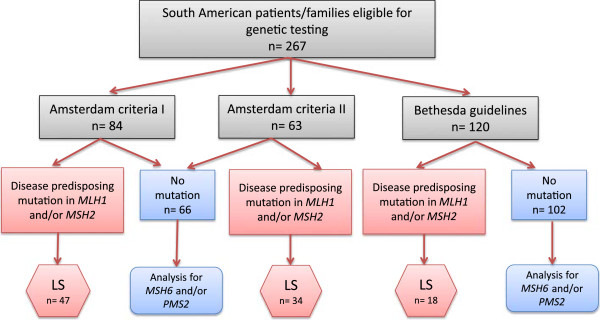
Methods: We compiled data from publications and hereditary cancer registries to characterize the Lynch syndrome mutation spectrum in South America. In total, data from 267 families that fulfilled the Amsterdam criteria and/or the Bethesda guidelines from Argentina, Brazil, Chile, Colombia and Uruguay were included.
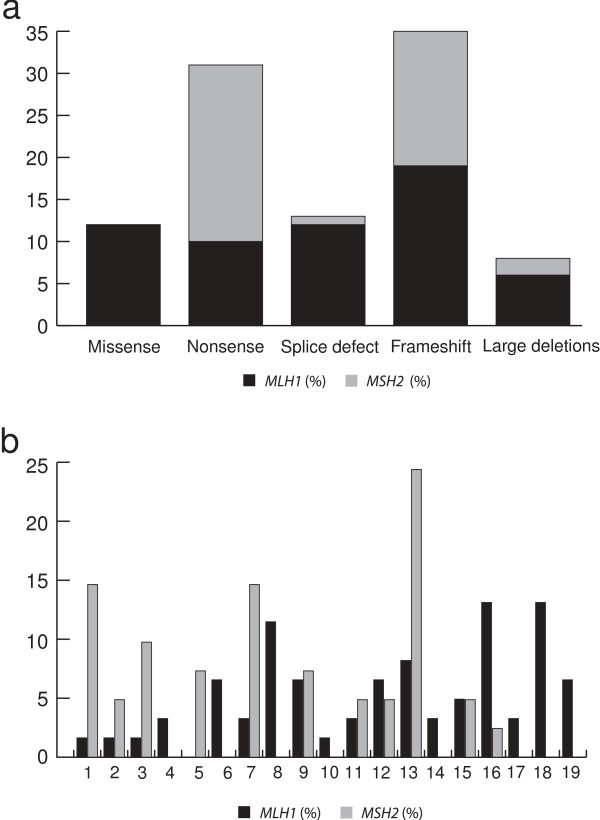
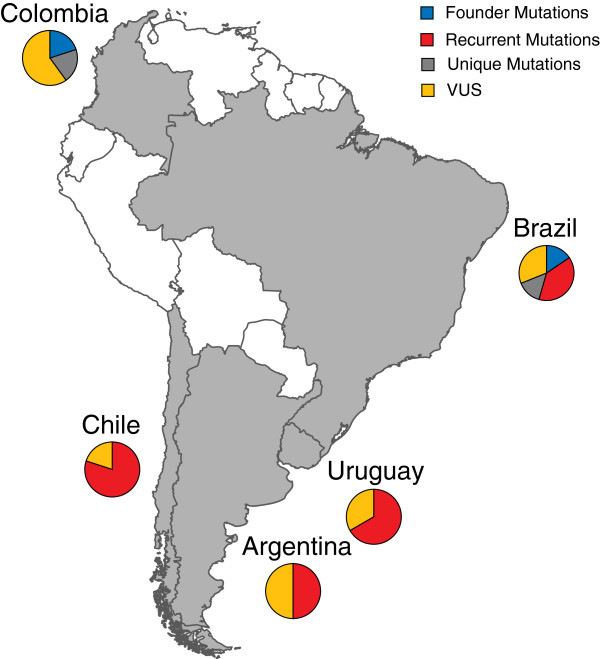
Results: Disease-predisposing mutations were identified in 37% of the families and affected MLH1 in 60% and MSH2 in 40%. Half of the mutations have not previously been reported and potential founder effects were identified in Brazil and in Colombia.
Conclusion: The South American Lynch syndrome mutation spectrum includes multiple new mutations, identifies potential founder effects and is useful for future development of genetic testing in this continent.
Figures
References
-
- Giraldo A, Gomez A, Salguero G, Garcia H, Aristizabal F, Gutierrez O, Angel LA, Padron J, Martinez C, Martinez H. et al.MLH1 and MSH2 mutations in Colombian families with hereditary nonpolyposis colorectal cancer (Lynch syndrome)–description of four novel mutations. Fam Cancer. 2005;11:285–290. doi: 10.1007/s10689-005-4523-7. - DOI - PubMed
-
- Valentin MD, da Silva FC, dos Santos EM, Lisboa BG, de Oliveira LP, Ferreira Fde O, Gomy I, Nakagawa WT, Aguiar Junior S, Redal M. et al.Characterization of germline mutations of MLH1 and MSH2 in unrelated south American suspected Lynch syndrome individuals. Fam Cancer. 2011;11:641–647. doi: 10.1007/s10689-011-9461-y. - DOI - PubMed
-
- Rossi BM, Lopes A, Oliveira Ferreira F, Nakagawa WT, Napoli Ferreira CC, Casali Da Rocha JC, Simpson CC, Simpson AJ. hMLH1 and hMSH2 gene mutation in Brazilian families with suspected hereditary nonpolyposis colorectal cancer. Ann Surg Oncol. 2002;11:555–561. - PubMed
LinkOut - more resources
Full Text Sources
Other Literature Sources
