. 2014 Feb;38(2):235-41.
doi: 10.1007/s00264-013-2231-8. Epub 2013 Dec 18.

Total knee arthroplasty at 15-17 years: does implant design affect outcome?

Affiliations

Total knee arthroplasty at 15-17 years: does implant design affect outcome?

Jan Victor et al. Int Orthop. 2014 Feb.

Abstract

Purpose: A study was conducted to compare minimum 15-year survivorship and outcome of the Genesis I and II implants for total knee arthroplasty (TKA).

Methods: We retrospectively reviewed 245 consecutive TKA implanted between January 1995 and October 1997. Genesis I was implanted in 156 knees and Genesis II in 89 knees.

Results: At 15-17 years, 75 patients (31%) had died, 28 patients (11%) were lost to follow-up and 11 TKA were revised (4.6%), including ten Genesis I (6.4%) and one Genesis II (1.1%); 131 TKA (53%) were available for follow-up. Cumulative survivorship was 92.4% at 15.7 years. Survival in patients <69 years at surgery was lower (88.0%) compared with patients ≥69 years (98.5%; p = 0.023). In patients <69 years, Genesis I survival (84.3%) was worse compared with Genesis II (97.1%) (p = 0.018). Polyethylene (PE) Insert thickness ≤11 mm had significantly better survivorship (97.1%) compared with PE >11 mm (56.7%) (p < 0.0001) CONCLUSIONS: At a minimum of 15 years, the overall (92.4%) survivorship of Genesis TKA was good, with excellent (98.1%) survivorship of the Genesis II design. Revision rates were higher with Genesis I in the younger age group and with insert thickness >11 mm, possibly due to longer shelf life of less frequently used sizes.


Figures
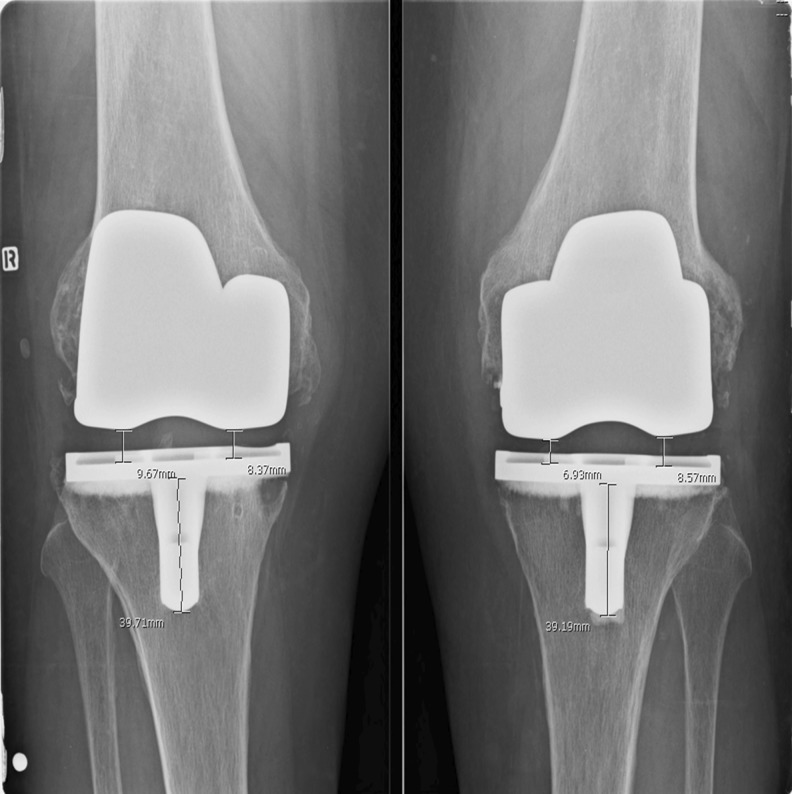
Fig. 1
Fig. 1
Polyethylene (PE) thickness of medial and lateral compartments measured on anteroposterior radiographs. The estimated amount of linear wear was calculated by deducting the measured thickness, corrected for magnification, from the initial PE thickness, as disclosed by the manufacturer
Fig. 2
Fig. 2
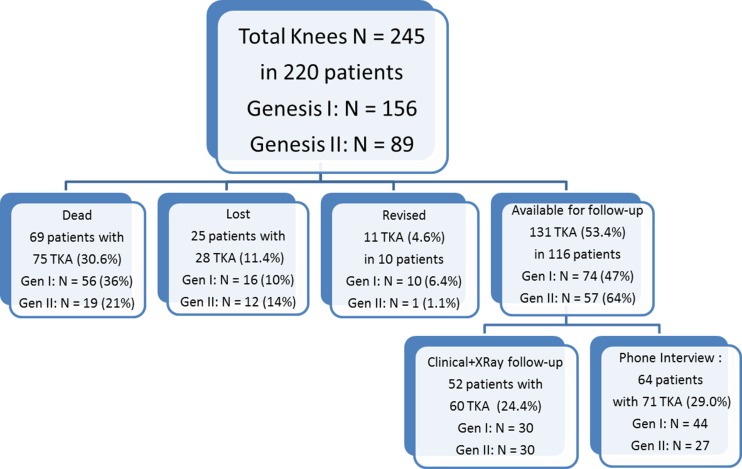
All patients: dead, lost, revised and available for 15–17 years’ follow-up in the global population and in the Genesis I (Gen I) and Genesis II (Gen II) cohorts
Fig. 3
Fig. 3
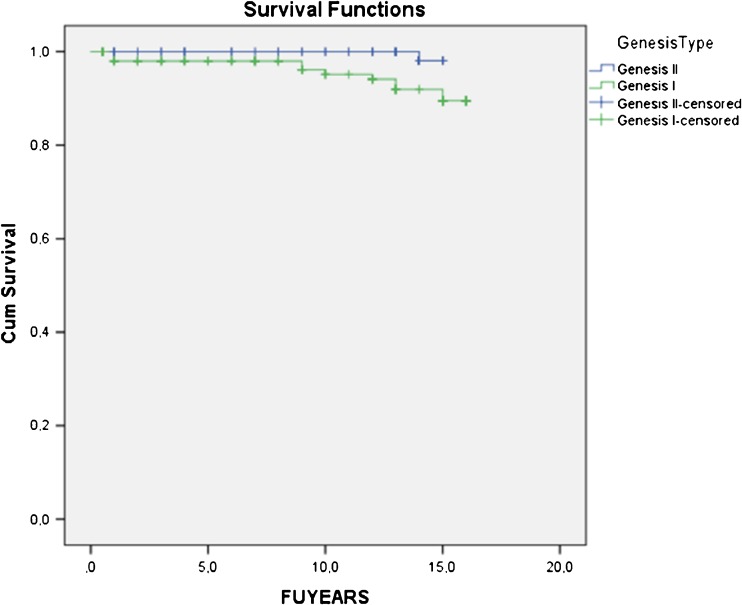
Survivorship in the Genesis I group was 90.1 % at 15.5 years [95 % confidence interval (CI) 88.0 – 92.2) and in the Genesis II group 98.1 % at 15.0 years (95 % CI 97.8 – 98.3). The difference was not statistically significant (Log rank 3.136; p = 0.077)
Fig. 4
Fig. 4
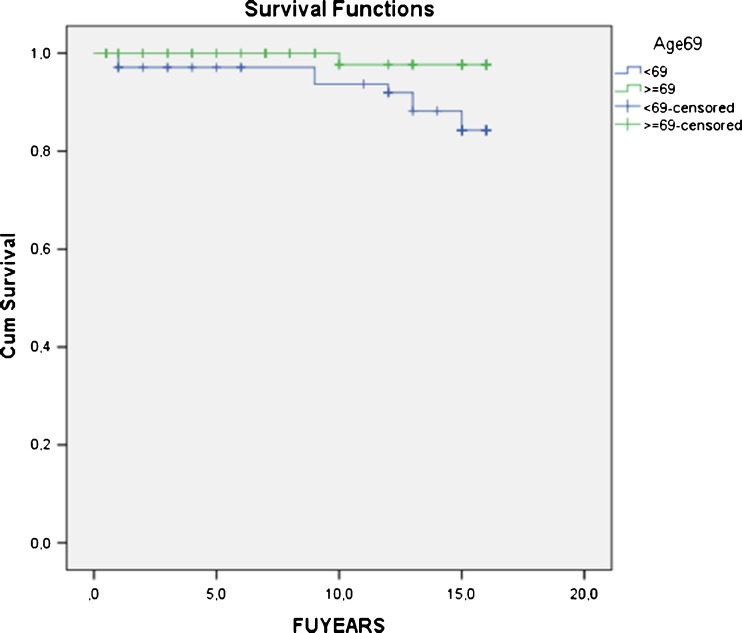
Total knee arthroplasty (TKA) survival in patients <69 years (overall median age) at surgery was significantly worse [88.0 % at 15.4 years; 95 % confidence interval (CI) 85.8 – 90.4] compared with patients ≥69 years at surgery (98.5 % at 15.9 years; 95 % CI 97.4 – 99.6); p = 0.023
Fig. 5
Fig. 5
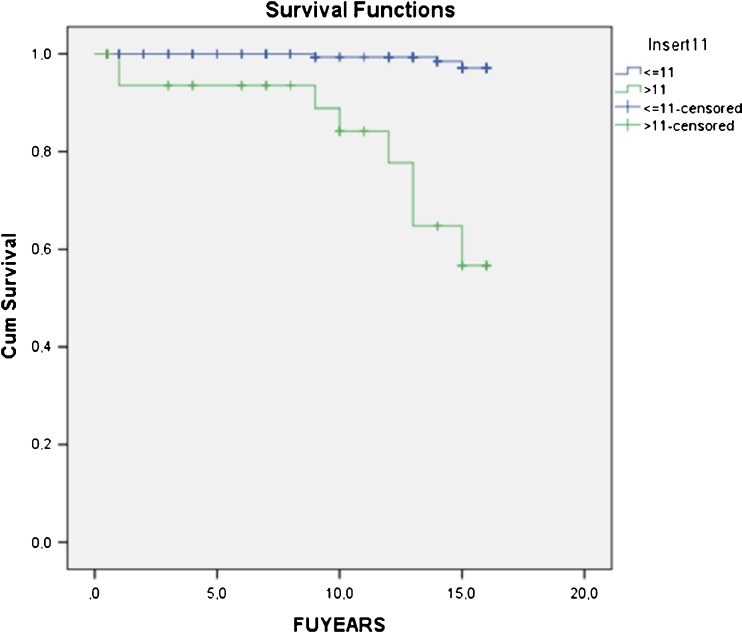
Survival with polyethylene (PE) thickness >11 mm [56.7 % at 14.0 years; 95 % confidence interval (CI) 49.5–62.9] was significantly worse compared with PE thickness ≤11 mm (97.1 % at 15.9 yearsl; 95 % CI 96.5 –97.7); p < 0.0001

References

    1. Kurtz SM, Ong K, Lau E, Mowat F, Halpern M. Projections of primary and revision hip and knee arthroplasty in the United States from 2005 to 2030. J Bone Joint Surg Am. 2007;89:780–785. doi: 10.2106/JBJS.F.00222. - DOI - PubMed
    1. Murray DW, Carr AJ, Bulstrode C. Survival analysis of joint replacements. J Bone Joint Surg Br. 1993;75:697–704. - PubMed
    1. Dennis DA, Komistek RD, Scuderi GR, Zingde S. Factors affecting flexion after total knee arthroplasty. Clin Orthop Relat Res. 2007;464:53–60. - PubMed
    1. Witvrouw E, Victor J, Bellemans J, Rock B, Van Lummel R, Vanderslikke R, Verdonk R. A correlation study of objective functionality and WOMAC in total knee arthroplasty. Knee Surg Sports Traumatol Arthrosc. 2002;10:347–351. doi: 10.1007/s00167-002-0302-2. - DOI - PubMed
    1. Bourne RB, Chesworth BM, Davis AM, Mahomed NN, Charron KD. Patient satisfaction after total knee arthroplasty: who is satisfied and who is not? Clin Orthop Relat Res. 2010;468:57–63. doi: 10.1007/s11999-009-1119-9. - DOI - PMC - PubMed