Clinical Trial
. 2013 Dec 11;8(12):e83306.
doi: 10.1371/journal.pone.0083306. eCollection 2013.

When, where and how osteoporosis-associated fractures occur: an analysis from the Global Longitudinal Study of Osteoporosis in Women (GLOW)

Affiliations
Clinical Trial

When, where and how osteoporosis-associated fractures occur: an analysis from the Global Longitudinal Study of Osteoporosis in Women (GLOW)

Aline G Costa et al. PLoS One. .

Abstract

Objective: To examine when, where and how fractures occur in postmenopausal women.

Methods: We analyzed data from the Global Longitudinal Study of Osteoporosis in Women (GLOW), including women aged ≥55 years from the United States of America, Canada, Australia and seven European countries. Women completed questionnaires including fracture data at baseline and years 1, 2 and 3.

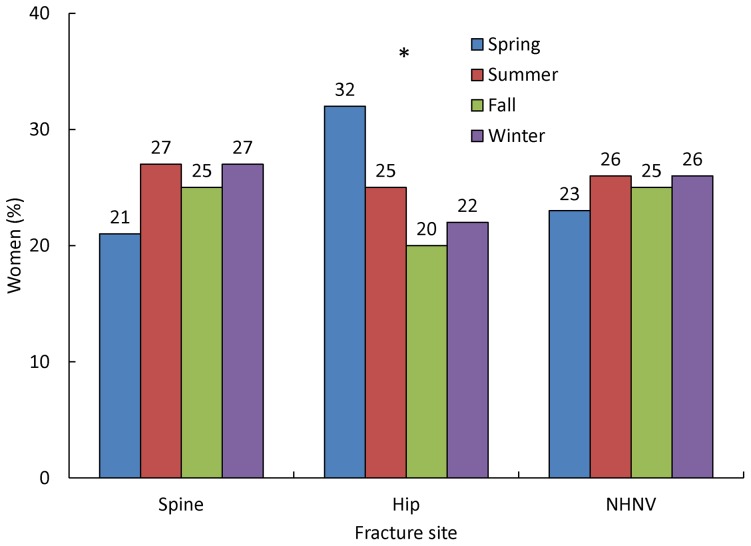
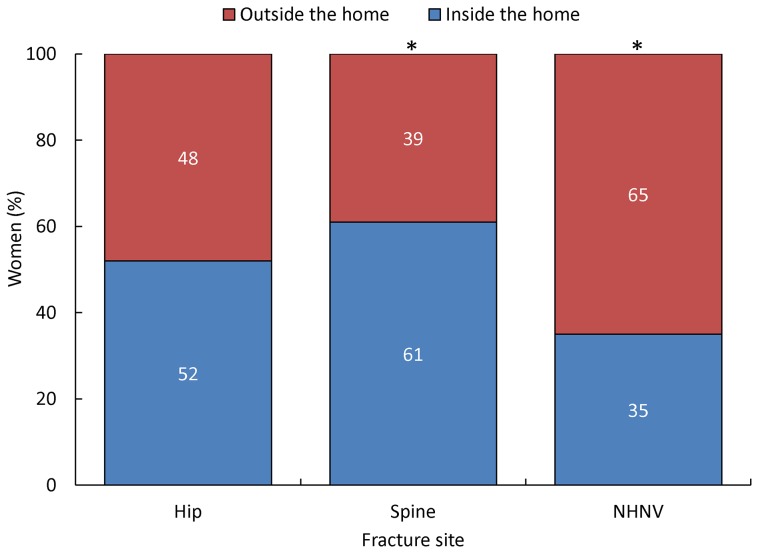
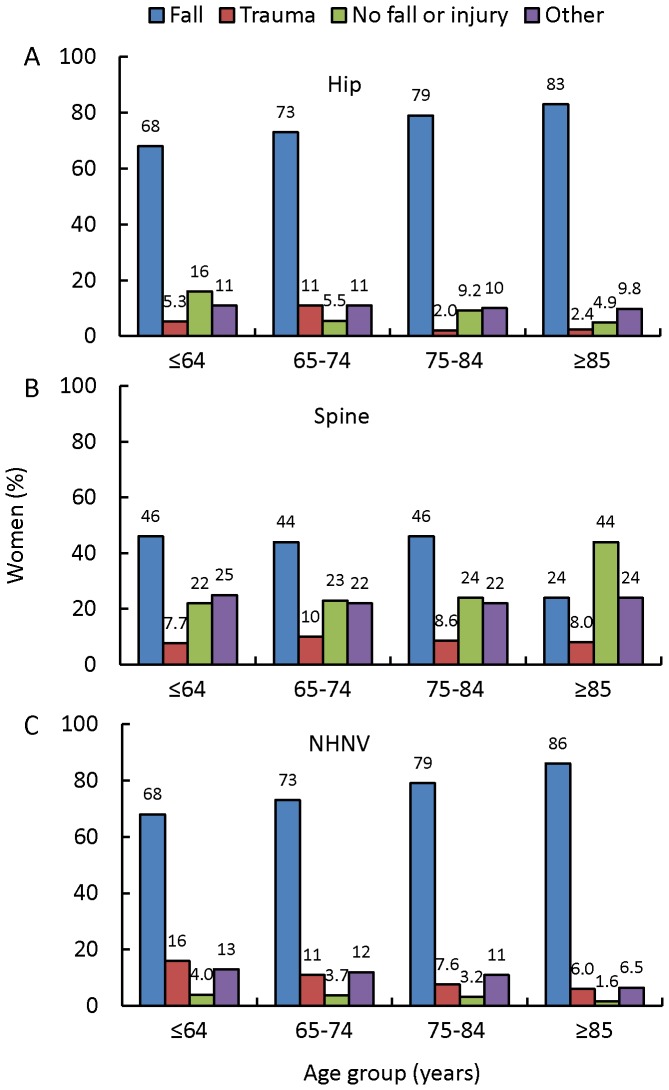
Results: Among 60,393 postmenopausal women, 4122 incident fractures were reported (86% non-hip, non-vertebral [NHNV], 8% presumably clinical vertebral and 6% hip). Hip fractures were more likely to occur in spring, with little seasonal variation for NHNV or spine fractures. Hip fractures occurred equally inside or outside the home, whereas 65% of NHNV fractures occurred outside and 61% of vertebral fractures occurred inside the home. Falls preceded 68-86% of NHNV and 68-83% of hip fractures among women aged ≤64 to ≥85 years, increasing with age. About 45% of vertebral fractures were associated with falls in all age groups except those ≥85 years, when only 24% occurred after falling.

Conclusion: In this multi-national cohort, fractures occurred throughout the year, with only hip fracture having a seasonal variation, with a higher proportion in spring. Hip fractures occurred equally within and outside the home, spine fractures more often in the home, and NHNV fractures outside the home. Falls were a proximate cause of most hip and NHNV fractures. Postmenopausal women at risk for fracture need counseling about reducing potentially modifiable fracture risk factors, particularly falls both inside and outside the home and during all seasons of the year.


Conflict of interest statement

Competing Interests: Aline Costa, Allison Wyman and Jeri Nieves have no disclosures. Ethel Siris has previously consulted for Amgen, Lilly, Novartis, Merck and Pfizer; and has served on Speakers' Bureaus for Amgen and Lilly. Nelson Watts has received honoraria for lectures during the past year from Amgen, Lilly, Novartis and Warner Chilcott; consulting fees during the past year from Abbott, Amgen, Bristol-Myers Squibb, Endo, Imagepace, Johnson & Johnson, Lilly, Medpace, Merck, Nitto Denko, Noven, Novo Nordisk, Pfizer/Wyeth and Quark; research support (through his Health System) from Merck and NPS; and cofounded, has stock options in and is a director of OsteoDynamics. Stuart Silverman has received grant support from Wyeth, Lilly, Novartis and Alliance; has served on Speakers' Bureaus for Lilly, Novartis, Pfizer and Procter & Gamble; has received honoraria from Procter & Gamble; and has previously consulted/acted as an Advisory Board member for Lilly, Argen, Wyeth, Merck, Roche and Novartis. Kenneth Saag has consulted for or received other remuneration from Merck, Amgen and Eli Lilly; has received research grants from Merck; and has held non-remunerative positions of influence on the NOF Board of Trustees and as ACR Chair on the Quality of Care Committee. Christian Roux has received honoraria from and consults/acts as an advisory board member for Alliance, Amgen, Lilly, Merck, Novartis, Nycomed, Roche, GlaxoSmithKline, Servier and Wyeth. Maurizio Rossini is on the Speakers' Bureau for Roche. Johannes Pfeilschifter has received grant support from Amgen, Kyphon, Novartis and Roche; has received grant support for equipment from GE Lunar; has served on Speakers' Bureaus for Amgen, sanofi-aventis, GlaxoSmithKline, Roche, Lilly Deutschland, Orion Pharma, Merck, Merckle, Nycomed and Procter & Gamble; and has acted as an Advisory Board member for Novartis, Roche, Procter & Gamble and Teva. J. Coen Netelenbos has previously consulted for Roche Diagnostics, Daiichi-Sankyo, Proctor & Gamble and Nycomed; has received lecture fees, travel and accommodation from E. Lilly, Amgen, Novartis and Will Farma and has received grant support from The Alliance for Better Bone Health and Amgen. Lyn March has acted as an Advisory Board member for Servier and received speakers' bureau fees and support to travel to scientific meetings from Servier, Merk and Pfizer. Andrea LaCroix has received funding from The Alliance for Better Bone Health (sanofi-aventis and Warner Chilcott) and is an Advisory Board member for Amgen. Susan Greenspan has previously consulted/been an Advisory Board member for Amgen, Lilly and Merck; and has received grant support from The Alliance for Better Bone Health (sanofi-aventis and Proctor & Gamble) and Lilly. Frederick Hooven, Stephen Gehlbach and Frederick Anderson have received funding from Pfizer. Adolfo Díez-Pérez has received consulting fees and lectured for Eli Lilly, Amgen, Procter & Gamble, Servier and Daiichi-Sankyo; has been an expert witness for Merck; consults for/is an Advisory Board member for Novartis, Eli Lilly, Amgen and Procter & Gamble; has received honoraria from Novartis, Lilly, Amgen, Procter & Gamble and Roche; has previously been an expert witness for Merck; and has previously consulted/acted as an Advisory Board member for Novartis, Lilly, Amgen and Procter & Gamble. Cyrus Cooper has previously consulted for/received lecture fees from Amgen, The Alliance for Better Bone Health (sanofi-aventis and Warner Chilcott), Lilly, Merck, Servier, Novartis and Roche-GSK. Juliet Compston has previously consulted for Servier, Shire, Nycomed, Novartis, Amgen, Procter & Gamble, Wyeth, Pfizer, The Alliance for Better Bone Health, Roche and GlaxoSmithKline; has received lecture fees, travel and accommodation from Servier, Procter & Gamble and Lilly; and has received grant support from Servier R&D (2007–2009), Procter & Gamble (2007–2009), Nycomed (2009–2012) and Acuitas (2009–2011). Roland Chapurlat has received funding from the French Ministry of Health, Merck, Servier, Lilly and Procter & Gamble; has received honoraria from Amgen, Servier, Novartis, Lilly, Roche and sanofi-aventis; and has previously consulted/acted as an Advisory Board member for Amgen, Merck, Servier, Nycomed and Novartis. Steven Boonen has received grant support from Amgen, Lilly, Novartis, Pfizer, Procter & Gamble, sanofi-aventis, Roche and GlaxoSmithKline; and has received honoraria from, served on Speakers' Bureaus for and previously consulted/acted as an Advisory Board member for Amgen, Lilly, Merck, Novartis, Procter & Gamble, sanofi-aventis and Servier. Jonathan Adachi has received consulting fees or other remuneration from Amgen, Eli Lilly, Merck, Novartis, Warner Chilcott; has received research grants from Amgen, Eli Lilly, Merck, and Novartis; has held a non-remunerative position of influence on the IOF Board of Directors, Osteoporosis Canada; and has been on speakers bureaus for Amgen, Eli Lilly, Merck, Novartis and Warner Chilcott. Silvano Adami has received honoraria for boards and speeches from Merck, Eli-Lilly, Amgen. This does not alter the authors' adherence to all the PLOS ONE policies on sharing data and materials.

Figures

Figure 1
Figure 1. Seasonal variation of fracture rates according to fracture site.
Significant differences for each season within fracture types (P<0.05) are denoted by an asterisk. NHNV, non-hip, non-vertebral.
Figure 2
Figure 2. Location of occurrence of fracture by fracture type.
Significant differences for each location within fracture types (P<0.05) are denoted by an asterisk. NHNV, non-hip, non-vertebral.
Figure 3
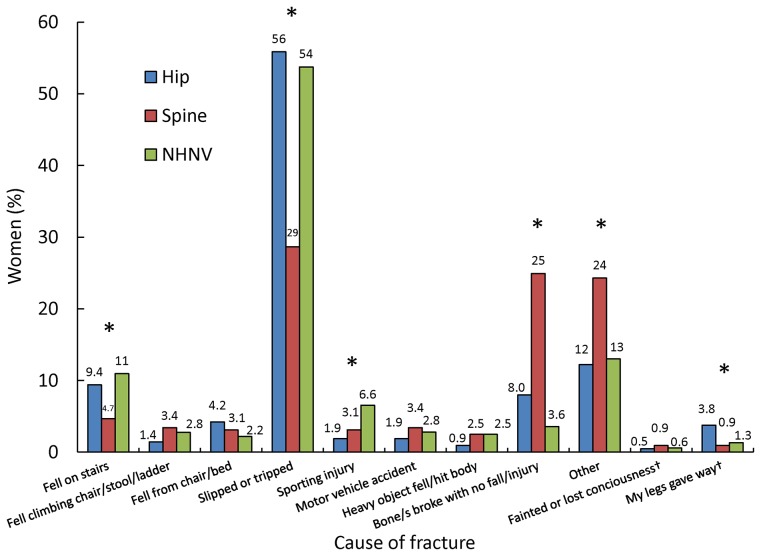
Figure 3. Cause of fracture by fracture type.
Significant differences for each cause between fracture types (P<0.05) are denoted by an asterisk. Dagger denotes response only available on year 3 survey. NHNV, non-hip, non-vertebral.
Figure 4
Figure 4. Cause of fractures by age group.
A, For hip fractures. B, For spine fractures. C, For NHNV fractures. NHNV, non-hip, non-vertebral.

References

    1. Burge R, Dawson-Hughes B, Solomon DH, Wong JB, King A, et al. (2007) Incidence and economic burden of osteoporosis-related fractures in the United States, 2005-2025. J Bone Miner Res 22: 465–475. - PubMed
    1. Johnell O, Kanis JA (2006) An estimate of the worldwide prevalence and disability associated with osteoporotic fractures. Osteoporos Int 17: 1726–1733. - PubMed
    1. Hooven FH, Adachi JD, Adami S, Boonen S, Compston J, et al. (2009) The Global Longitudinal Study of Osteoporosis in Women (GLOW): rationale and study design. Osteoporos Int 20: 1107–1116. - PMC - PubMed
    1. Centers for Disease Control and Prevention (CDC), National Center for Health Statistics (NCHS) (2008) National Health and Nutrition Examination Survey 2005-2006. Hyattsville, MD: U.S. Department of Health and Human Services, Centers for Disease Control and Prevention.
    1. Brazier JE, Walters SJ, Nicholl JP, Kohler B (1996) Using the SF-36 and Euroqol on an elderly population. Qual Life Res 5: 195–204. - PubMed

Publication types