


Longer Course of Induction Chemotherapy Followed by Chemoradiation Favors Better Survival Outcomes for Patients With Locally Advanced Pancreatic Cancer
- PMID: 24351782
- PMCID: PMC4061284
- DOI: 10.1097/COC.0000000000000022
Longer Course of Induction Chemotherapy Followed by Chemoradiation Favors Better Survival Outcomes for Patients With Locally Advanced Pancreatic Cancer
Abstract
Objectives: At diagnosis, 30% of patients with pancreatic cancer are unresectable stage 3 locally advanced. The standard treatment for locally advanced pancreatic cancer (LAPC) is not defined. The current study was conducted to assess the roles of chemotherapy and chemoradiation for LAPC treatment.
Materials and methods: Between June 2006 and March 2011, 100 patients with LAPC were treated at the Johns Hopkins Hospital. Retrospective analysis was performed to compare cumulative incidence of progression (CIP) and overall survival (OS) among different subgroups.
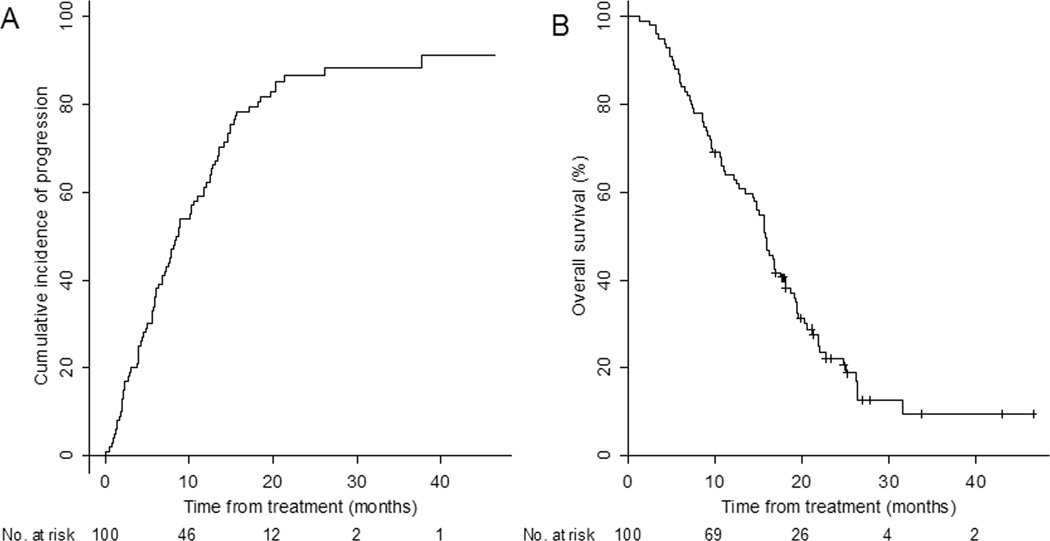
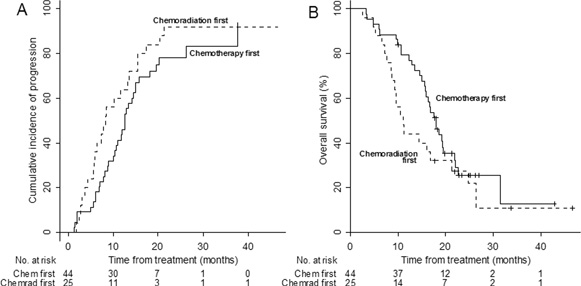
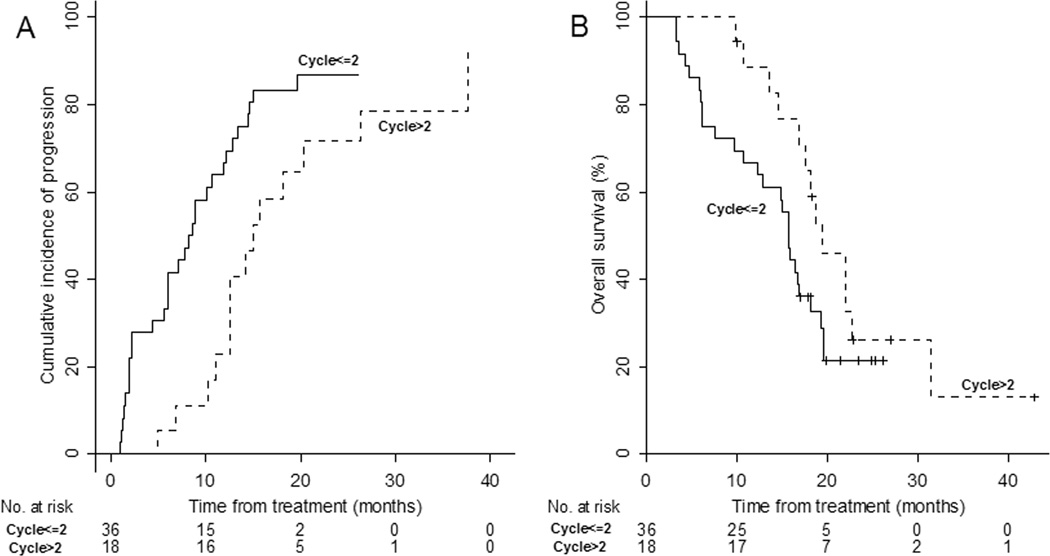
Results: For the 100 patients, the median OS was 15.8 months and the median CIP was 8.4 months. The combination of chemotherapy and chemoradiation before disease progression was significantly associated with improved CIP (P=0.001) and improved OS when compared with chemoradiation alone (median OS: 16.4 vs. 11.1 mo, P=0.03). Among patients receiving combination treatment, patients who received chemotherapy first followed by chemoradiation had a trend toward lower CIP (P=0.09) and improved OS (median OS: 18.1 vs. 11.0 mo, P=0.09). Patients who received >2 cycles of chemotherapy before chemoradiation had a significantly decreased CIP (P=0.008) and a trend toward better OS (median OS: 19.4 vs. 15.7 mo, P=0.10). On multivariate analysis, receiving >2 cycles of chemotherapy before chemoradiation was associated with improved CIP.
Conclusions: Although combination chemotherapy and chemoradiation is favored in the treatment of LAPC, longer induction chemotherapy may play a more important role in sensitization of tumors to subsequent chemoradiation. Our results support treating patients with induction chemotherapy for at least 3 cycles followed by consolidative chemoradiation. These results merit further validation by a prospective study.
Figures

References
-
- Krishnan S, Rana V, Janjan NA, et al. Induction chemotherapy selects patients with locally advanced, unresectable pancreatic cancer for optimal benefit from consolidative chemoradiation therapy. Cancer. 2007;110:47–55. - PubMed
-
- Huguet F, Andre T, Hammel P, et al. Impact of chemoradiotherapy after disease control with chemotherapy in locally advanced pancreatic adenocarcinoma in GERCOR phase II and III studies. J. Clin. Oncol. 2007;25:326–331. - PubMed
-
- Moertel CG, Frytak S, Hahn RG, et al. Therapy of locally unresectable pancreatic carcinoma: a randomized comparison of high dose (6000 rads) radiation alone, moderate dose radiation (4000 rads + 5-fluorouracil), and high dose radiation + 5-fluorouracil: The Gastrointestinal Tumor Study Group. Cancer. 1981;48:1705–1710. - PubMed
-
- Callery MP, Chang KJ, Fishman EK, et al. Pretreatment assessment of resectable and borderline resectable pancreatic cancer: expert consensus statement. Ann. Surg. Oncol. 2009;16:1727–1733. - PubMed
Publication types
MeSH terms
Substances
Grants and funding
LinkOut - more resources
Full Text Sources
Other Literature Sources
Medical
