The LIM and POU homeobox genes ttx-3 and unc-86 act as terminal selectors in distinct cholinergic and serotonergic neuron types
- PMID: 24353061
- PMCID: PMC3879818
- DOI: 10.1242/dev.099721
The LIM and POU homeobox genes ttx-3 and unc-86 act as terminal selectors in distinct cholinergic and serotonergic neuron types
Abstract
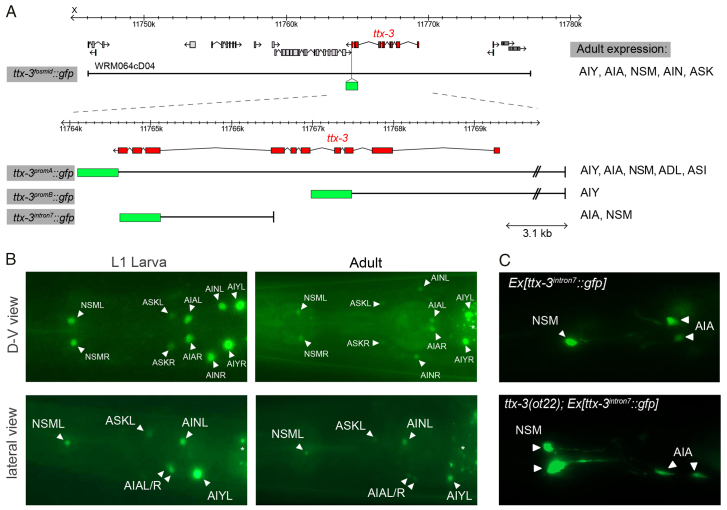
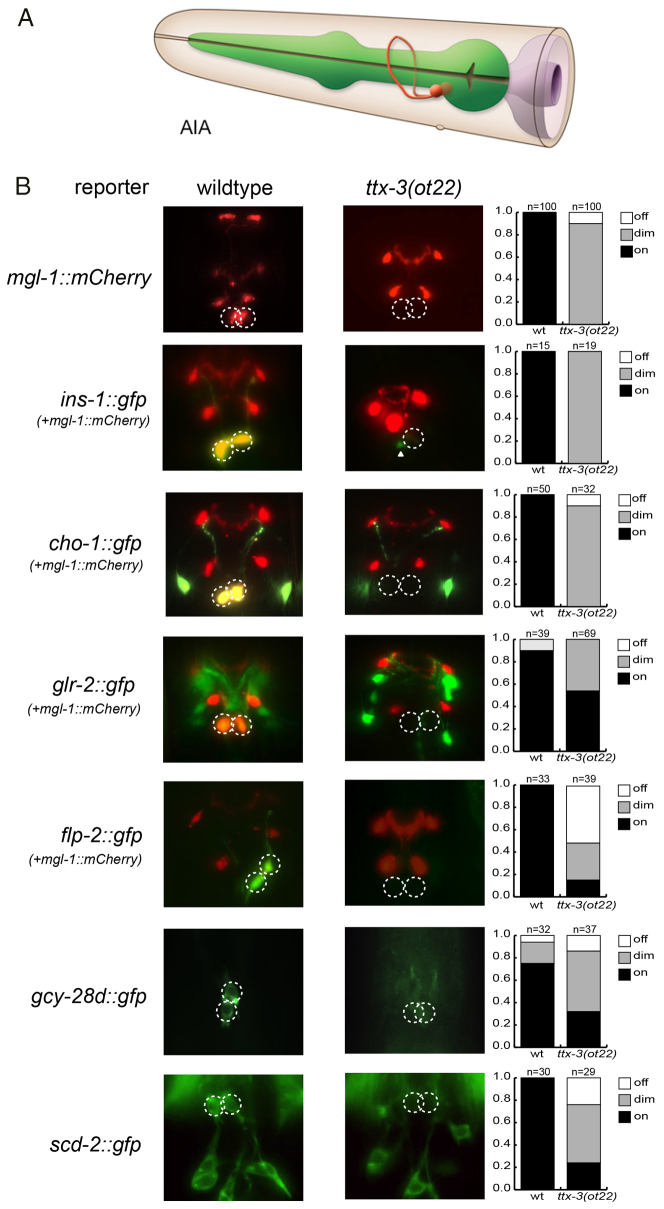
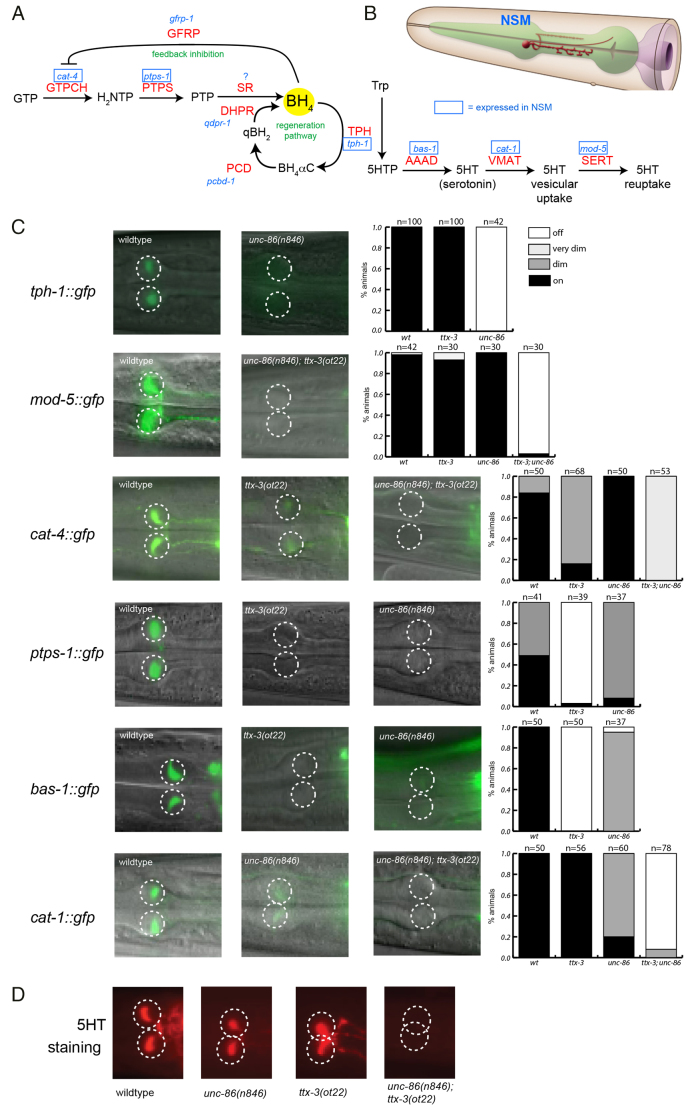
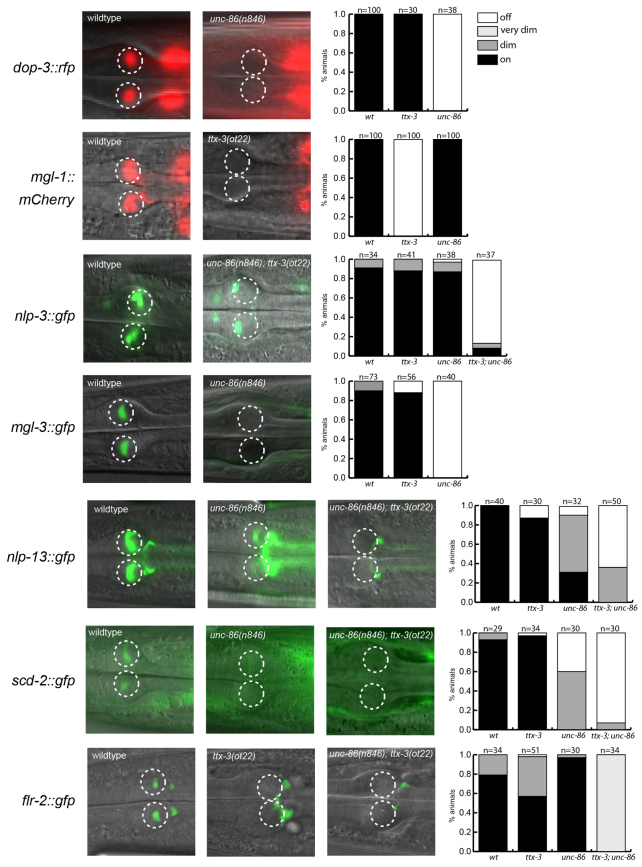
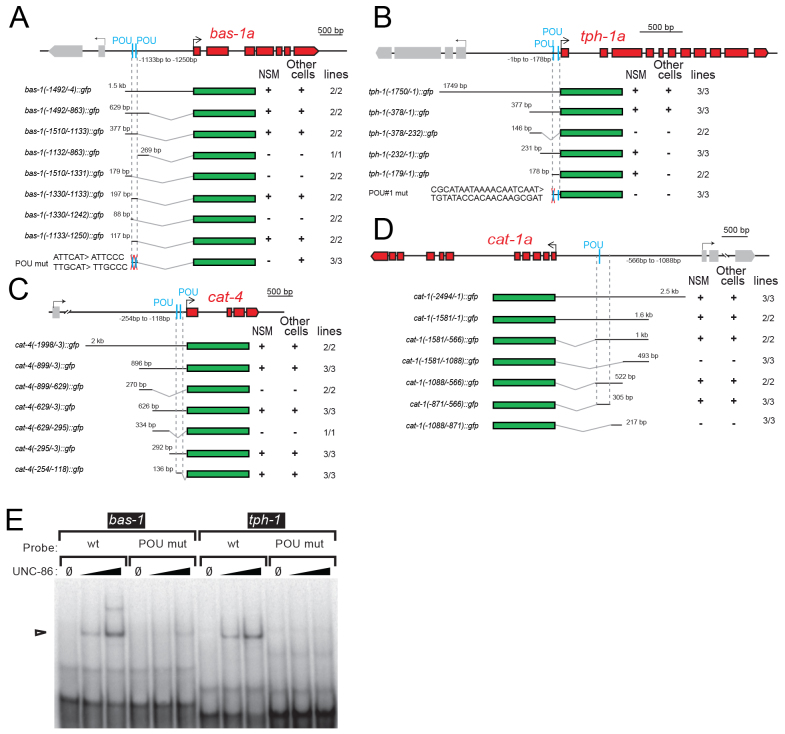
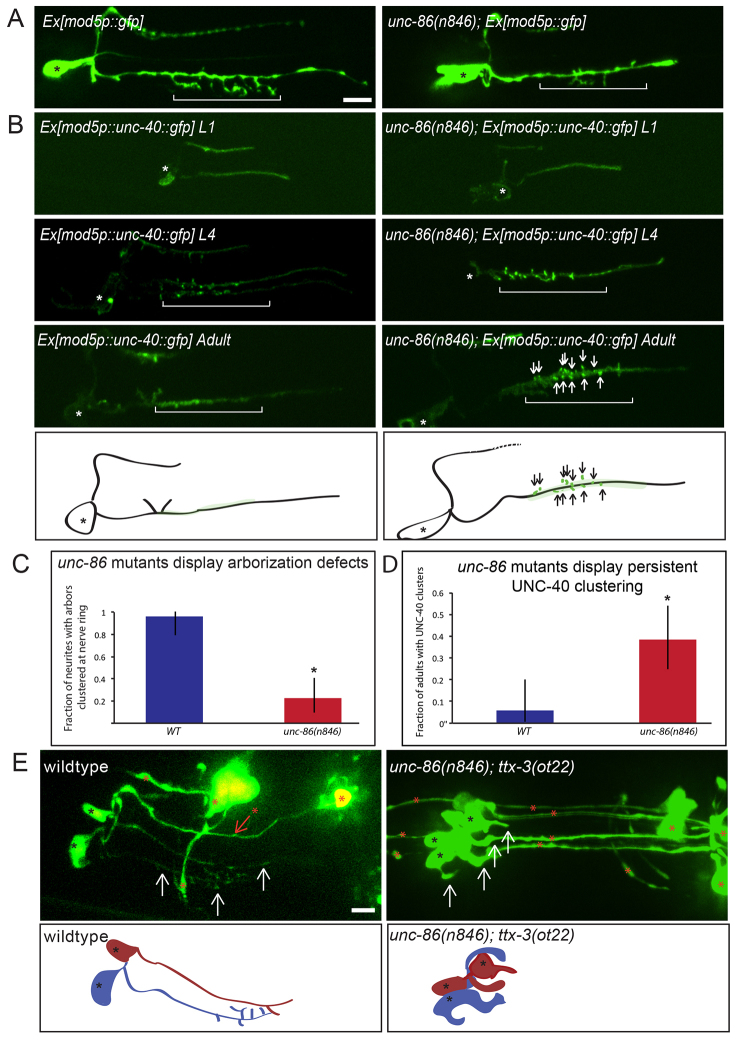
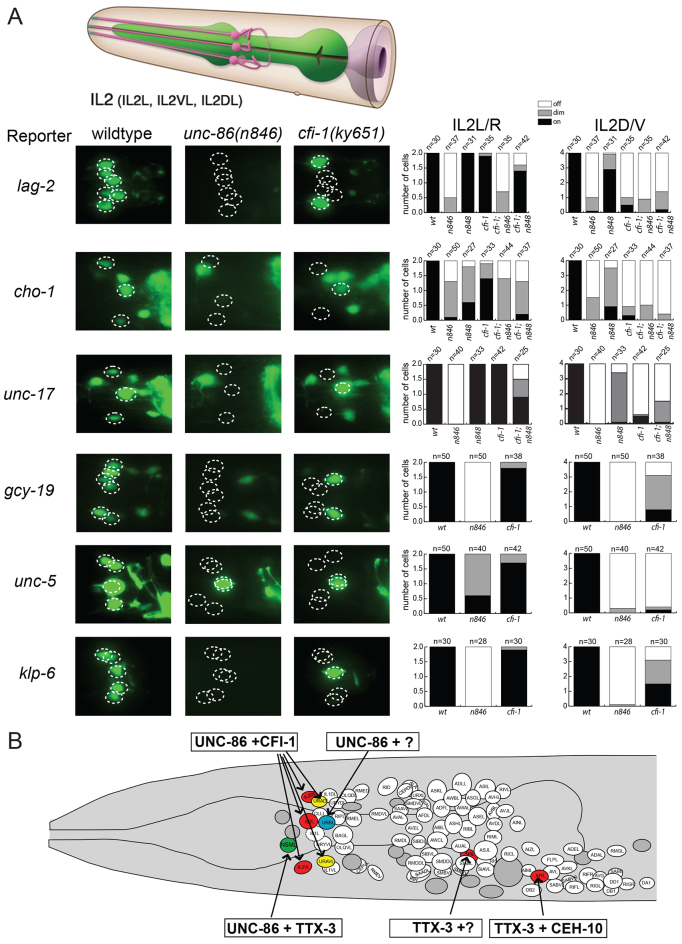
Transcription factors that drive neuron type-specific terminal differentiation programs in the developing nervous system are often expressed in several distinct neuronal cell types, but to what extent they have similar or distinct activities in individual neuronal cell types is generally not well explored. We investigate this problem using, as a starting point, the C. elegans LIM homeodomain transcription factor ttx-3, which acts as a terminal selector to drive the terminal differentiation program of the cholinergic AIY interneuron class. Using a panel of different terminal differentiation markers, including neurotransmitter synthesizing enzymes, neurotransmitter receptors and neuropeptides, we show that ttx-3 also controls the terminal differentiation program of two additional, distinct neuron types, namely the cholinergic AIA interneurons and the serotonergic NSM neurons. We show that the type of differentiation program that is controlled by ttx-3 in different neuron types is specified by a distinct set of collaborating transcription factors. One of the collaborating transcription factors is the POU homeobox gene unc-86, which collaborates with ttx-3 to determine the identity of the serotonergic NSM neurons. unc-86 in turn operates independently of ttx-3 in the anterior ganglion where it collaborates with the ARID-type transcription factor cfi-1 to determine the cholinergic identity of the IL2 sensory and URA motor neurons. In conclusion, transcription factors operate as terminal selectors in distinct combinations in different neuron types, defining neuron type-specific identity features.
Keywords: Caenorhabditis elegans; Homeobox; Neuron differentiation.
Figures

References
-
- Albertson D. G., Thomson J. N. (1976). The pharynx of Caenorhabditis elegans. Philos. Trans. R. Soc. B 275, 299–325 - PubMed
-
- Altun Z. F., Herndon L. A., Crocker C., Lints R., Hall D. H. (eds) (2002-2013). WormAtlas, http://www.wormatlas.org
-
- Altun-Gultekin Z., Andachi Y., Tsalik E. L., Pilgrim D., Kohara Y., Hobert O. (2001). A regulatory cascade of three homeobox genes, ceh-10, ttx-3 and ceh-23, controls cell fate specification of a defined interneuron class in C. elegans. Development 128, 1951–1969 - PubMed
-
- Aspöck G., Ruvkun G., Bürglin T. R. (2003). The Caenorhabditis elegans ems class homeobox gene ceh-2 is required for M3 pharynx motoneuron function. Development 130, 3369–3378 - PubMed
Publication types
MeSH terms
Substances
Grants and funding
LinkOut - more resources
Full Text Sources
Other Literature Sources
Molecular Biology Databases
Research Materials
Miscellaneous