


Elevated mouse hepatic betatrophin expression does not increase human β-cell replication in the transplant setting
- PMID: 24353178
- PMCID: PMC3964501
- DOI: 10.2337/db13-1435
Elevated mouse hepatic betatrophin expression does not increase human β-cell replication in the transplant setting
Abstract
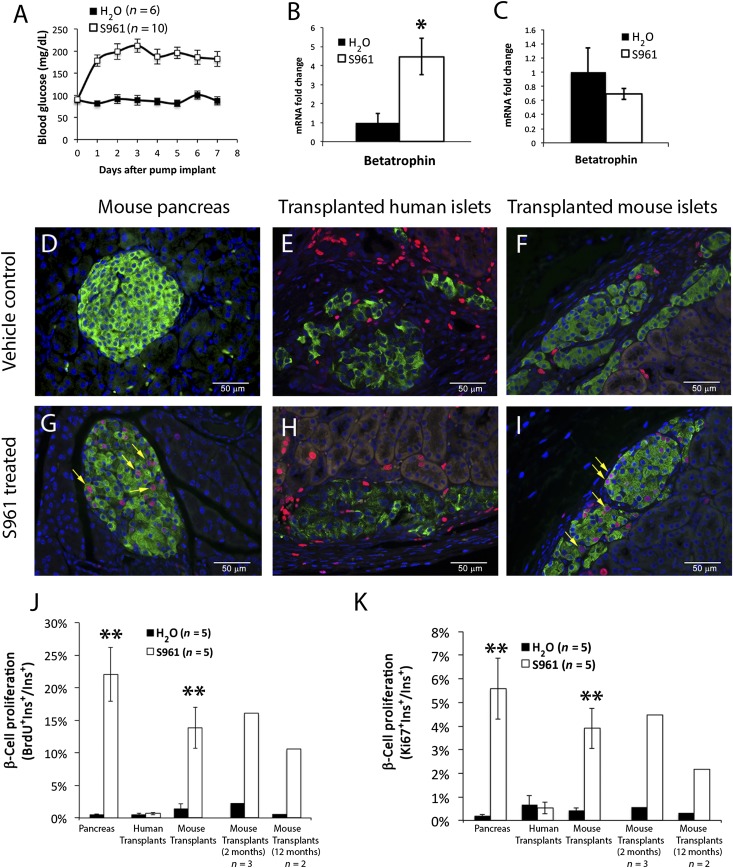
The recent discovery of betatrophin, a protein secreted by the liver and white adipose tissue in conditions of insulin resistance and shown to dramatically stimulate replication of mouse insulin-producing β-cells, has raised high hopes for the rapid development of a novel therapeutic approach for the treatment of diabetes. At present, however, the effects of betatrophin on human β-cells are not known. Here we use administration of the insulin receptor antagonist S961, shown to increase betatrophin gene expression and stimulate β-cell replication in mice, to test its effect on human β-cells. Although mouse β-cells, in their normal location in the pancreas or when transplanted under the kidney capsule, respond with a dramatic increase in β-cell DNA replication, human β-cells are completely unresponsive. These results put into question whether betatrophin can be developed as a therapeutic approach for treating human diabetes.
Figures
Comment in
-
Betatrophin versus bitter-trophin and the elephant in the room: time for a new normal in β-cell regeneration research.Diabetes. 2014 Apr;63(4):1198-9. doi: 10.2337/db14-0009. Diabetes. 2014. PMID: 24651805 Free PMC article. No abstract available.
References
-
- Bonner-Weir S, Weir GC. New sources of pancreatic beta-cells. Nat Biotechnol 2005;23:857–861 - PubMed
-
- Dor Y, Brown J, Martinez OI, Melton DA. Adult pancreatic beta-cells are formed by self-duplication rather than stem-cell differentiation. Nature 2004;429:41–46 - PubMed
-
- Heit JJ, Karnik SK, Kim SK. Intrinsic regulators of pancreatic beta-cell proliferation. Annu Rev Cell Dev Biol 2006;22:311–338 - PubMed
-
- Brüning JC, Winnay J, Bonner-Weir S, Taylor SI, Accili D, Kahn CR. Development of a novel polygenic model of NIDDM in mice heterozygous for IR and IRS-1 null alleles. Cell 1997;88:561–572 - PubMed
Publication types
MeSH terms
Substances
Grants and funding
LinkOut - more resources
Full Text Sources
Other Literature Sources
Molecular Biology Databases
