Review
. 2014 Jan 20;53(4):956-87.
doi: 10.1002/anie.201302268. Epub 2013 Dec 18.

Neurotrophic natural products: chemistry and biology

Affiliations
Review

Neurotrophic natural products: chemistry and biology

Jing Xu et al. Angew Chem Int Ed Engl. .

Abstract

Neurodegenerative diseases and spinal cord injury affect approximately 50 million people worldwide, bringing the total healthcare cost to over 600 billion dollars per year. Nervous system growth factors, that is, neurotrophins, are a potential solution to these disorders, since they could promote nerve regeneration. An average of 500 publications per year attests to the significance of neurotrophins in biomedical sciences and underlines their potential for therapeutic applications. Nonetheless, the poor pharmacokinetic profile of neurotrophins severely restricts their clinical use. On the other hand, small molecules that modulate neurotrophic activity offer a promising therapeutic approach against neurological disorders. Nature has provided an impressive array of natural products that have potent neurotrophic activities. This Review highlights the current synthetic strategies toward these compounds and summarizes their ability to induce neuronal growth and rehabilitation. It is anticipated that neurotrophic natural products could be used not only as starting points in drug design but also as tools to study the next frontier in biomedical sciences: the brain activity map project.

Keywords: Alzheimer’s disease; dementia; drug discovery; neurodegenerative disease; total synthesis.


Figures
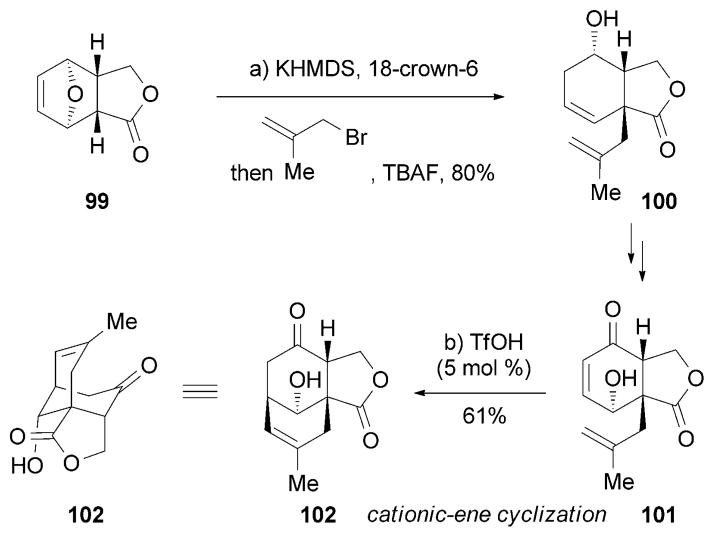
Figure 1
Figure 1
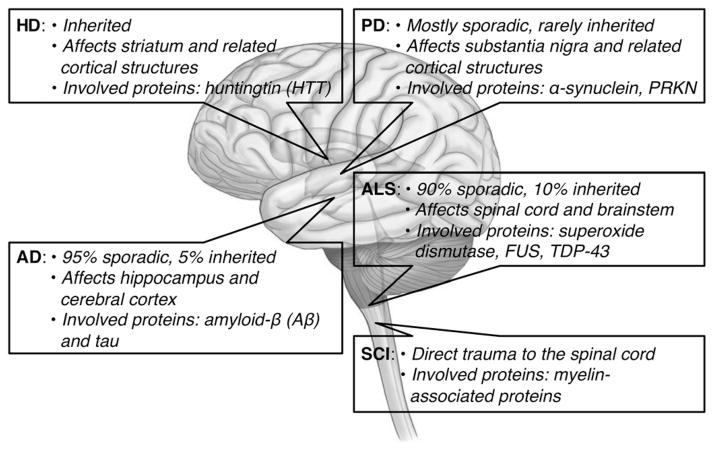
Summary of neurodegenerative diseases (NDDs; AD =Alzheimer’s Disease, ALS =amyotrophic lateral sclerosis, HD =Huntington’s Disease, PD =Parkinson’s Disease) and spinal cord injury (SCI).[44]
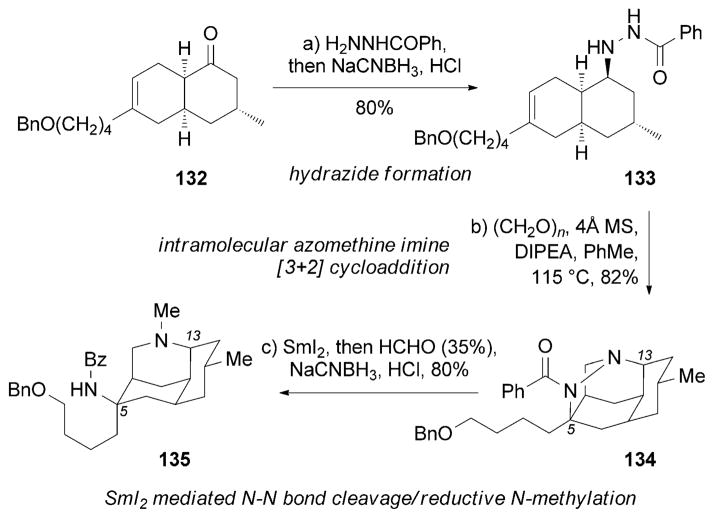
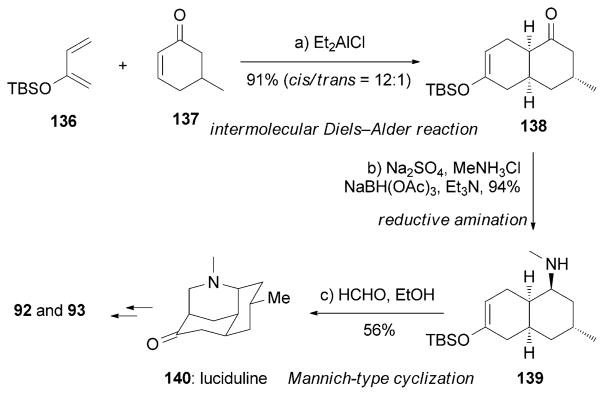
Figure 2
Figure 2
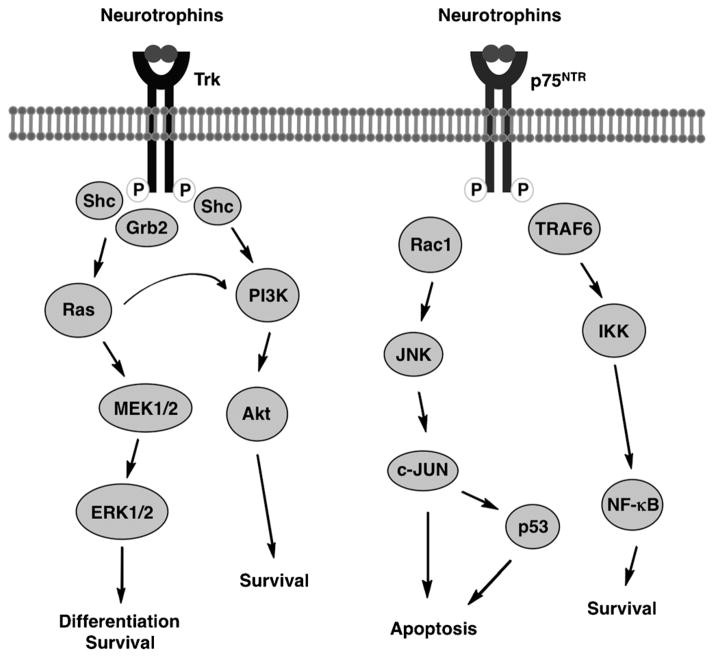
Neurotrophin signaling pathways.
Figure 3
Figure 3
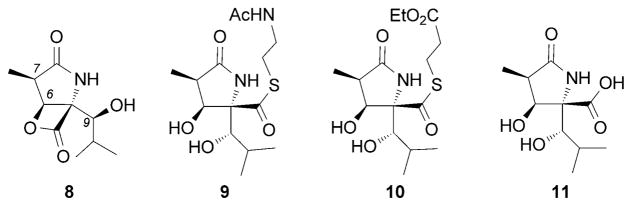
Selected lactacystin analogues.
Figure 4
Figure 4
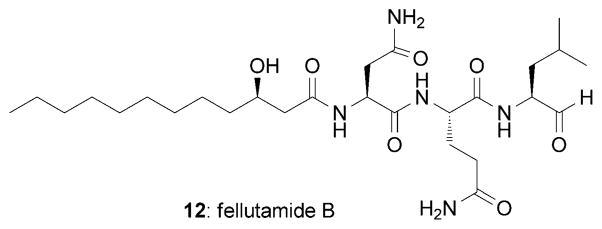
Structure of fellutamide B (12).
Figure 5
Figure 5
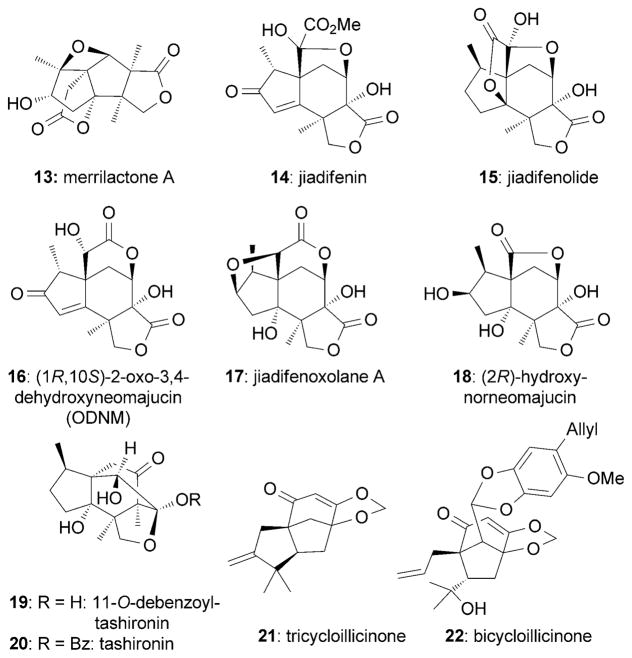
Representative neurotrophic Illicium sesquiterpenes.
Figure 6
Figure 6
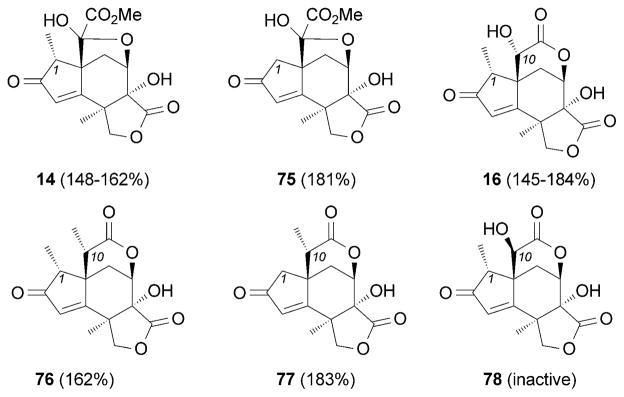
Representative structure–activity relationship studies on jiadifenin and analogues. The numbers in parenthesis indicate the extent of neurite outgrowth compared to a control; inactive indicates less than 110% neurite outgrowth as compared to control.
Figure 7
Figure 7
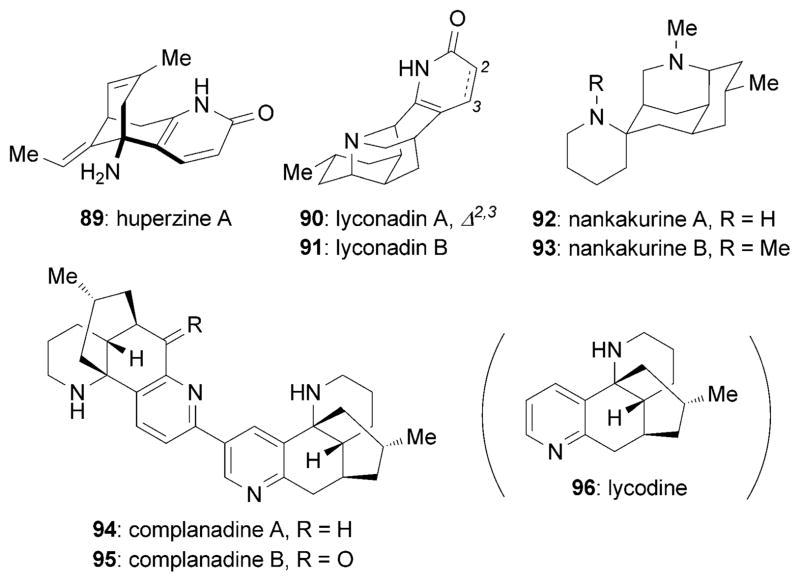
Neurotrophic Lycopodium alkaloids.
Figure 8
Figure 8
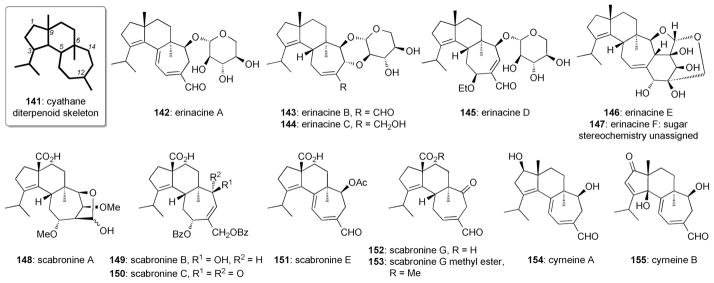
Neurotrophic cyathane diterpenoids.
Figure 9
Figure 9
Structure of scabronine M (174).
Figure 10
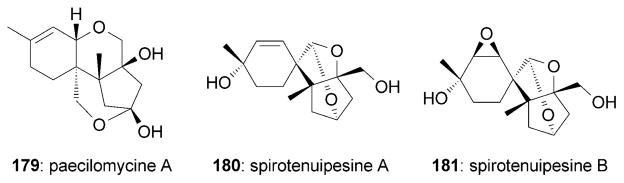
Figure 10
Neurotrophic trichothecanes.
Figure 11
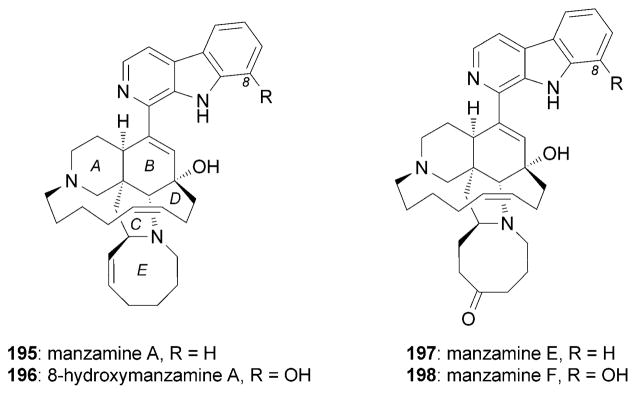
Figure 11
Neurotrophic manzamine natural products.
Figure 12
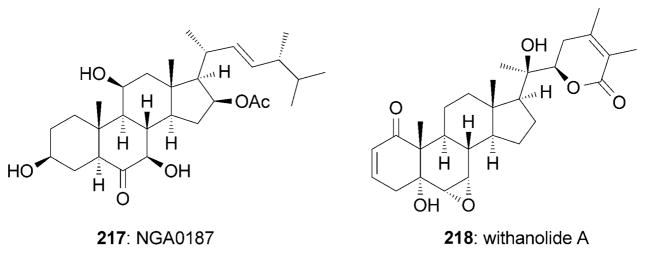
Figure 12
Representative neurotrophic steroids.
Figure 13
Figure 13
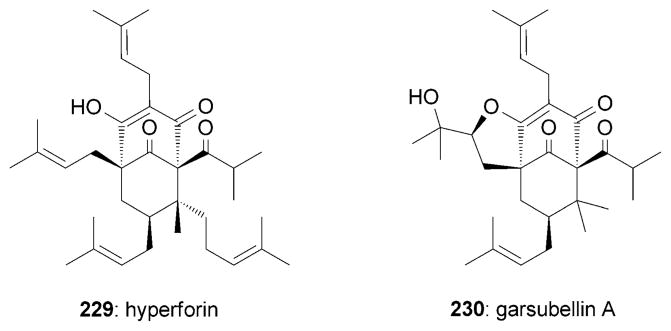
Representative neurotrophic PPAPs.
Figure 14
Figure 14
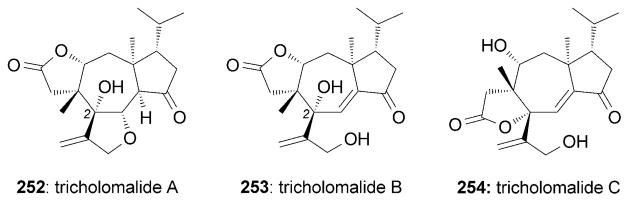
Neurotrophic tricholomalides.
Figure 15
Figure 15
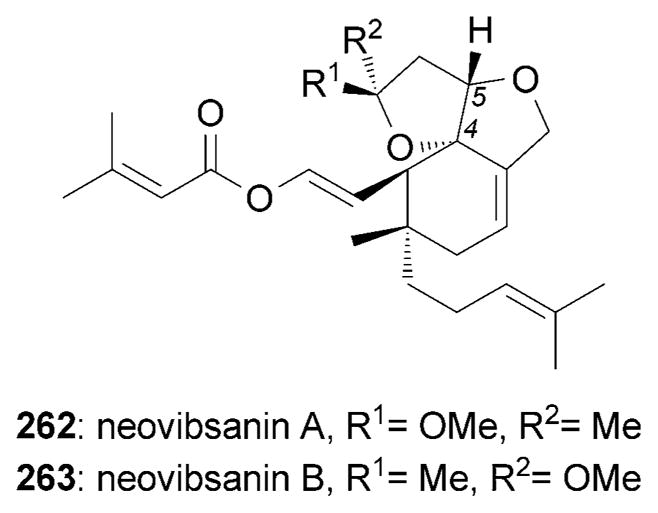
Neurotrophic neovibsanes.
Figure 16
Figure 16
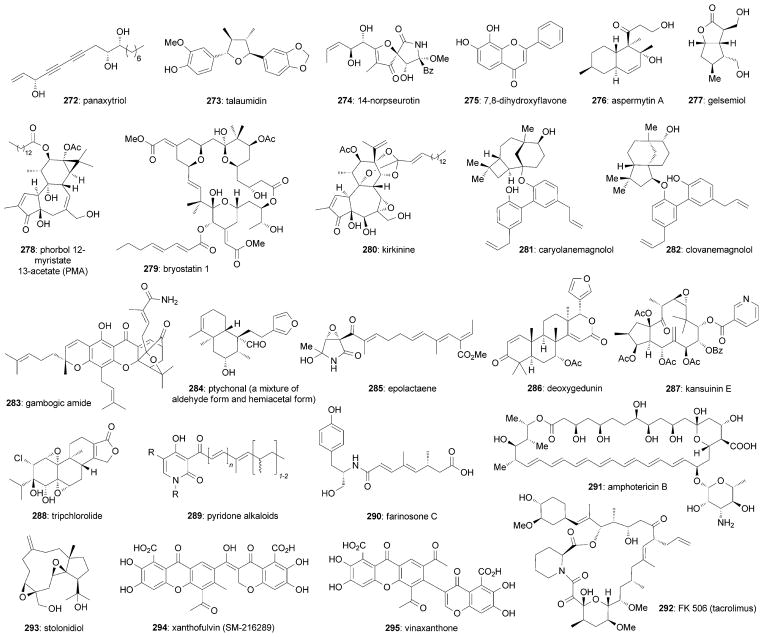
Other selected neurotrophic natural products.
Scheme 1
Scheme 1
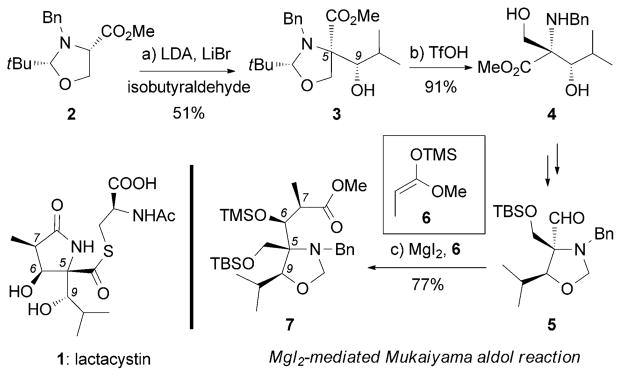
Part of the total synthesis of (+)-lactacystin by Corey et al.[52] Bn =benzyl, LDA =lithium diisopropylamide, TBS =tert-butyl-dimethylsilyl, TfOH =trifluoromethanesulfonic acid, TMS =trimethyl-silyl.
Scheme 2
Scheme 2
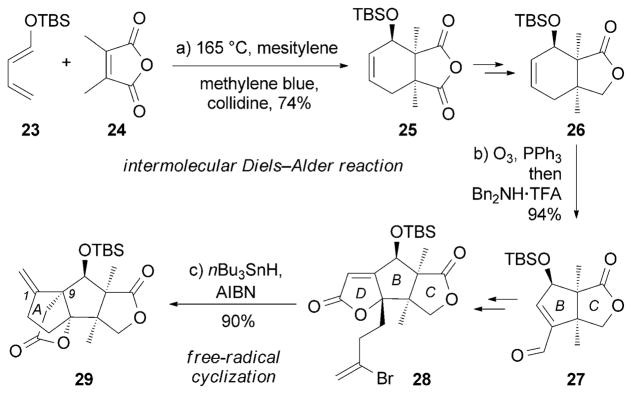
Part of the total synthesis of merrilactone A (13) by Danishefsky and co-workers.[71] AIBN=azobis(isobutyronitrile), TFA = trifluoroacetic acid.
Scheme 3
Scheme 3
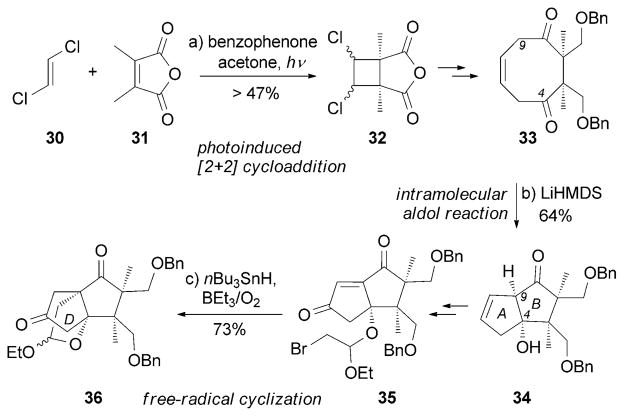
Part of the total synthesis of merrilactone A (13) by Inoue, Hirama and co-workers.[75] LiHMDS =lithium hexamethyldisilazide.
Scheme 4
Scheme 4
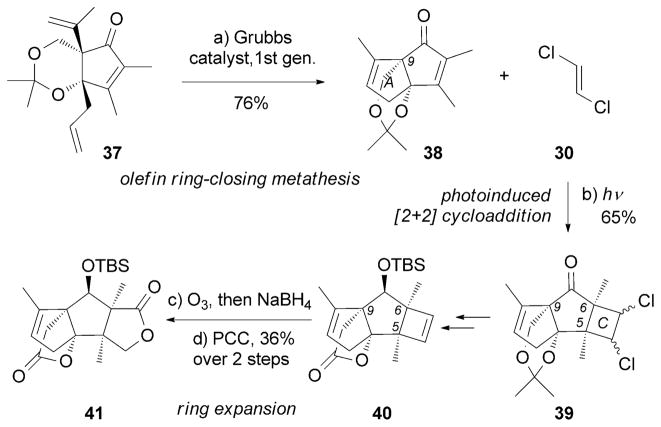
Part of the total synthesis of (±)-merrilactone A (13) by Mehta and Singh.[76] PCC=pyridinium chlorochromate.
Scheme 5
Scheme 5
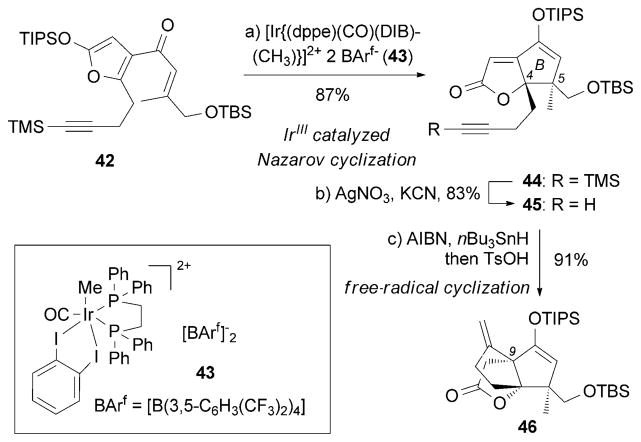
Part of the total synthesis of (±)-merrilactone A (13) by Frontier and co-workers.[79] dppe =1,2-bis(diphenylphosphino)ethane, DIB =o-diiodobenzene, TIPS =triisopropylsilyl, TsOH =p-toluenesul-fonic acid.
Scheme 6
Scheme 6
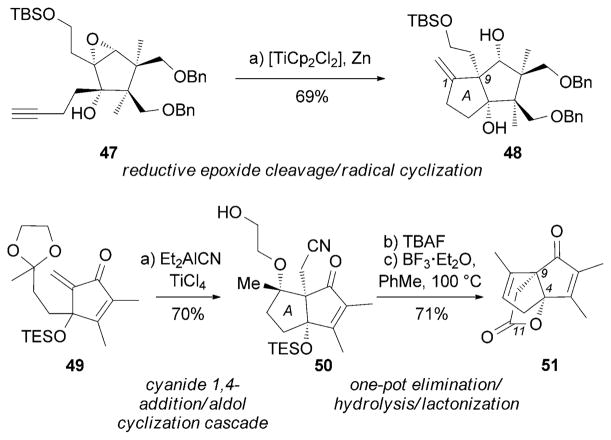
Total synthesis of (±)-merrilactone A (13) by Greaney and co-workers.[82] Cp =cyclopentadienyl, TBAF =tetrabutylammonium fluoride, TES =triethylsilyl.
Scheme 7
Scheme 7
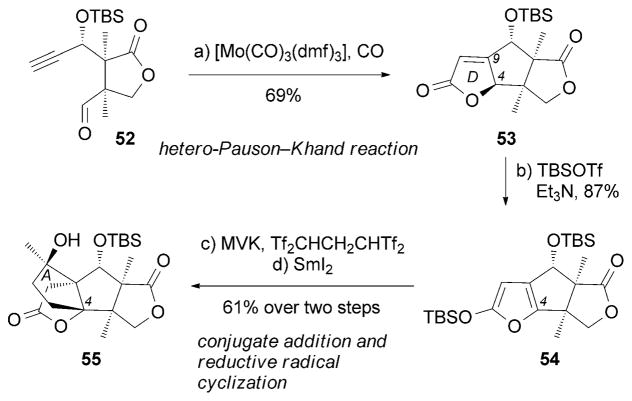
Part of the total synthesis of (±)-merrilactone A (13) by Zhai and co-workers.[84] MVK =methyl vinyl ketone.
Scheme 8
Scheme 8
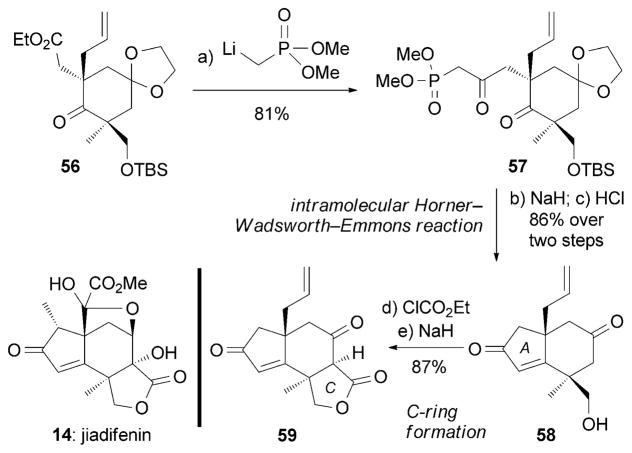
Part of the total synthesis of (±)-jiadifenin (14) by Dani-shefsky and co-workers.[87]
Scheme 9
Scheme 9
Part of the total synthesis of (−)-jiadifenin (14) by Theodorakis and co-workers.[89]
Scheme 10
Scheme 10
Part of the total synthesis of (−)-jiadifenin (14) by Zhai and co-workers.[91]
Scheme 11
Scheme 11
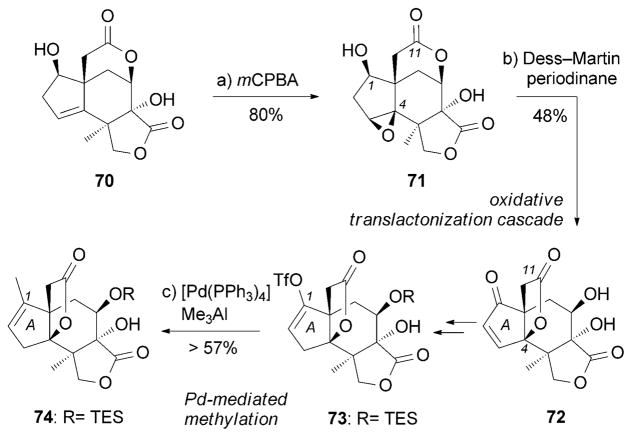
Part of the total synthesis of (−)-jiadifenolide (15) by Theodorakis and co-workers.[93] mCPBA =m-chloroperbenzoic acid.
Scheme 12
Scheme 12
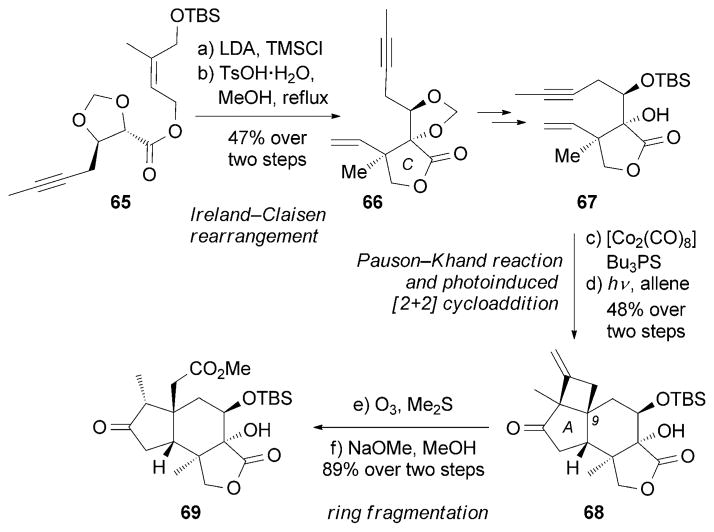
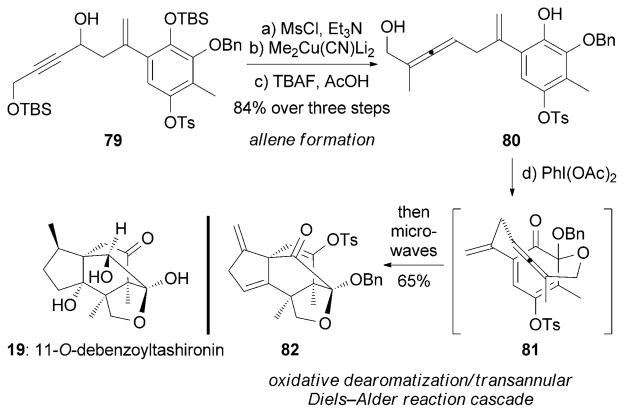
Part of the total synthesis of 11-O-debenzoyltashironin (19) by Danishefsky and co-workers.[99]
Scheme 13
Scheme 13
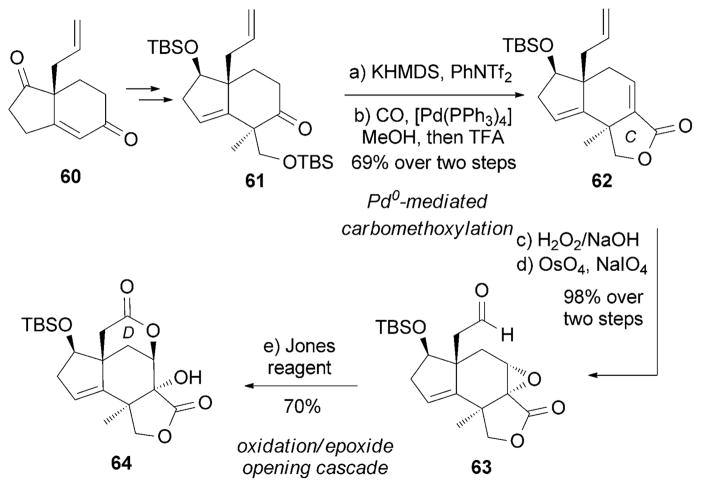
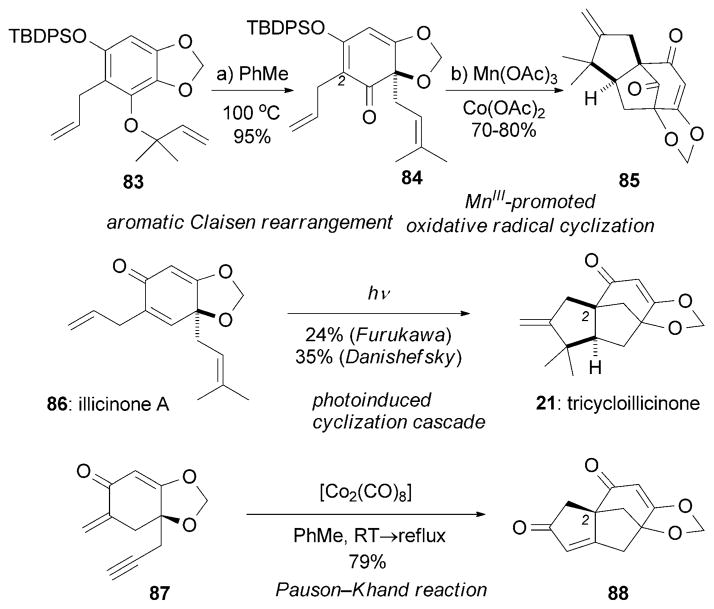
Part of the total syntheses of tricycloillicinone (21) by Danishefsky et al. and Terashima and Furuya.[105] TBDPS =tert-butyldi-phenylsilyl.
Scheme 14
Scheme 14
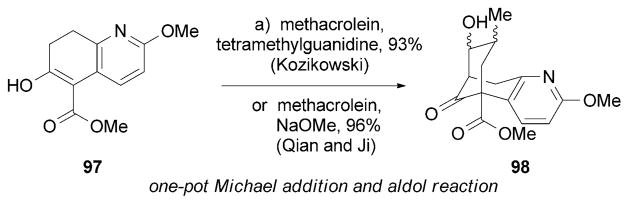
Part of the total syntheses of (±)-huperzine A (89) by Xia and Kozikowski as well as Qian and Ji.[125,126]
Scheme 15
Scheme 15
Part of the total synthesis of (−)-huperzine A (89) by Fukuyama and co-workers.[127]
Scheme 16
Scheme 16
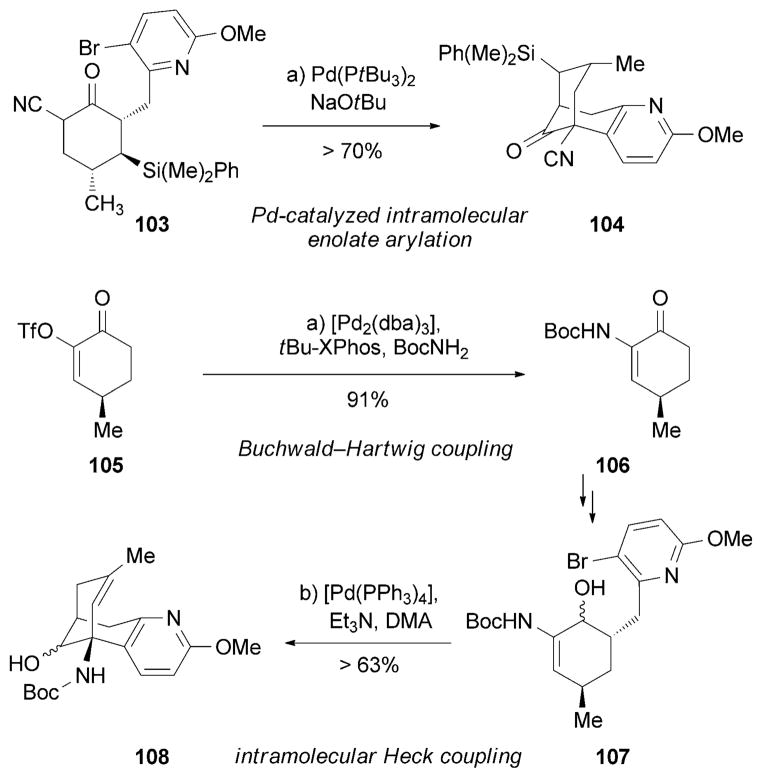
Part of the total syntheses of (−)-huperzine A (89) by Herzon and co-workers and Lin and co-workers.[129,131] Boc =tert-butoxycarbonyl.
Scheme 17
Scheme 17
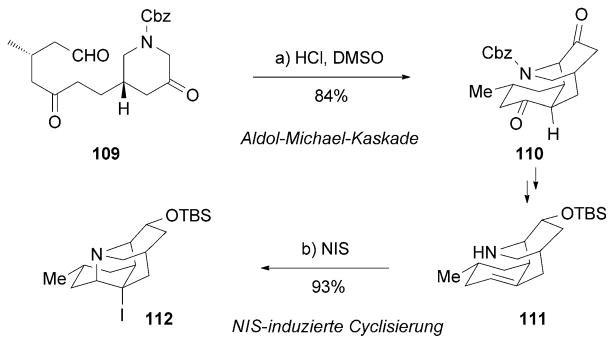
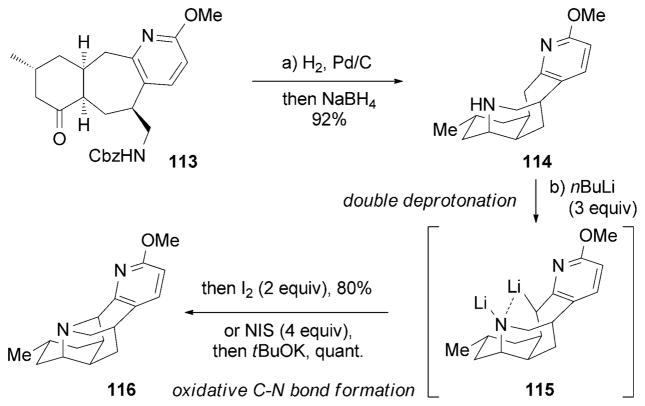
Part of the total synthesis of (+)-lyconadin A (90) and (−)-B (91) by Beshore and Smith.[136] Cbz =carboxybenzyl, NIS =N-iodosuccinimide.
Scheme 18
Scheme 18
Part of the total synthesis of lyconadin A (90) by Sarpong and co-workers.[137]
Scheme 19
Scheme 19
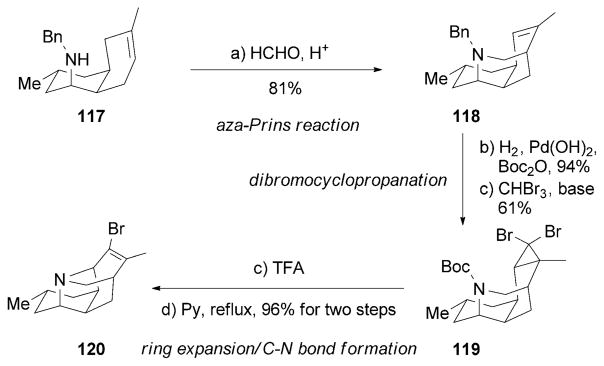
Part of the total syntheses of lyconadins by Fukuyama and co-workers.[138] Py=pyridine.
Scheme 20
Scheme 20
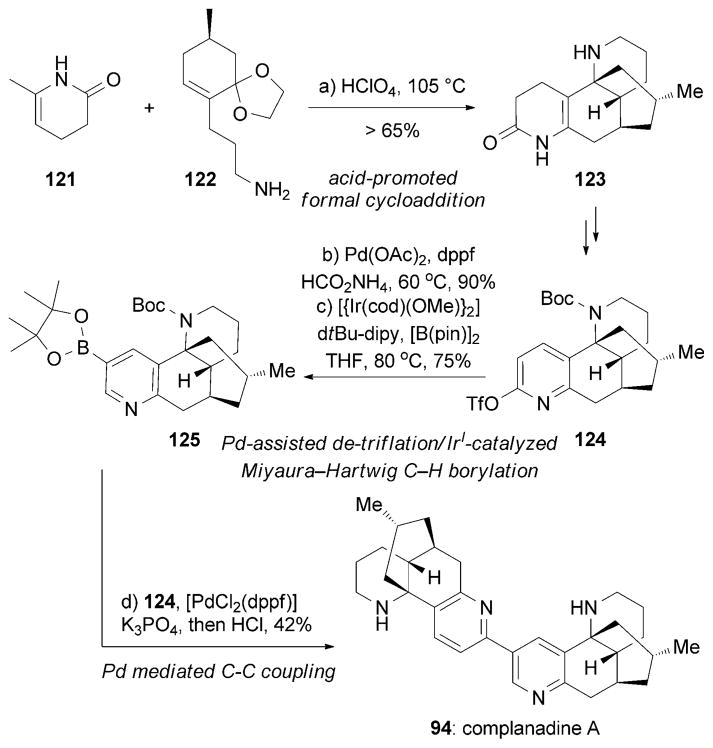
Part of the total synthesis of (+)-complanadine A (94) by Fischer and Sarpong.[140] [B(pin)]2 = diboron pinacolato ester, dppf =1,1′-bis(diphenyl phosphino) ferrocene, dtBu-dipy=di-tert-butyl-bipyridine.
Scheme 21
Scheme 21
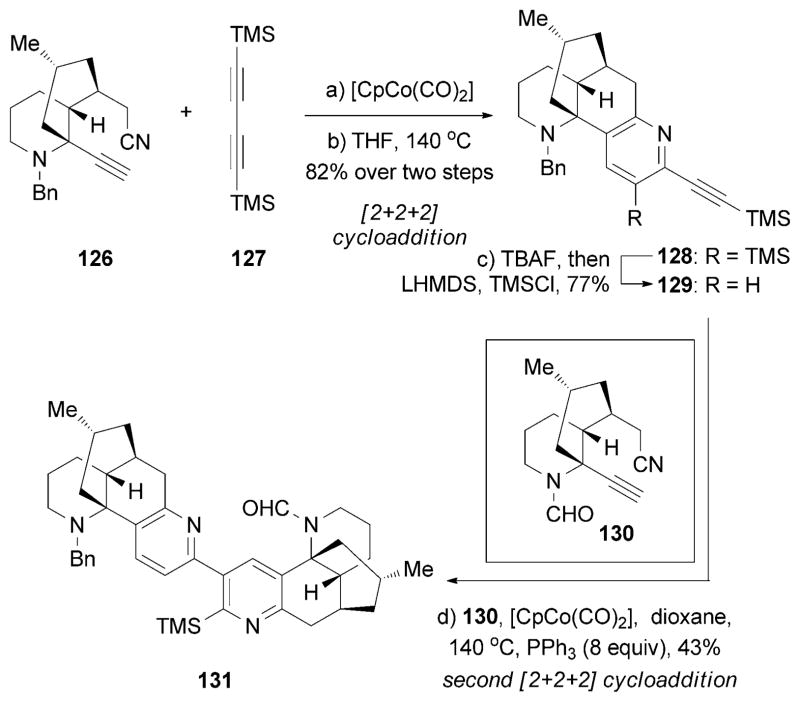
Part of the total synthesis of (+)-complanadine A (94) by Siegel and co-workers.[144]
Scheme 22
Scheme 22
Part of the total syntheses of (+)-nankakurines by Overman and co-workers.[148]
Scheme 23
Scheme 23
Part of the total syntheses of (±)-nankakurines by Cheng and Waters.[149]
Scheme 24
Scheme 24
Part of the total synthesis of (+)-erinacine A (142) by Snider et al.[159] DMS=dimethylsulfide, HMPA=hexamethylphosphorus amide.
Scheme 25
Scheme 25
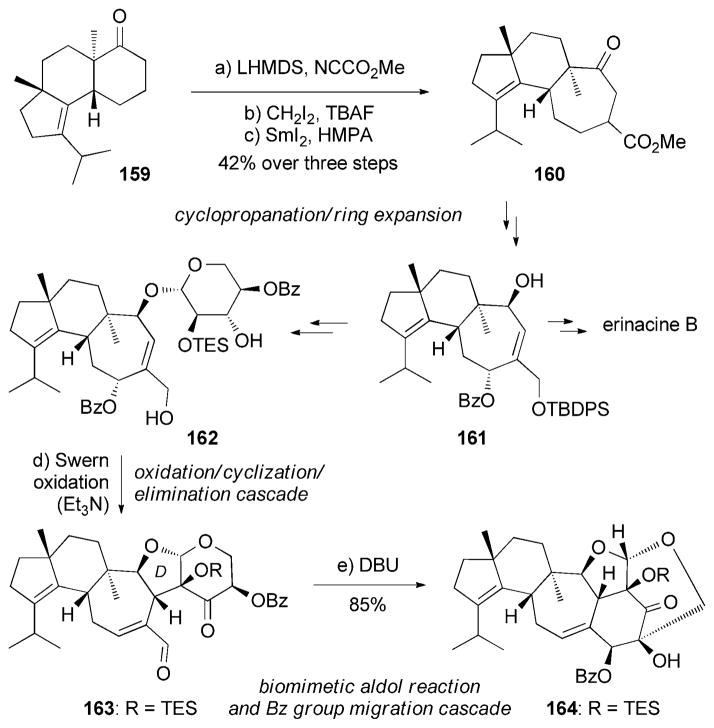
Part of the total syntheses of (−)-erinacine B (143) and (−)-E (146) by Watanabe and Nakada.[163] Bz =benzoyl, DBU =1,8-diazabicyclo[5.4.0]undec-7-ene.
Scheme 26
Scheme 26
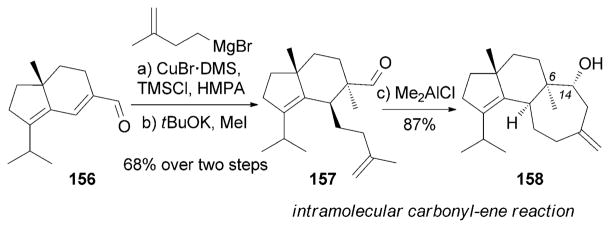
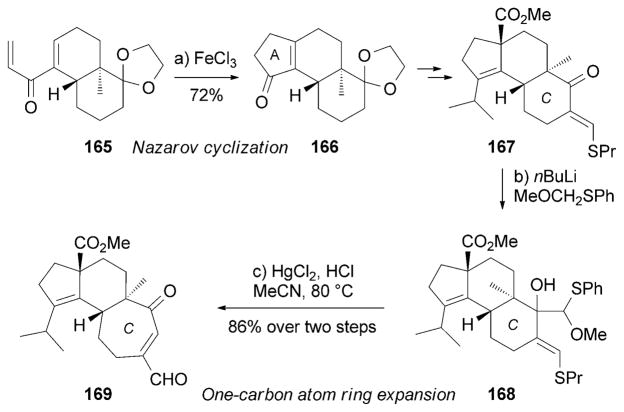
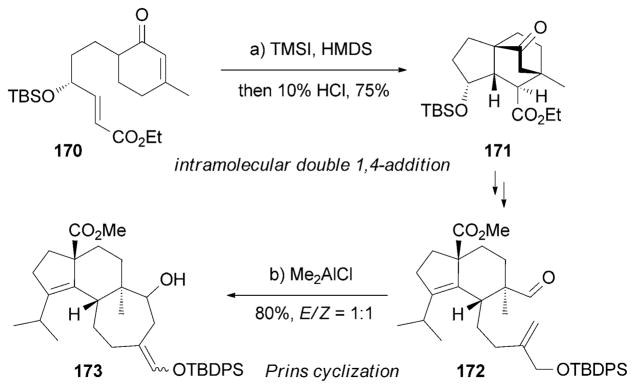
Part of the total synthesis of (−)-scabronine G (152) by Danishefsky and co-workers.[165]
Scheme 27
Scheme 27
Part of the total synthesis of (−)-scabronine G (152) by Kanoh, Iwabuchi et al.[168] HMDS =hexamethyldisilazane.
Scheme 28
Scheme 28
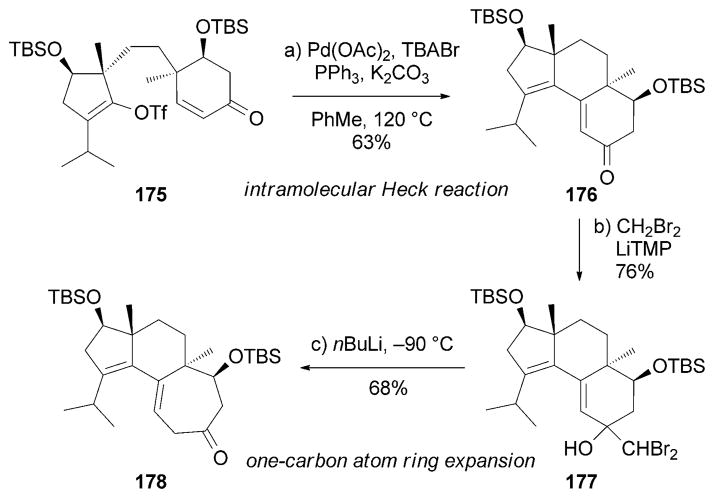
Part of the total synthesis of (+)-cyrneine A (154) by Gademann and co-workers.[173] TBABr=tetrabutylammonium bromide, TMP =2,2,6,6-tetramethylpiperidine.
Scheme 29
Scheme 29
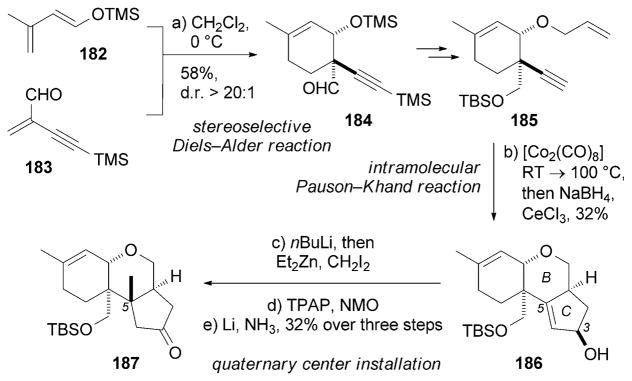
Part of the total synthesis of (±)-paecilomycine A (179) by Min and Danishefsky.[176] NMO =N-methylmorpholine N-oxide, TPAP =tetrapropylammonium perruthenate.
Scheme 30
Scheme 30
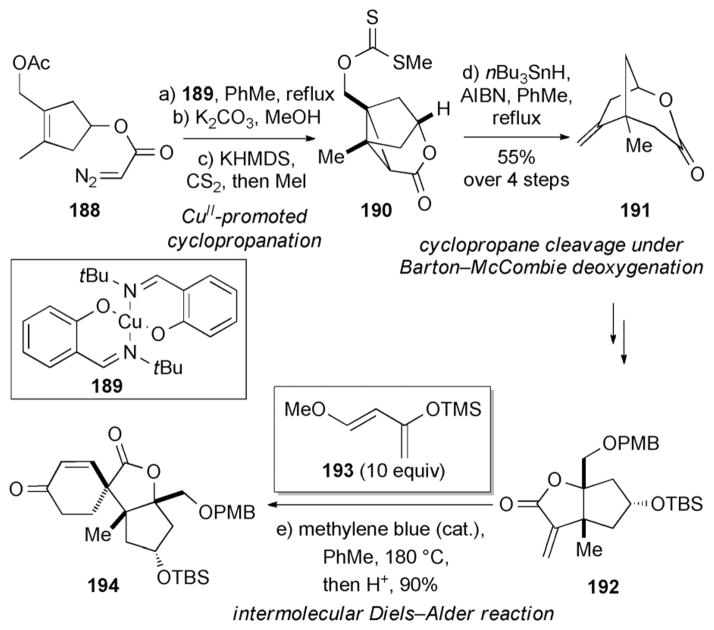
Part of the total syntheses of (±)-spirotenuipesine A (180) and B (181) by Danishefsky and co-workers.[178] PMB =p-methoxyben-zyl.
Scheme 31
Scheme 31
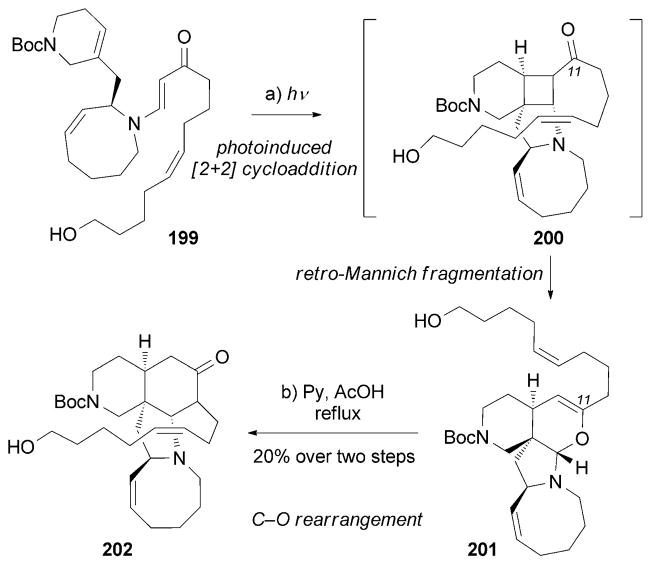
Part of the total synthesis of (+)-manzamine A (195) by Winkler and Axten.[186]
Scheme 32
Scheme 32
Part of the total synthesis of (+)-manzamine A (195) by Martin et al.[187]
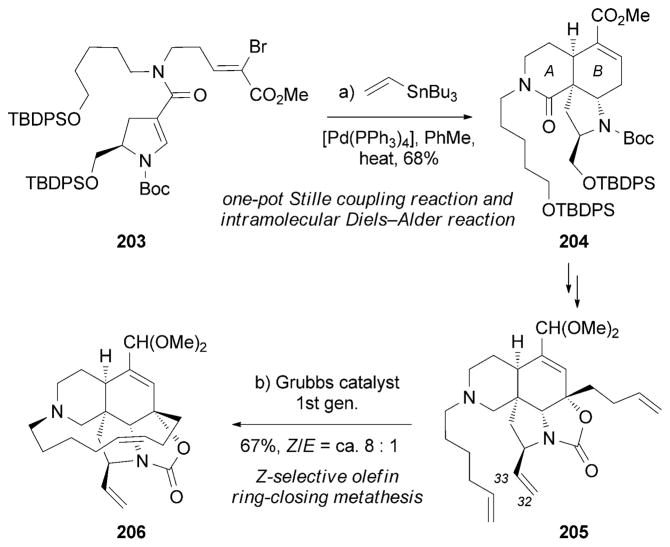
Scheme 33
Scheme 33
Part of the total synthesis of (+)-manzamine A (195) by Fukuyama and co-workers.[184] PMP=p-methoxyphenyl.
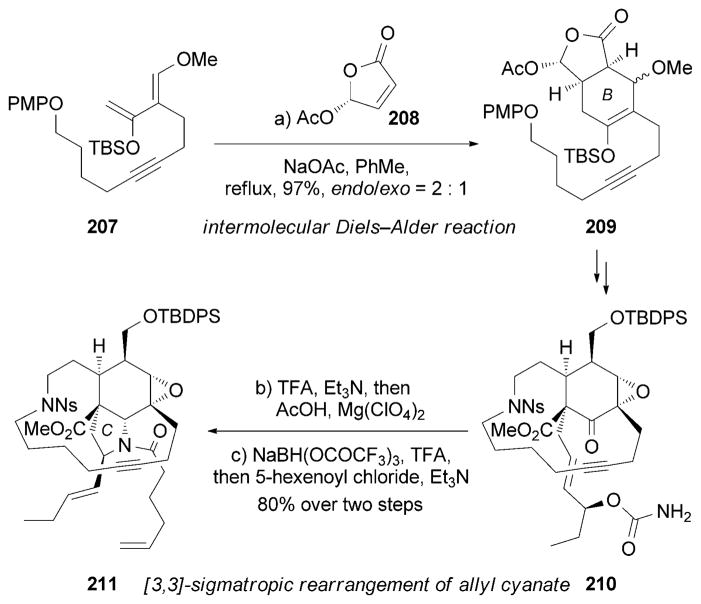
Scheme 34
Scheme 34
Part of the total synthesis of (+)-manzamine A (195) by Dixon and co-workers.[190]
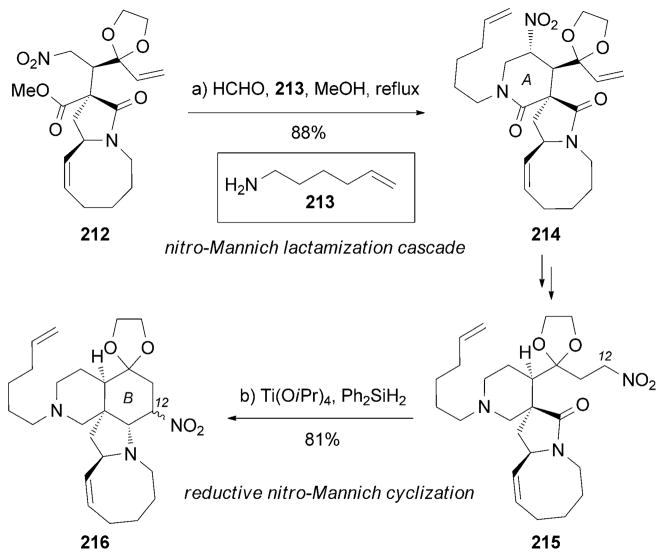
Scheme 35
Scheme 35
Part of the total synthesis of (+)-NGA0187 (217) by Danishefsky and co-workers.[195]
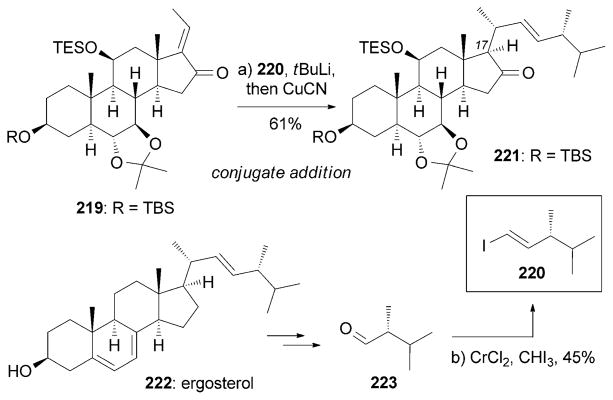
Scheme 36
Scheme 36
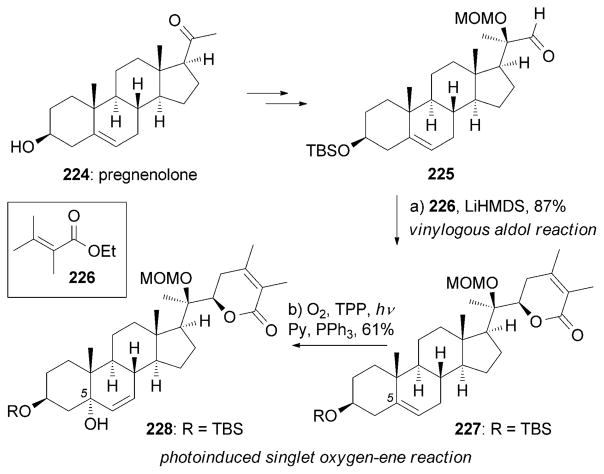
Part of the total synthesis of (+)-withanolide A (218) by Gademann and co-workers.[197] MOM=methoxymethyl, TPP =mesotetraphenylporphyrin.
Scheme 37
Scheme 37
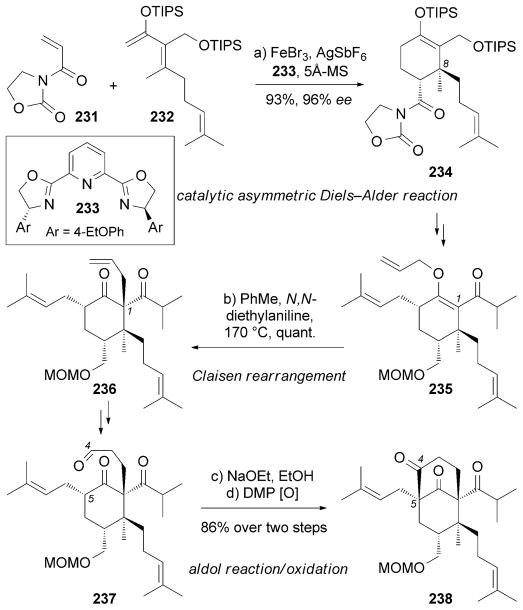
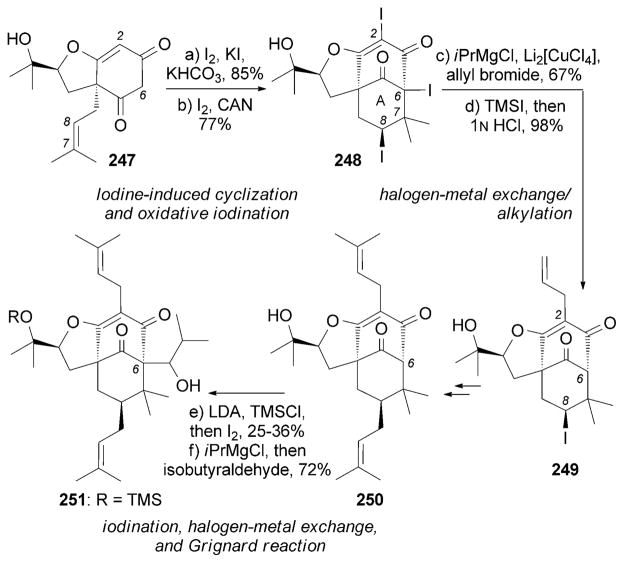
Part of the total synthesis of (−)-hyperforin (229) by Kanai, Shibasaki and co-workers.[216] DMP=Dess–Martin periodinane.
Scheme 38
Scheme 38
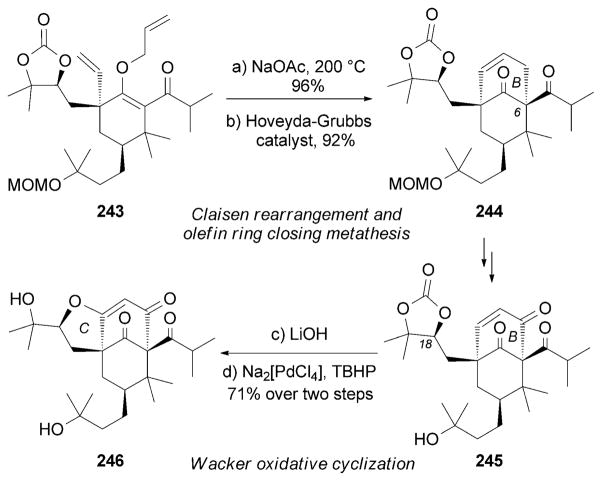
Part of the total synthesis of (+)-hyperforin (229) by Shair and co-workers.[218]
Scheme 39
Scheme 39
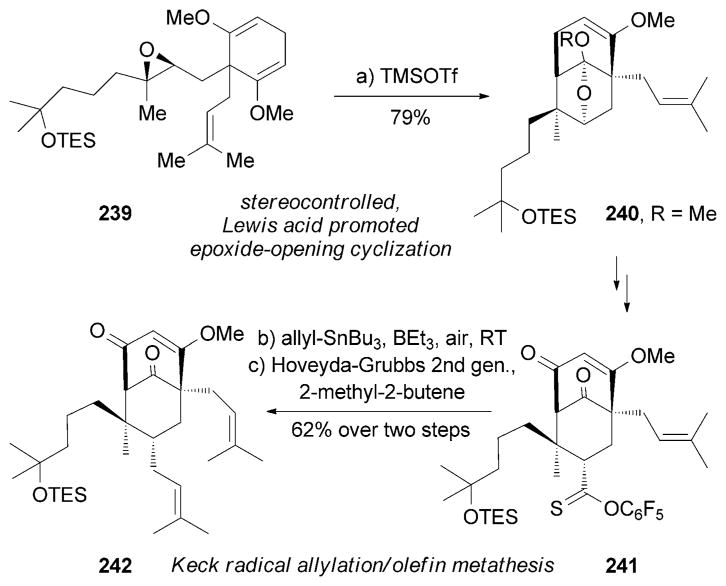
Part of the total synthesis of (±)-garsubellin A (221) by Kanai, Shibasaki and co-workers. [220] TBHP =tert-butylhydrogen peroxide.
Scheme 40
Scheme 40
Part of the total synthesis of (±)-garsubellin A (230) by Siegel and Danishefsky.[222] CAN =cerium(IV) ammonium nitrate.
Scheme 41
Scheme 41
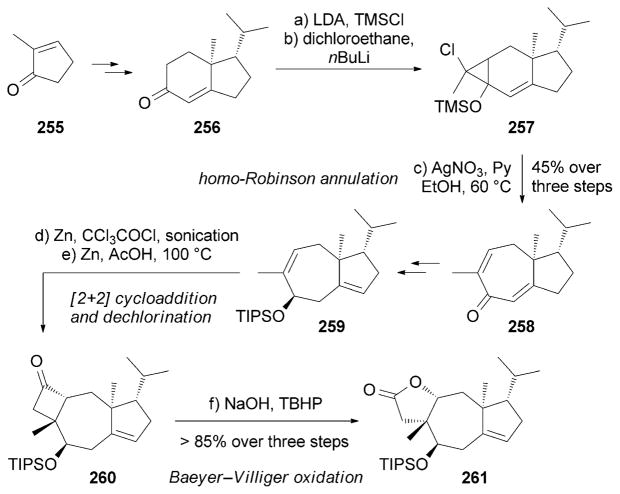
Part of the total syntheses of (±)-tricholomalides by Danishefsky and co-workers.[226] TBHP =tert-butylhydrogen peroxide.
Scheme 42
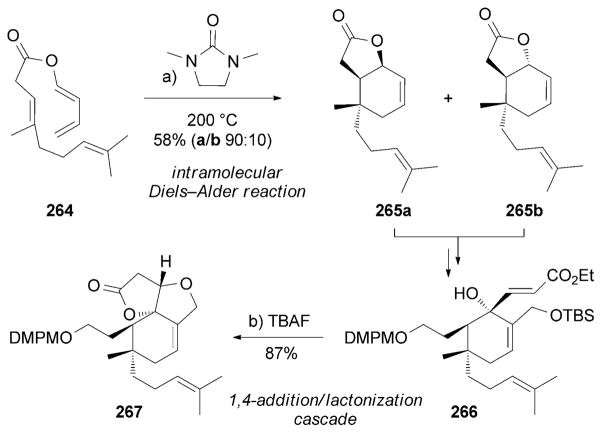
Scheme 42
Part of the total synthesis of (±)-neovibsanin B (263) by Imagawa, Nishizawa et al.[229b] DMPM=3,4-dimethoxybenzyl.
Scheme 43
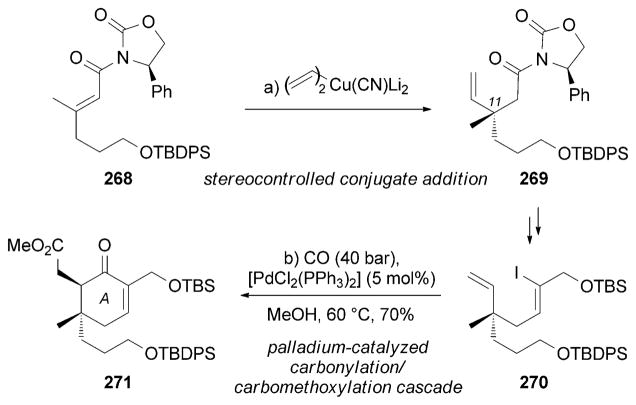
Scheme 43
Part of the total synthesis of (+)-neovibsanin B (254) by Esumi, Fukuyama et al.[229c]

References

    1. Thompson LM. Nature. 2008;452:707–708. - PubMed
    2. Palop JJ, Chin J, Mucke L. Nature. 2006;443:768–773. - PubMed
    3. Martin JB. N Engl J Med. 1999;340:1970–1980. - PubMed
    1. Thuret S, Moon LD, Gage FH. Nat Rev Neurosci. 2006;7:628–643. - PubMed
    2. Cadotte DW, Fehlings MG. Clin Orthop. 2011;469:732–741. - PMC - PubMed
    1. Querfurth HW, LaFerla FM. N Engl J Med. 2010;362:329–344. - PubMed
    2. Meissner WG, Frasier M, Gasser T, Goetz CG, Lozano A, Piccini P, Obeso JA, Rascol O, Schapira A, Voon V, Weiner DM, Tison F, Bezard E. Nat Rev Drug Discovery. 2011;10:377–393. - PubMed
    3. Executive Summary. Published by Alzheimer’s Disease International; London: 2013. World Alzheimer Report 2013: An analysis of long-term care for dementia.
    1. Bossy-Wetzel E, Schwarzenbacher R, Lipton SA. Nat Med. 2004;10:S2–S9. - PubMed
    1. Luo LQ, O’Leary DDM. Annu Rev Neurosci. 2005;28:127–156. - PubMed

Publication types

MeSH terms

Substances