


Recommendations regarding exercise during pregnancy made by private/small group practice obstetricians in the USA
- PMID: 24353463
- PMCID: PMC3842146
Recommendations regarding exercise during pregnancy made by private/small group practice obstetricians in the USA
Abstract
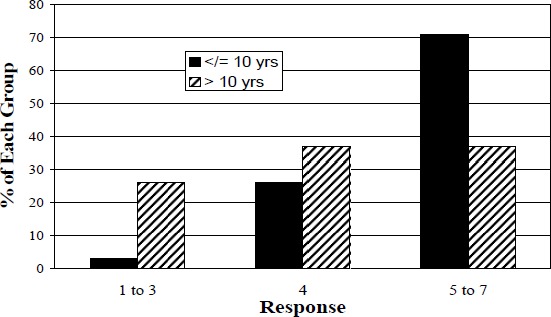
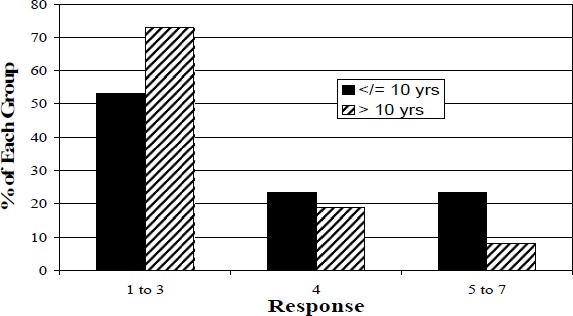
For pregnant women, exercise offers numerous benefits with little risk. The American College of Obstetricians and Gynecologists (ACOG) endorses aerobic exercise for all pregnant women without medical or obstetric complications. Nonetheless, only a small percentage of pregnant women meet exercise guidelines. We investigated the extent to which obstetricians (Obs) in private or small group practice in the USA actively recommend exercise to their pregnant patients. Surveys were sent to 300 Obs in 33 American cities, of which 83 were returned. 52% of respondents reported discussing exercise with 81-100% of their patients. Using a 7- point Likert scale (1 = never, 7 = always), Obs reported recommending aerobic exercise more often than resistance exercise (5.6 ± 1.5 versus 3.8 ± 1.6, p < 0.001). Obs do not routinely advise sedentary women to initiate exercise during pregnancy (mean 4.4 ± 1.8). Of the 67% of Obs who specify a target exercise duration, 95% recommend ≥ 16 min, consistent with ACOG guidelines. However, 62% of Obs reported that they regularly specify a maximum heart rate, even though ACOG guidelines do not. Half of respondents indicated that they advise a reduction in exercise load during the third trimester, even for uncomplicated pregnancies. Respondents' opinions were mixed regarding the extent to which exercise reduces gestational diabetes or preeclampsia risk and they believe more research on exercise during pregnancy is needed. Half of Obs do not routinely discuss exercise. The majority is hesitant to advise sedentary gravidae to start exercise and is conservative with respect to exercise intensity. Action may be needed to convince more Obs to routinely recommend exercise to all healthy patients. Key Points52% of surveyed obstetricians discuss exercise with 81-100% of pregnant patients.68% of surveyed obstetricians do not regularly advise sedentary pregnant women to initiate an exercise program.62% of surveyed obstetricians recommend pregnant patients not exceed a maximum heart rate during exercise, even though ACOG guidelines do not specify a maximum heart rate.Approximately half of surveyed obstetricians recommend a reduction in exercise load during the third trimester, even though ACOG guidelines do not.Regular exercise was thought by surveyed obstetricians to have some potential for reducing the risk of gestational diabetes, but little effect on risk of preeclampsia.
Keywords: Physical activity; guidelines for exercise; pregnant women; prenatal activity.
Figures
References
-
- American College of Obstetricians and Gynecologists (2002) ACOG Committee Opinion #267: Exercise during pregnancy and the postpartum period. Obstetrics and Gynecology 99, 171-173 - PubMed
-
- American College of Obstetricians and Gynecologists (1994) ACOG Technical Bulletin #189: Exercise during pregnancy and the post-partum period. International Journal of Gynecology and Obstetrics 45, 65-70 - PubMed
-
- Avery N.D., Stocking K.D., Tranmer J.E., Davies G.A., Wolfe L.A. (1999) Fetal responses to maternal strength and conditioning exercises in late gestation. Canadian Journal of Applied Physiology 24, 362-376 - PubMed
-
- Bauer P.W., Broman C.L., Pivarnik J.M. (2004) Exercise and pregnancy survey for health care providers. Medicine and Science in Sports and Exercise 36(5), Abstract S113
LinkOut - more resources
Full Text Sources