


Deficient spontaneous in vitro apoptosis and increased tmTNF reverse signaling-induced apoptosis of monocytes predict suboptimal therapeutic response of rheumatoid arthritis to TNF inhibition
- PMID: 24354986
- PMCID: PMC4029313
- DOI: 10.1186/ar4416
Deficient spontaneous in vitro apoptosis and increased tmTNF reverse signaling-induced apoptosis of monocytes predict suboptimal therapeutic response of rheumatoid arthritis to TNF inhibition
Abstract
Introduction: In vitro apoptosis of peripheral monocytes in rheumatoid arthritis (RA) is disturbed and influenced by cytokine production and transmembrane TNF (tmTNF) reverse signaling. The goal of the study was the analysis of the predictive value of the rate of in vitro apoptosis for the therapeutic response to anti-TNF treatment.
Methods: Spontaneous and tmTNF reverse signaling-induced apoptosis were determined in vitro in monocytes from 20 RA patients prior to initiation of therapeutic TNF inhibition with etanercept, and the subsequent clinical response was monitored.
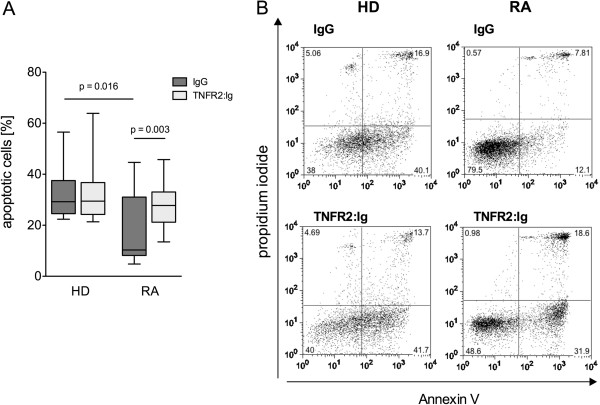
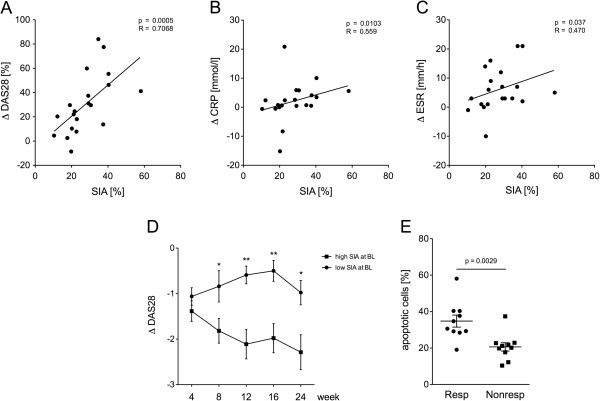
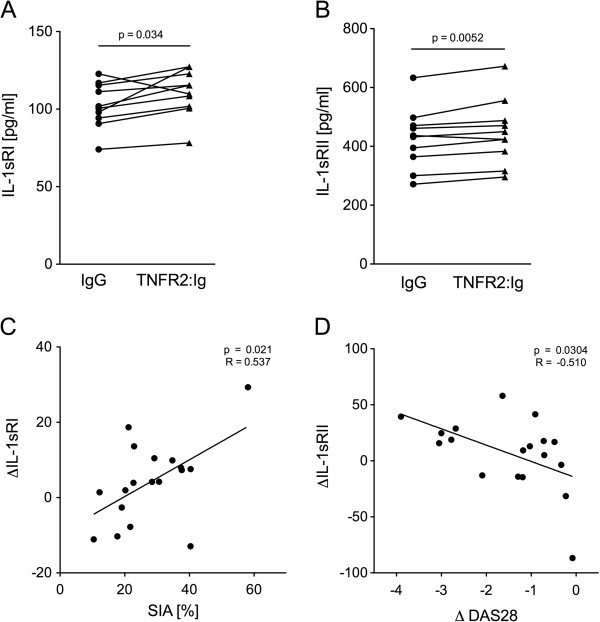
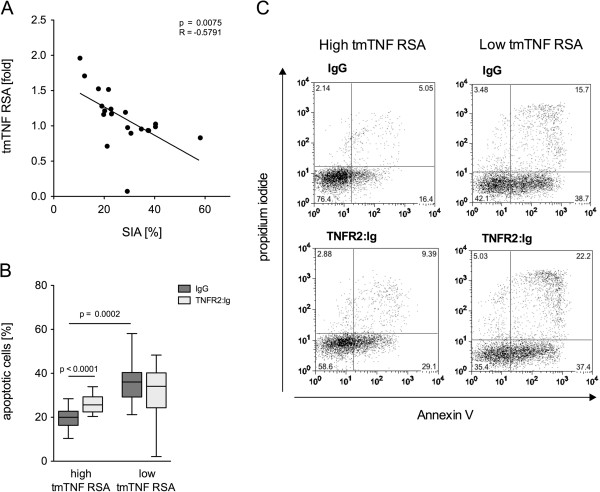
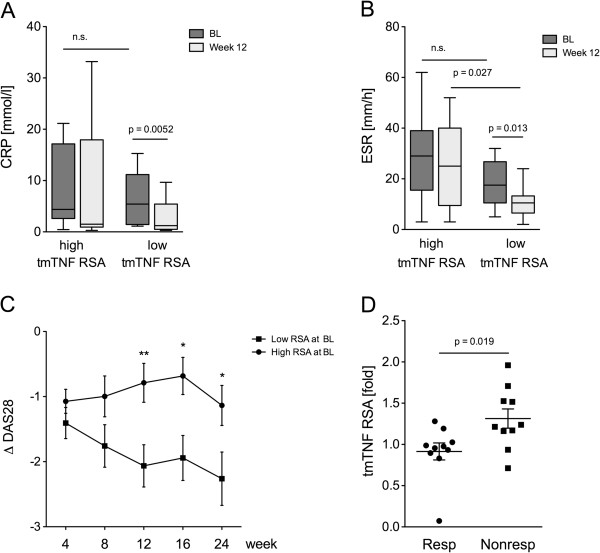
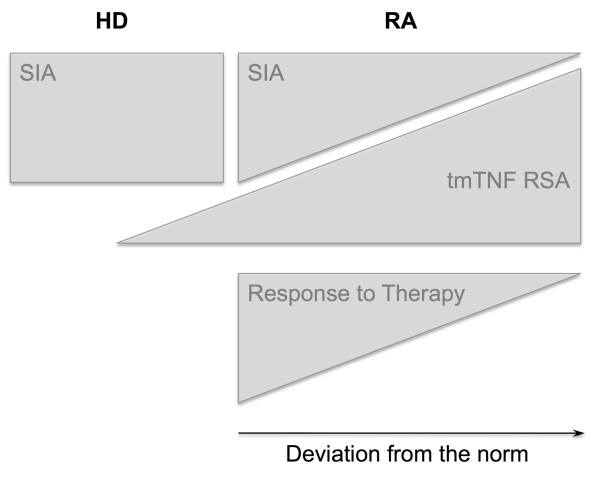
Results: Spontaneous in vitro apoptosis was significantly reduced in RA patients compared to controls. Deficiency in spontaneous apoptosis was associated with an insufficient therapeutic response according to the European League Against Rheumatism (EULAR) response criteria and less reduction of the disease activity determined by disease activity score (DAS) 28. High susceptibility to reverse signaling-induced apoptosis was also associated with less efficient reduction in the DAS28. Of note, a strong negative correlation between the two apoptotic parameters was discernible, possibly indicative of two pathogenetically relevant processes counter-regulating each other. tmTNF reverse signaling induced in vitro production of soluble IL1-RI and IL-1RII only in monocytes not deficient in spontaneous apoptosis, and the levels of soluble IL1-RII were found to be predictive of a good clinical response to Etanercept.
Conclusion: Although tmTNF reverse signaling is able to induce apoptosis of RA monocytes in vitro, this process appears to occur in vitro preferentially in patients with suboptimal therapeutic response. Resistance to spontaneous in vitro apoptosis, in contrast, is a predictor of insufficient response to treatment.
Figures
References
-
- Mitoma H, Horiuchi T, Hatta N, Tsukamoto H, Harashima SI, Kikuchi Y, Otsuka J, Okamura S, Fujita S, Harada M. Infliximab induces potent anti-inflammatory responses by outside-to-inside signals through transmembrane TNF-alpha. Gastroenterology. 2005;15:376–392. doi: 10.1053/j.gastro.2004.11.060. - DOI - PubMed
-
- Mitoma H, Horiuchi T, Tsukamoto H, Tamimoto Y, Kimoto Y, Uchino A, To K, Harashima SI, Hatta H, Harada M. Mechanisms for cytotoxic effects of anti-tumor necrosis factor agents on transmembrane tumor necrosis factor alpha-expressing cells: comparison among infliximab, etanercept, and adalimumab. Arthritis Rheum. 2008;15:1248–1257. doi: 10.1002/art.23447. - DOI - PubMed
-
- Rossol M, Schubert K, Meusch U, Schulz A, Biedermann B, Grosche J, Pierer M, Scholz R, Baerwald C, Thiel A, Hagen S, Wagner U. Tumor necrosis factor receptor type I expression of CD4+ T cells in rheumatoid arthritis enables them to follow tumor necrosis factor gradients into the rheumatoid synovium. Arthritis Rheum. 2013;15:1468–1476. doi: 10.1002/art.37927. - DOI - PubMed
-
- Meusch U, Rossol M, Baerwald C, Hauschildt S, Wagner U. Outside-to-inside signaling through transmembrane tumor necrosis factor reverses pathologic interleukin-1beta production and deficient apoptosis of rheumatoid arthritis monocytes. Arthritis Rheum. 2009;15:2612–2621. doi: 10.1002/art.24778. - DOI - PubMed
Publication types
MeSH terms
Substances
LinkOut - more resources
Full Text Sources
Other Literature Sources
Medical
