


The diabetes control and complications trial/epidemiology of diabetes interventions and complications study at 30 years: summary and future directions
- PMID: 24356597
- PMCID: PMC3867991
- DOI: 10.2337/dc13-2148
The diabetes control and complications trial/epidemiology of diabetes interventions and complications study at 30 years: summary and future directions
Abstract
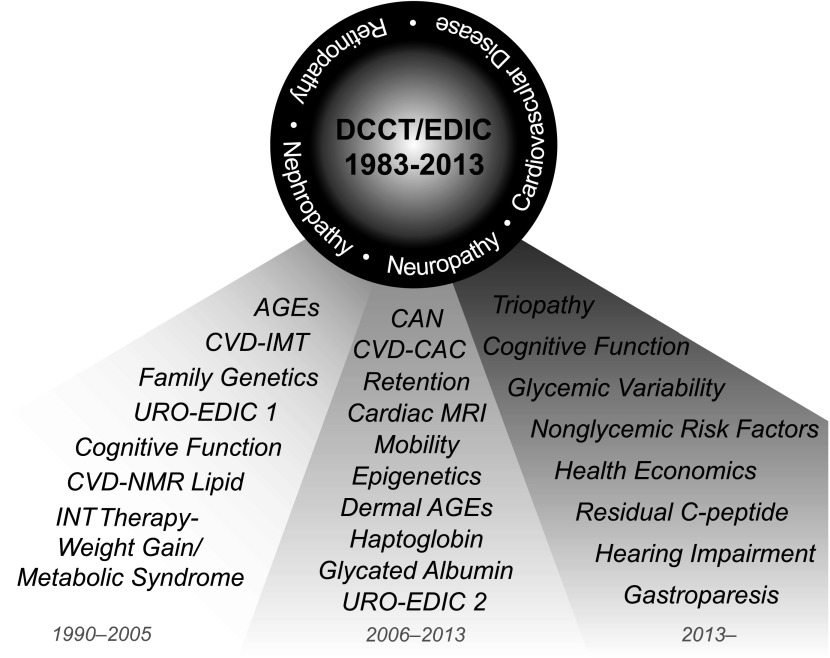
OBJECTIVE The Diabetes Control and Complications Trial/Epidemiology of Diabetes Interventions and Complications (DCCT/EDIC) study continues to address knowledge gaps in our understanding of type 1 diabetes and the effects of intensive therapy on its long-term complications. RESEARCH DESIGN AND METHODS During the DCCT (1982-1993), a controlled clinical trial of 1,441 subjects with type 1 diabetes, and the EDIC (1994-present), an observational study of the DCCT cohort, core data collection has included medical history questionnaires, surveillance health exams, and frequent laboratory and other evaluations for microvascular and macrovascular disease. Numerous collaborations have expanded the outcome data with more detailed investigations of cardiovascular disease, cognitive function, neuropathy, genetics, and potential biological pathways involved in the development of complications. RESULTS The longitudinal follow-up of the DCCT/EDIC cohort provides the opportunity to continue monitoring the durability of intensive treatment as well as to address lingering questions in type 1 diabetes research. Future planned analyses will address the onset and progression of microvascular triopathy, evidence-based screening for retinopathy and nephropathy, effects of glycemic variability and nonglycemic risk factors on outcomes, long-term impact of intensive therapy on cognitive decline, and health economics. Three new proposed investigations include an examination of residual C-peptide secretion and its impact, prevalence of hearing impairment, and evaluation of gastrointestinal dysfunction. CONCLUSIONS With the comprehensive data collection and the remarkable participant retention over 30 years, the DCCT/EDIC continues as an irreplaceable resource for understanding type 1 diabetes and its long-term complications.
Figures
References
-
- The Diabetes Control and Complications Trial Research Group The effect of intensive treatment of diabetes on the development and progression of long-term complications in insulin-dependent diabetes mellitus. N Engl J Med 1993;329:977–986 - PubMed
-
- The Diabetes Control and Complications Trial Research Group. The effect of intensive diabetes treatment on the progression of diabetic retinopathy in insulin-dependent diabetes mellitus. The Diabetes Control and Complications Trial. Arch Ophthalmol 1995;113:36–51 - PubMed
-
- Diabetes Control and Complications Trial Research Group Progression of retinopathy with intensive versus conventional treatment in the Diabetes Control and Complications Trial. Ophthalmology 1995;102:647–661 - PubMed
-
- Writing Team for the Diabetes Control and Complications Trial/Epidemiology of Diabetes Interventions and Complications Research Group Sustained effect of intensive treatment of type 1 diabetes mellitus on development and progression of diabetic nephropathy: the Epidemiology of Diabetes Interventions and Complications (EDIC) study. JAMA 2003;290:2159–2167 - PMC - PubMed
-
- Albers JW, Herman WH, Pop-Busui R, et al. Diabetes Control and Complications Trial /Epidemiology of Diabetes Interventions and Complications Research Group Effect of prior intensive insulin treatment during the Diabetes Control and Complications Trial (DCCT) on peripheral neuropathy in type 1 diabetes during the Epidemiology of Diabetes Interventions and Complications (EDIC) Study. Diabetes Care 2010;33:1090–1096 - PMC - PubMed
Publication types
MeSH terms
Substances
Grants and funding
LinkOut - more resources
Full Text Sources
Other Literature Sources
Medical
