


A role for peroxisome proliferator-activated receptor γ coactivator-1 in the control of mitochondrial dynamics during postnatal cardiac growth
- PMID: 24366168
- PMCID: PMC4061768
- DOI: 10.1161/CIRCRESAHA.114.302562
A role for peroxisome proliferator-activated receptor γ coactivator-1 in the control of mitochondrial dynamics during postnatal cardiac growth
Abstract
Rationale: Increasing evidence has shown that proper control of mitochondrial dynamics (fusion and fission) is required for high-capacity ATP production in the heart. Transcriptional coactivators, peroxisome proliferator-activated receptor γ coactivator-1 (PGC-1) α and PGC-1β, have been shown to regulate mitochondrial biogenesis in the heart at the time of birth. The function of PGC-1 coactivators in the heart after birth has been incompletely understood.
Objective: Our aim was to assess the role of PGC-1 coactivators during postnatal cardiac development and in adult hearts in mice.
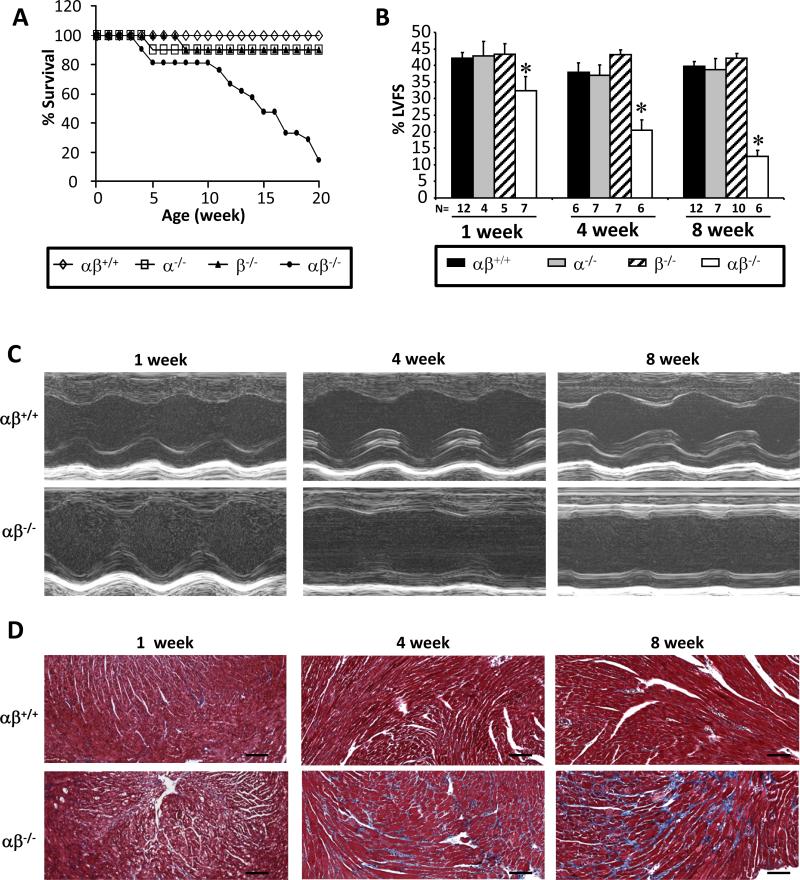
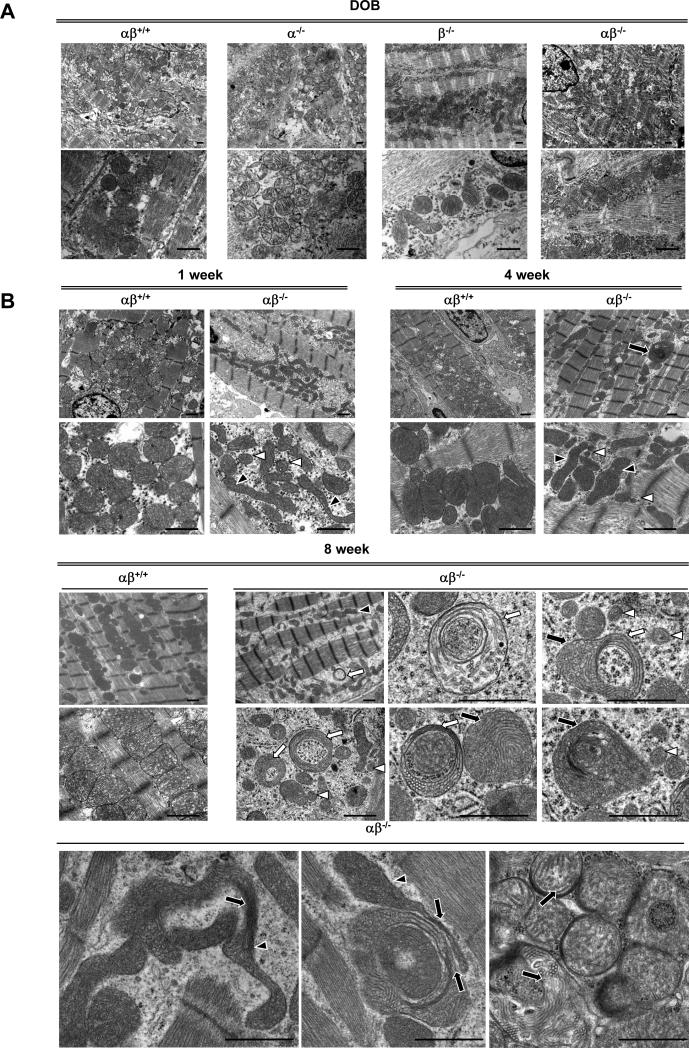
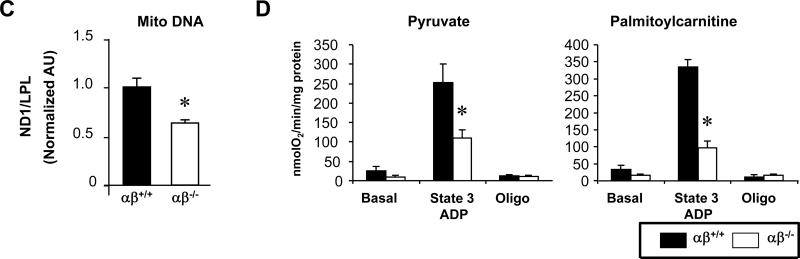
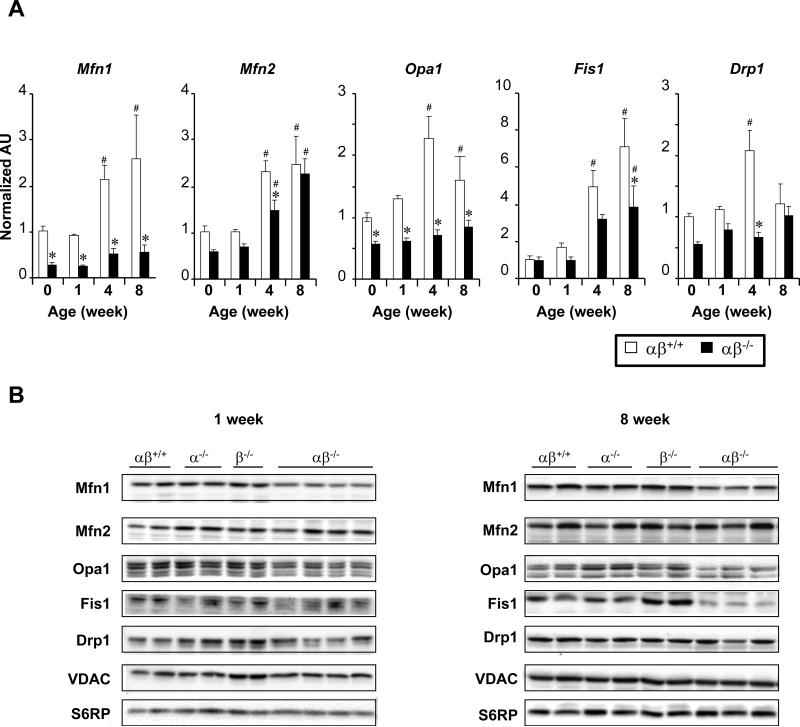
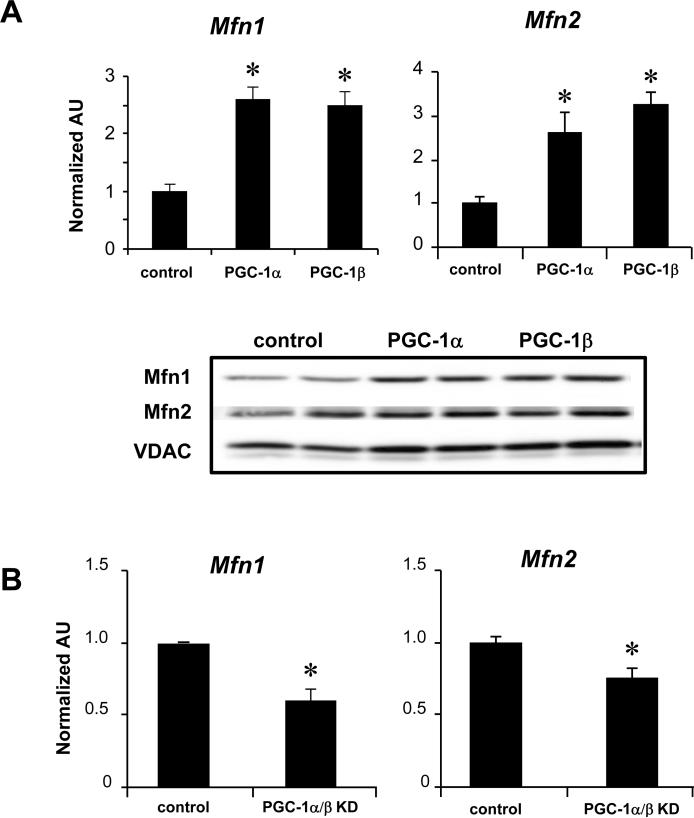
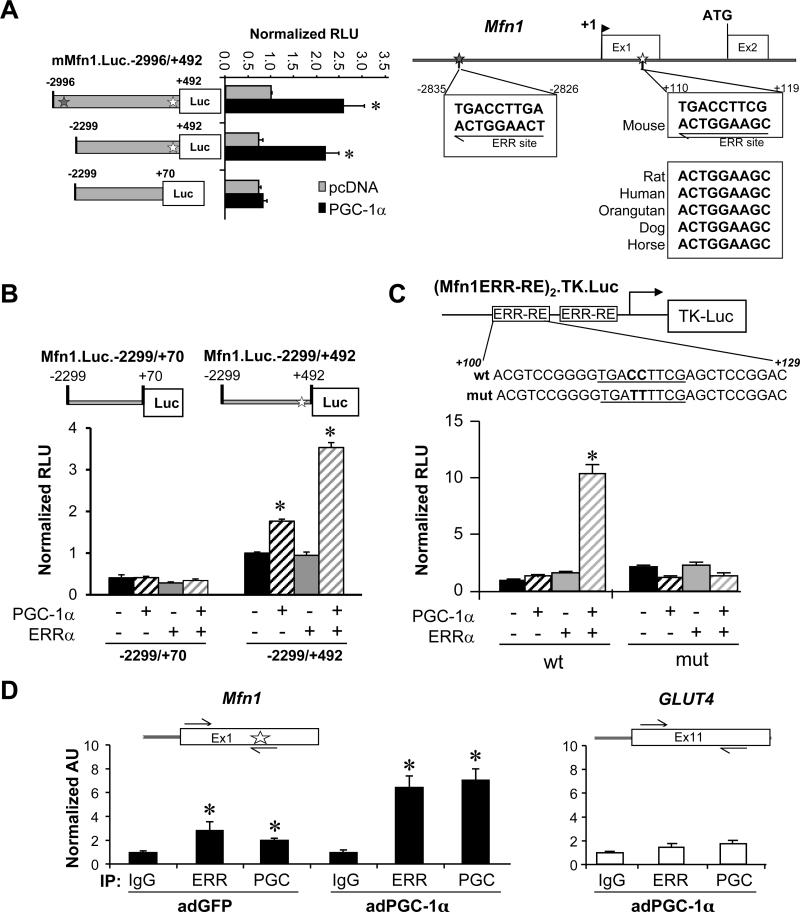
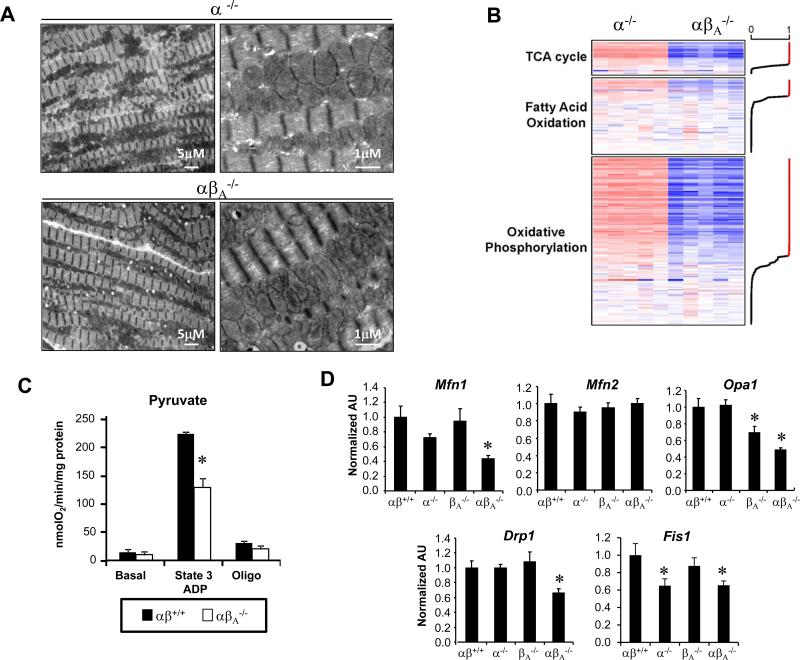
Methods and results: Conditional gene targeting was used in mice to explore the role of PGC-1 coactivators during postnatal cardiac development and in adult hearts. Marked mitochondrial structural derangements were observed in hearts of PGC-1α/β-deficient mice during postnatal growth, including fragmentation and elongation, associated with the development of a lethal cardiomyopathy. The expression of genes involved in mitochondrial fusion (Mfn1, Opa1) and fission (Drp1, Fis1) was altered in the hearts of PGC-1α/β-deficient mice. PGC-lα was shown to directly regulate Mfn1 gene transcription by coactivating the estrogen-related receptor α on a conserved DNA element. Surprisingly, PGC-1α/β deficiency in the adult heart did not result in evidence of abnormal mitochondrial dynamics or heart failure. However, transcriptional profiling demonstrated that PGC-1 coactivators are required for high-level expression of nuclear- and mitochondrial-encoded genes involved in mitochondrial dynamics and energy transduction in the adult heart.
Conclusions: These results reveal distinct developmental stage-specific programs involved in cardiac mitochondrial dynamics.
Keywords: Mfn1 protein, human; cardiomyopathies; mitochondrial dynamics.
Figures
References
-
- Ventura-Clapier R, Garnier A, Veksler V, Joubert F. Bioenergetics of the failing heart. Biochim Biophys Acta. 2011;1813:1360–1372. - PubMed
-
- Kelly DP, Scarpulla RC. Transcriptional control of striated muscle mitochondrial biogenesis and function. In: Hill JA, Olson EN, editors. Muscle: Fundamental biology and mechanisms of disease. Elsevier Academic Press; London: 2012. pp. 203–215.
-
- Neubauer S. The failing heart--an engine out of fuel. N Engl J Med. 2007;356:1140–1151. - PubMed
-
- Lopaschuk GD, Jaswal JS. Energy metabolic phenotype of the cardiomyocyte during development, differentiation, and postnatal maturation. J Cardiovasc Pharmacol. 2010;56:130–140. - PubMed
Publication types
MeSH terms
Substances
Grants and funding
LinkOut - more resources
Full Text Sources
Other Literature Sources
Medical
Molecular Biology Databases
Miscellaneous
