


The source of respiratory syncytial virus infection in infants: a household cohort study in rural Kenya
- PMID: 24367040
- PMCID: PMC4017365
- DOI: 10.1093/infdis/jit828
The source of respiratory syncytial virus infection in infants: a household cohort study in rural Kenya
Abstract
Background: Respiratory syncytial virus (RSV) vaccine development for direct protection of young infants faces substantial obstacles. Assessing the potential of indirect protection using different strategies, such as targeting older children or mothers, requires knowledge of the source of infection to the infants.
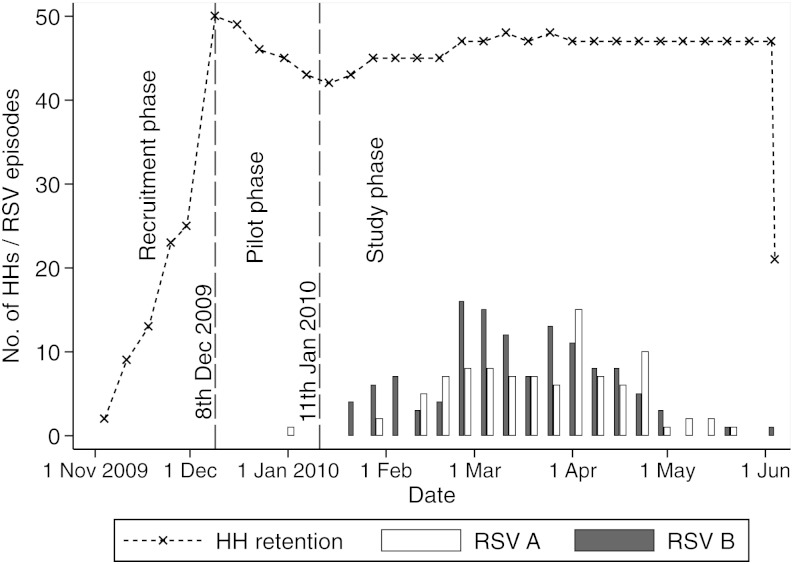
Methods: We undertook a prospective study in rural Kenya. Households with a child born after the preceding RSV epidemic and ≥ 1 elder sibling were recruited. Nasopharyngeal swab samples were collected every 3-4 days irrespective of symptoms from all household members throughout the RSV season of 2009-2010 and tested for RSV using molecular techniques.
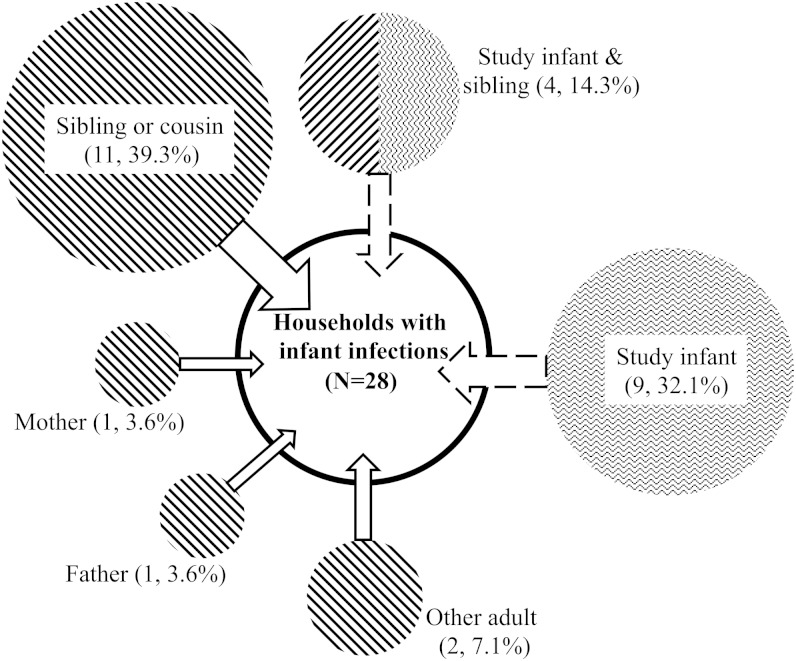
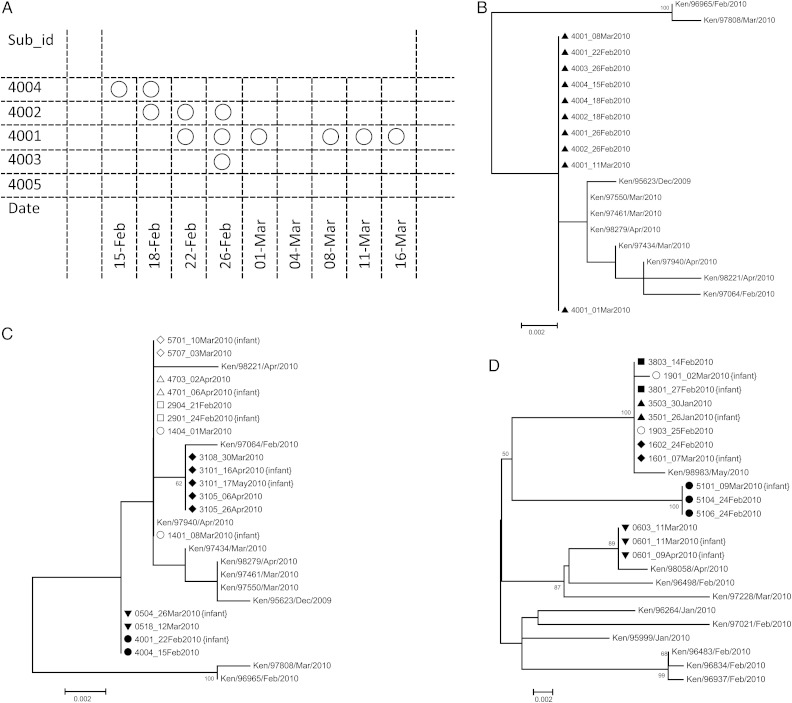
Results: From 451 participants in 44 households a total of 15 396 nasopharyngeal swab samples were samples were collected, representing 86% of planned sampling. RSV was detected in 37 households (84%) and 173 participants (38%) and 28 study infants (64%). The infants acquired infection from within (15 infants; 54%) or outside (9 infants; 32%) the household; in 4 households the source of infant infection was inconclusive. Older children were index case patients for 11 (73%) of the within-household infant infections, and 10 of these 11 children were attending school.
Conclusion: We demonstrate that school-going siblings frequently introduce RSV into households, leading to infection in infants.
Keywords: RSV; households; infants; siblings; transmission.
Figures
Comment in
-
Protecting the family to protect the child: vaccination strategy guided by RSV transmission dynamics.J Infect Dis. 2014 Jun 1;209(11):1679-81. doi: 10.1093/infdis/jiu075. Epub 2014 Feb 12. J Infect Dis. 2014. PMID: 24523511 Free PMC article. No abstract available.
References
-
- Glezen WP, Taber LH, Frank AL, Kasel JA. Risk of primary infection and reinfection with respiratory syncytial virus. Am J Dis Child. 1986;140:543–6. - PubMed
-
- Machata AM, Kabon B, Willschke H, Prayer D, Marhofer P. Upper airway size and configuration during propofol-based sedation for magnetic resonance imaging: an analysis of 138 infants and children. Paediatr Anaesth. 2010;20:994–1000. - PubMed
Publication types
MeSH terms
Grants and funding
LinkOut - more resources
Full Text Sources
Other Literature Sources
Medical
